
 Áfíríkà
 Éṣíà
Éṣíà Yúróòpù
 Gúúsù Amẹ́ríkà
 Ọsirélíà àti Òṣéáníà
 Antáktíkà
 Òkun Pàsífíìkì
 Òkun Àtìláńtíìkì
 Òkun Íńdíà
 Òkun Áktíkì
 Òkun Mẹditaréníà
 Òkun Pupa
 Òkun Káríbíànù
 Òkun Coral
 Òkun Gúúsù Ṣáínà
 Òkun Fílípínì
 Òkun Andaman
 Òkun Àríwá
 Òkun Tímọ̀ àti Òkun Àráfúrà
 Ìyawọlẹ̀ Òkun Bẹ̀ngál
 Ìyawọlẹ̀ Òkun Kalifọ́níà
Brown-tail moth
 Irun tó ń ta ni
The brown-tail moth is a moth whose caterpillars are covered in tiny irritating hairs. It is native to Europe, neighbouring parts of Asia and the north coast of Africa. Its hairs can cause a very itchy rash, so it matters to anyone who works or plays near trees it feeds on.1

 Bí o ṣe lè dá a mọ̀
- Adults have pure white upper wings and a hairy white body with a tuft of brown hair at the tip of the tail end.1
- Adults have a wingspan of 36 to 42 millimetres.1
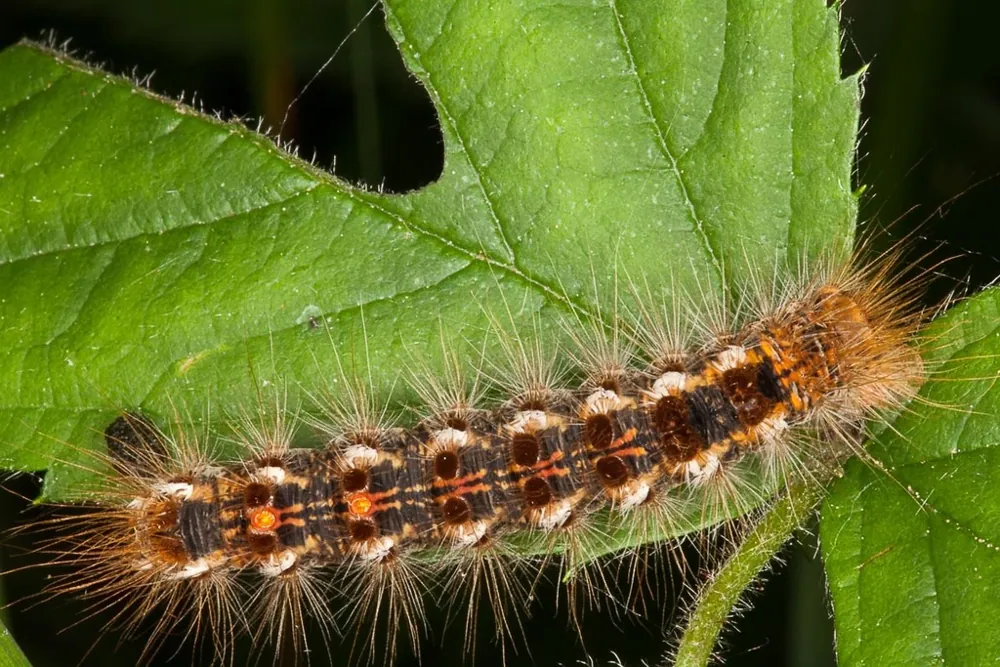
- Caterpillars are very hairy, brown with white markings, and have two prominent red spots toward the tail end.1
- In late autumn and winter, silken tents hang on branch tips, which are a sign that the caterpillars are present.1
A sábà máa ń ṣì í mọ̀ sí: Euproctis similis, also native to Europe, is similar as an adult but the female has a yellow tail tuft. Hyphantria cunea, native to North America, is similar too, but it lacks the coloured tail tuft.1
Agbára oró
Irun kékeré tàbí irun líle máa ń kán sínú awọ ara, wọ́n sì ń ta ni.
Kí ni oró rẹ̀ máa ń ṣe?
The hairs are not venom injected by a bite or sting. They are toxic and irritating to skin. Barbed hairs lodge in the skin and cause physical irritation, and chemicals in the hairs also irritate it. If inhaled, the hairs can cause breathing difficulties similar to asthma. The toxins stay active for up to three years after the hairs are shed.1
Báwo ló ṣe léwu tó fún ènìyàn?
Ewu fún ènìyàn: Ó ń dunniÓ lè dunni gan-an, ṣùgbọ́n kì í fẹ́rẹ̀ẹ́ le rárá.Contact with the hairs causes a very itchy rash that can last for weeks. Doctors reported rashes worse than poison ivy rash in the early 1900s. Breathing difficulties can occur if the hairs are inhaled.1
Kí ni ó máa ń ṣe nígbà tí ẹ̀rù bá bà á?
Its hairs protect the caterpillars from predators, and the caterpillars use some hairs in their cocoons.1
 Bí o bá fọwọ́ kan irun rẹ̀
- Fún irun ìdin labalábá tó ń ta ni: fi téèpù aláléẹ̀mọ́ gbé wọn kúrò, lẹ́yìn náà fọ awọ ara. Má ṣe fọwọ́ pa á.
- Fún ìbùjẹ: fọ̀ ọ́, kí o sì tù ú. Wá ìrànlọ́wọ́ ìṣègùn bí ara ẹni náà kò bá yá tàbí tí ẹ̀jẹ̀ bá ń tètè ṣàn lára rẹ̀.
Máa kọ́kọ́ pe nọ́ńbà pàjáwìrì rẹ nígbà gbogbo (112, 000, 911). Èyí jẹ́ ìtọ́sọ́nà ìtọ́jú àkọ́kọ́ gbogbogbò, kì í ṣe ìmọ̀ràn ìṣègùn. Ìpìlẹ̀ ìtọ́jú àkọ́kọ́
 Wà láìléwu
- Má ṣe fọwọ́ kan, mú tàbí yọ ẹranko igbó lẹ́nu láéláé, kódà bí ó bá kéré, kódà bí ó bá dà bí ẹni pé ó ń sùn tàbí ó ti kú.
- Fún un ní àyè. Bí o bá pàdé ọ̀kan, farabalẹ̀, sẹ́yìn díẹ̀díẹ̀ kí o sì jẹ́ kí ó máa bá ọ̀nà rẹ̀ lọ.
- Bí o bá fọwọ́ kan irun rẹ̀: farabalẹ̀, má ṣe mira, pe nọ́ńbà pàjáwìrì rẹ (112, 000, 911) tàbí lọ sí ilé ìwòsàn kíákíá. Rántí bí ó ṣe rí, fọ́tò máa ń ṣèrànwọ́.
Kò wá ọ kiri láti ṣe ọ́ léṣe. Ó ń lo oró rẹ̀ láti mú oúnjẹ tàbí láti dáàbò bo ara rẹ̀, ó sì fẹ́ràn láti farapamọ́ jù. Sí i nípa wíwà láìléwu
Báwo ló ṣe tóbi tó?
Báwo ló ṣe gùn tó?
 ó kúrú ju ọmọdínrín ìka rẹ lọ
 ó lọ́ra ju ìgbín inú ọgbà lọ
Báwo ni Brown-tail moth ṣe tóbi tó tí a bá fi wé ÌWỌ?
Ìṣirò nìkan nínú bráwúsà rẹ. A kò fi ohunkóhun pamọ́, a kò sì fi ránṣẹ́ sí ibikíbi.
Báwo ló ṣe yára tó?

Òtítọ́
The hairs of the caterpillars can cause a rash even when no one touches a caterpillar, because shed hairs can blow in the wind.1
Brown-tail moths were described in outbreaks in Paris, London and Berlin as far back as the 1500s, when they stripped trees of leaves.1
The species spends about nine months of its year as caterpillars, which is unusually long for a moth.1
Caterpillars spend the winter together in silken tents built at branch tips, rather than spreading out.1
A parasitic fly introduced to North America in 1906 to control spongy moths also strongly affected brown-tail moths.1
Olùfọ́ àròsọ
Àròsọ: You can only get the rash by touching the caterpillars.
Òtítọ́: Hairs are shed and can become windblown, and they can be carried indoors on clothing and shoes, so a rash can occur without direct contact with the caterpillars.1
Ibi tí àwọn òtítọ́ ti wá
- Brown-tail moth (Wikipedia (CC BY-SA 4.0))
- Euproctis chrysorrhoea (iNaturalist): orúkọ àti ìpínsísọ̀rí.
- Venom Wiki: ìpele ewu, ìtóbi déédé àti àfojúbù ìyára jẹ́ tiwa. Wo bí a ṣe ń ṣírò wọn: Bí a ṣe ń díwọ̀n ewu.
Gbogbo òtítọ́ ojú-ìwé yìí ní nọ́ńbà tó tọ́ka sí orísun rẹ̀. Bí a bá ṣe àṣìṣe, má bínú, olólùfẹ́ ẹranko ni wá, kì í ṣe ìwé ìròyìn sáyẹ́ǹsì. Sọ fún wa ní [email protected] a ó sì tún un ṣe.
 Ebi ń pa àkekèé! Iṣẹ́ akanṣe ẹnì kan ṣoṣo ni Venom Wiki: ọ̀fẹ́ ni, kò sí ìpolówó, kò sì sí olùtọpinpin. Ẹ̀bùn kékeré ń ràn án lọ́wọ́ láti wà lórí íńtánẹ́ẹ̀tì.Bọ́ àkekèé
Sí i láti inú ẹgbẹ́ kan náà: Ìdin labalábá àti kòkòrò
 Oak processionaryÌdin labalábá àti kòkòròÓ kàn ń dunniMá ṣe fọwọ́ kàn án
 Pine processionaryÌdin labalábá àti kòkòròÓ kàn ń dunniMá ṣe fọwọ́ kàn án
 Common bombardier beetleÌdin labalábá àti kòkòròAláìléwu
 Asian giant water bugÌdin labalábá àti kòkòròÓ kàn ń dunni
 Blue-striped nettle grubÌdin labalábá àti kòkòròÓ kàn ń dunniMá ṣe fọwọ́ kàn án
 Masked hunterÌdin labalábá àti kòkòròÓ kàn ń dunni
Ó tún ń gbé ní: Yúróòpù
 Common European adderViper àti paramọ́lẹ̀Ó nílò dókítà
 Spanish flyÀwọn ẹranko onímájèlé mìírànÓ nílò dókítàMá ṣe fọwọ́ kàn án
 Common waspOyin, agbọ́n àti agbọ́n ńláÓ kàn ń dunni
 European hornetOyin, agbọ́n àti agbọ́n ńláÓ kàn ń dunni
 Fire salamanderÀkèré onímájèlé, ọ̀pọ̀lọ́ àti newtÓ kàn ń dunniMá ṣe fọwọ́ kàn án
 Western honey beeOyin, agbọ́n àti agbọ́n ńláÓ kàn ń dunni