
 Áfíríkà
 Éṣíà
Éṣíà Yúróòpù
 Gúúsù Amẹ́ríkà
 Ọsirélíà àti Òṣéáníà
 Antáktíkà
 Òkun Pàsífíìkì
 Òkun Àtìláńtíìkì
 Òkun Íńdíà
 Òkun Áktíkì
 Òkun Mẹditaréníà
 Òkun Pupa
 Òkun Káríbíànù
 Òkun Coral
 Òkun Gúúsù Ṣáínà
 Òkun Fílípínì
 Òkun Andaman
 Òkun Àríwá
 Òkun Tímọ̀ àti Òkun Àráfúrà
 Ìyawọlẹ̀ Òkun Bẹ̀ngál
 Ìyawọlẹ̀ Òkun Kalifọ́níà
Red-necked keelback
 Ìbùjẹ
ÌbùjẹThe red-necked keelback is a snake from the Indonesian islands of Java and Sumatra. It is unusual because it is venomous, which is rare for snakes in its family, and it was only recently reclassified as dangerous to people.1



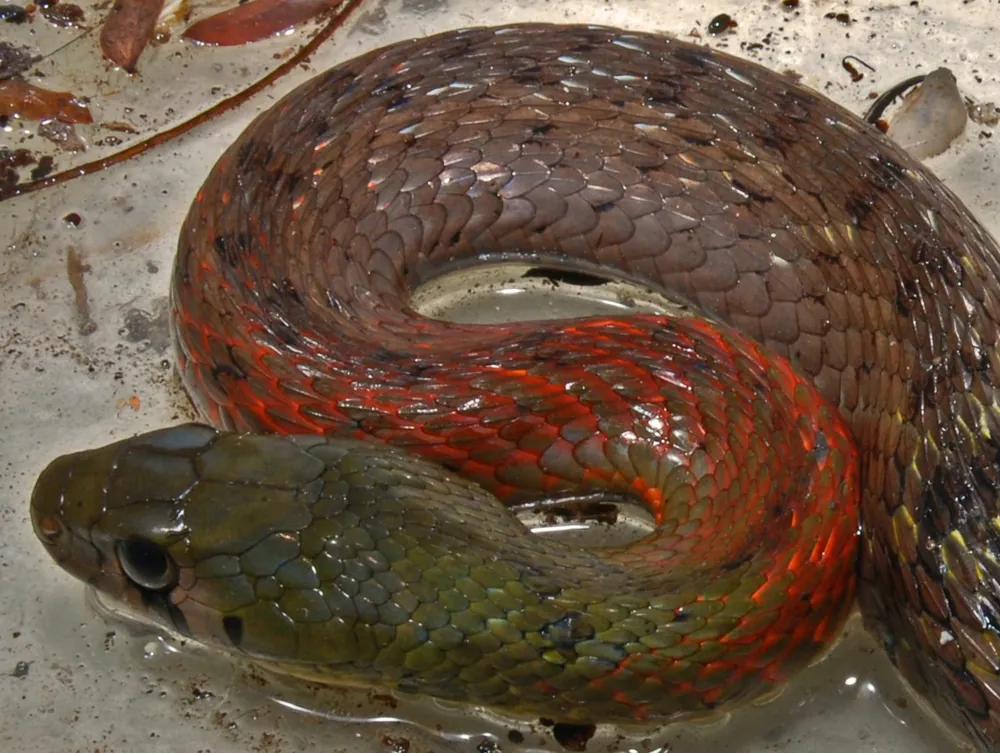
 Bí o ṣe lè dá a mọ̀
Agbára oró
Oró ń jáde láti inú eyín oró tàbí eyín rẹ̀ nígbà tí ó bá bùjẹ.
Kí ni oró rẹ̀ máa ń ṣe?
This snake is rear-fanged, so its venom is delivered through grooved teeth at the back of the upper jaw rather than through hollow front fangs. Its venom can cause internal bleeding, including bleeding in the brain, nausea, and blood clotting problems such as disseminated intravascular coagulation. In animal tests, the venom caused kidney failure.1
Báwo ló ṣe léwu tó fún ènìyàn?
Ewu fún ènìyàn: Ó le gan-anÌbùjẹ nílò dókítà. Ikú kò wọ́pọ̀ rárá.After one fatal and several near-fatal envenomations, the snake was reclassified as dangerous. Most bites to people involve the front teeth and cause no harmful effects, but rare bites from the rear fangs can be lethal. Recent reports describe severe envenomation and organ failure, affecting the kidneys and liver, after even brief bites.1
Kí ni ó máa ń ṣe nígbà tí ẹ̀rù bá bà á?
When threatened, for example by being touched, it can burst its nuchal glands in the red neck, releasing stored toad toxins (bufotoxins) that cause fast heartbeat, drooling, convulsions and paralysis.1
 Bí ó bá bùjẹ
- Care is needed when treating a bitten person. Injections should be avoided, as they may cause excessive bleeding.1
- Fọ ibi ìbùjẹ náà, jẹ́ kí ẹni náà farabalẹ̀, kí o sì wá ìrànlọ́wọ́ ìṣègùn. Àwọn irú kan (bí boomslang) lè pani ní wákàtí púpọ̀ lẹ́yìn náà.
Máa kọ́kọ́ pe nọ́ńbà pàjáwìrì rẹ nígbà gbogbo (112, 000, 911). Èyí jẹ́ ìtọ́sọ́nà ìtọ́jú àkọ́kọ́ gbogbogbò, kì í ṣe ìmọ̀ràn ìṣègùn. Ìpìlẹ̀ ìtọ́jú àkọ́kọ́
 Wà láìléwu
- Má ṣe fọwọ́ kan, mú tàbí yọ ẹranko igbó lẹ́nu láéláé, kódà bí ó bá kéré, kódà bí ó bá dà bí ẹni pé ó ń sùn tàbí ó ti kú.
- Fún un ní àyè. Bí o bá pàdé ọ̀kan, farabalẹ̀, sẹ́yìn díẹ̀díẹ̀ kí o sì jẹ́ kí ó máa bá ọ̀nà rẹ̀ lọ.
- Bí ọ̀kan bá bù ọ́ jẹ: farabalẹ̀, má ṣe mira, pe nọ́ńbà pàjáwìrì rẹ (112, 000, 911) tàbí lọ sí ilé ìwòsàn kíákíá. Rántí bí ó ṣe rí, fọ́tò máa ń ṣèrànwọ́.
Kò wá ọ kiri láti ṣe ọ́ léṣe. Ó ń lo oró rẹ̀ láti mú oúnjẹ tàbí láti dáàbò bo ara rẹ̀, ó sì fẹ́ràn láti farapamọ́ jù. Sí i nípa wíwà láìléwu
Báwo ló ṣe tóbi tó?
Báwo ló ṣe gùn tó?
 ó gùn tó ológbò ilé 2 láti imú dé ìrù
 ó gùn tó ọ̀gẹ̀dẹ̀ 5 tí a tò tẹ̀léra
 lè sáré mítà 100 ní ìṣẹ́jú-àáyá 71 (ènìyàn tó yára jùlọ nílò 9.6)
Báwo ni Red-necked keelback ṣe tóbi tó tí a bá fi wé ÌWỌ?
Ìṣirò nìkan nínú bráwúsà rẹ. A kò fi ohunkóhun pamọ́, a kò sì fi ránṣẹ́ sí ibikíbi.
Báwo ló ṣe yára tó?


Òtítọ́
It stores toxins from the toads it eats in glands in its neck, which it can release when threatened.1
Unusually for a member of the colubrid family, which is a large snake family, this species is venomous.1
Its venom ducts open onto grooved fangs at the back of the mouth, and chewing helps the venom enter a bite.1
During mating, several males may swarm around a single female.1
Olùfọ́ àròsọ
Àròsọ: The red-necked keelback is harmless because it was once thought to be.
Òtítọ́: It is venomous. It was previously thought harmless, but after serious bites it was reclassified as dangerous.1
Ibi tí àwọn òtítọ́ ti wá
- Rhabdophis subminiatus (Wikipedia (CC BY-SA 4.0))
- Rhabdophis subminiatus (iNaturalist): orúkọ àti ìpínsísọ̀rí.
- Venom Wiki: ìpele ewu, ìtóbi déédé àti àfojúbù ìyára jẹ́ tiwa. Wo bí a ṣe ń ṣírò wọn: Bí a ṣe ń díwọ̀n ewu.
Gbogbo òtítọ́ ojú-ìwé yìí ní nọ́ńbà tó tọ́ka sí orísun rẹ̀. Bí a bá ṣe àṣìṣe, má bínú, olólùfẹ́ ẹranko ni wá, kì í ṣe ìwé ìròyìn sáyẹ́ǹsì. Sọ fún wa ní [email protected] a ó sì tún un ṣe.
 Ebi ń pa àkekèé! Iṣẹ́ akanṣe ẹnì kan ṣoṣo ni Venom Wiki: ọ̀fẹ́ ni, kò sí ìpolówó, kò sì sí olùtọpinpin. Ẹ̀bùn kékeré ń ràn án lọ́wọ́ láti wà lórí íńtánẹ́ẹ̀tì.Bọ́ àkekèé
 Brown tree snake
 Tiger keelback
 Green cat snake
 Mangrove snake
 Asian vine snake
 Golden tree snake
 Deathstalker
 Indian cobra
 Indian saw-scaled viper
 King cobra
 Puff adder
 Paramọlẹ Russell