
 Áfíríkà
 Éṣíà
Éṣíà Yúróòpù
 Gúúsù Amẹ́ríkà
 Ọsirélíà àti Òṣéáníà
 Antáktíkà
 Òkun Pàsífíìkì
 Òkun Àtìláńtíìkì
 Òkun Íńdíà
 Òkun Áktíkì
 Òkun Mẹditaréníà
 Òkun Pupa
 Òkun Káríbíànù
 Òkun Coral
 Òkun Gúúsù Ṣáínà
 Òkun Fílípínì
 Òkun Andaman
 Òkun Àríwá
 Òkun Tímọ̀ àti Òkun Àráfúrà
 Ìyawọlẹ̀ Òkun Bẹ̀ngál
 Ìyawọlẹ̀ Òkun Kalifọ́níà
Darevsky's viper
 Ìbùjẹ
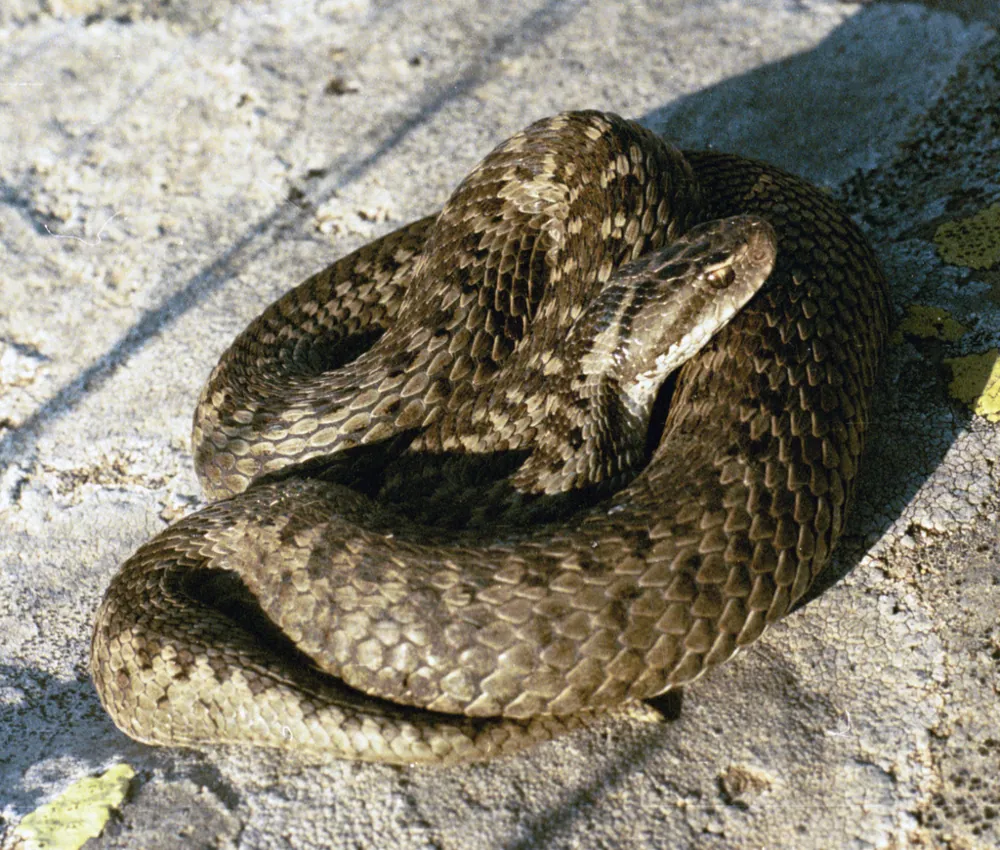
ÌbùjẹDarevsky's viper is a small venomous snake that lives high in the mountains of northwestern Armenia, northeastern Turkey and southern Georgia. Its bite is painful and causes swelling, but it does not appear to be life-threatening to adults. It is a rare animal, classed as critically endangered.1



 Bí o ṣe lè dá a mọ̀
- Light brown to grey background colour with a dark brown to black zigzag pattern along the back, often broken into pieces.1
- A single row of small dark blotches on each side of the body.1
- Belly with many grey or black dots. Females have a greyer belly, while males' bellies are almost black.1
- Chin shields and lip scales are white, with a few dark fang-shaped marks on the lip scales.1
- Adult males are brighter, with a yellow tint and a dark, often black, pattern. Females are browner, with a fainter pattern. Females reach up to 42.1 cm in total length.1
A sábà máa ń ṣì í mọ̀ sí: It is often compared with Vipera eriwanensis. That species has a pinkish tint on its lip scales, while Darevsky's viper has white lip scales with dark fang-shaped marks.1
Agbára oró
Oró ń jáde láti inú eyín oró tàbí eyín rẹ̀ nígbà tí ó bá bùjẹ.
Kí ni oró rẹ̀ máa ń ṣe?
Its venom is potent, and it is a relatively small venomous snake. A bite causes pain and local swelling around the wound. The bite does not appear to be life-threatening to adult humans.1
Báwo ló ṣe léwu tó fún ènìyàn?
Ewu fún ènìyàn: Ó ń dunniÓ lè dunni gan-an, ṣùgbọ́n kì í fẹ́rẹ̀ẹ́ le rárá.The bite is painful and causes local swelling, but it appears not to be life-threatening to adult humans.1
 Bí ó bá bùjẹ
- Jẹ́ kí ẹni náà wà láìmira kí ó sì farabalẹ̀, jẹ́ kí apá tàbí ẹsẹ̀ tí ó bù jẹ wà ní ìpele ọkàn, yọ òrùka àti àwọn nǹkan tó há, kí ẹ sì lọ sí ilé ìwòsàn kíákíá.
Máa kọ́kọ́ pe nọ́ńbà pàjáwìrì rẹ nígbà gbogbo (112, 000, 911). Èyí jẹ́ ìtọ́sọ́nà ìtọ́jú àkọ́kọ́ gbogbogbò, kì í ṣe ìmọ̀ràn ìṣègùn. Ìpìlẹ̀ ìtọ́jú àkọ́kọ́
 Wà láìléwu
- Má ṣe fọwọ́ kan, mú tàbí yọ ẹranko igbó lẹ́nu láéláé, kódà bí ó bá kéré, kódà bí ó bá dà bí ẹni pé ó ń sùn tàbí ó ti kú.
- Fún un ní àyè. Bí o bá pàdé ọ̀kan, farabalẹ̀, sẹ́yìn díẹ̀díẹ̀ kí o sì jẹ́ kí ó máa bá ọ̀nà rẹ̀ lọ.
- Bí ọ̀kan bá bù ọ́ jẹ: farabalẹ̀, má ṣe mira, pe nọ́ńbà pàjáwìrì rẹ (112, 000, 911) tàbí lọ sí ilé ìwòsàn kíákíá. Rántí bí ó ṣe rí, fọ́tò máa ń ṣèrànwọ́.
Kò wá ọ kiri láti ṣe ọ́ léṣe. Ó ń lo oró rẹ̀ láti mú oúnjẹ tàbí láti dáàbò bo ara rẹ̀, ó sì fẹ́ràn láti farapamọ́ jù. Sí i nípa wíwà láìléwu
Báwo ló ṣe tóbi tó?
Báwo ló ṣe gùn tó?
Báwo ló ṣe wúwo tó?
 ó gùn tó ọ̀gẹ̀dẹ̀ 2.5 tí a tò tẹ̀léra
 ó gùn tó bíríkì ìṣeré 13 tí a tò sí ìlà kan
 ó fúyẹ́ débi pé o kò ní mọ̀ ọ́n lára lọ́wọ́ rẹ
 lè sáré mítà 100 ní ìṣẹ́jú-àáyá 120 (ènìyàn tó yára jùlọ nílò 9.6)
Báwo ni Darevsky's viper ṣe tóbi tó tí a bá fi wé ÌWỌ?
Ìṣirò nìkan nínú bráwúsà rẹ. A kò fi ohunkóhun pamọ́, a kò sì fi ránṣẹ́ sí ibikíbi.
Báwo ló ṣe yára tó?


Òtítọ́
Its digestion is very fast. In captive tests at 4 to 7 °C, a meal of fuzzy rat was digested in only 3 days.1
Remains of this snake have been found in the droppings of a beech marten, although little is known about its natural enemies.1
Newborns feed on the yolk left inside them for their first two weeks, and they grow without eating before their first shed.1
It is active during the day and moves into rocky deposits to keep its body at about 26 to 28 °C.1
Fún àwọn amòye oró
- Orúkọ sáyẹ́ǹsì
- Vipera darevskii
- Ẹgbẹ́
- Viper àti paramọ́lẹ̀
- Ìdílé
- Viperidae2
- Ètò
- Squamata
- Àwọn kọ́ńtínẹ́ńtì
- Éṣíà
- Àwọn ọmọ
- It is ovoviviparous, meaning the eggs hatch inside the mother and she gives birth to live young. She has 4 to 8 babies between September and early October.1
- Bí ó ṣe ń ṣe nínú igbó
- Critically endangered (IUCN Red List)1
- Ewu fún ènìyàn
- 2 / 5: Ó ń dunni3
Ibi tí àwọn òtítọ́ ti wá
- Vipera darevskii (Wikipedia (CC BY-SA 4.0))
- Vipera darevskii (iNaturalist): orúkọ àti ìpínsísọ̀rí.
- Venom Wiki: ìpele ewu, ìtóbi déédé àti àfojúbù ìyára jẹ́ tiwa. Wo bí a ṣe ń ṣírò wọn: Bí a ṣe ń díwọ̀n ewu.
Gbogbo òtítọ́ ojú-ìwé yìí ní nọ́ńbà tó tọ́ka sí orísun rẹ̀. Bí a bá ṣe àṣìṣe, má bínú, olólùfẹ́ ẹranko ni wá, kì í ṣe ìwé ìròyìn sáyẹ́ǹsì. Sọ fún wa ní [email protected] a ó sì tún un ṣe.
 Ebi ń pa àkekèé! Iṣẹ́ akanṣe ẹnì kan ṣoṣo ni Venom Wiki: ọ̀fẹ́ ni, kò sí ìpolówó, kò sì sí olùtọpinpin. Ẹ̀bùn kékeré ń ràn án lọ́wọ́ láti wà lórí íńtánẹ́ẹ̀tì.Bọ́ àkekèé
 Indian saw-scaled viper
 Puff adder
 Paramọlẹ Russell
 Common European adder
 Eastern Russell's viper
 Northeast African carpet viper
 Deathstalker
 Indian cobra
 King cobra
 Asian giant hornet
 Komodo dragon
 Spanish fly