
 Áfíríkà
 Éṣíà
Éṣíà Yúróòpù
 Gúúsù Amẹ́ríkà
 Ọsirélíà àti Òṣéáníà
 Antáktíkà
 Òkun Pàsífíìkì
 Òkun Àtìláńtíìkì
 Òkun Íńdíà
 Òkun Áktíkì
 Òkun Mẹditaréníà
 Òkun Pupa
 Òkun Káríbíànù
 Òkun Coral
 Òkun Gúúsù Ṣáínà
 Òkun Fílípínì
 Òkun Andaman
 Òkun Àríwá
 Òkun Tímọ̀ àti Òkun Àráfúrà
 Ìyawọlẹ̀ Òkun Bẹ̀ngál
 Ìyawọlẹ̀ Òkun Kalifọ́níà
Equatorial spitting cobra
 Ó ń fọ́n tàbí tu
The equatorial spitting cobra is a medium-sized cobra found in Southeast Asia. It can spray venom from a distance, which is what makes it special. It lives mainly in forests and sometimes in gardens and towns.1



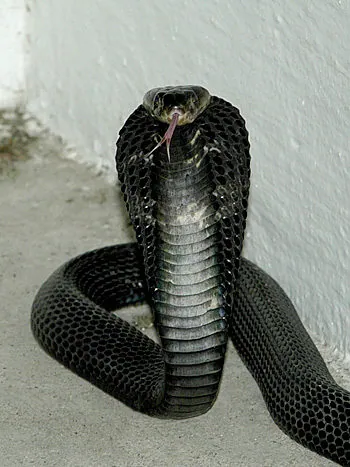
 Bí o ṣe lè dá a mọ̀
- Medium-sized, usually 0.9 to 1.2 metres long, and can grow up to 1.5 metres1
- Has no hood marks1
- Comes in two colour forms: yellow (common in Thailand and northern Peninsular Malaysia) and black (found in Peninsular Malaysia, Singapore and the islands of Indonesia and the Philippines)1
- Juveniles and adults often have different colours1
- Has smooth scales and a short, rounded snout1
Agbára oró
Ó ń fọ́n tàbí tu omi tó ń ta ni sí àwọn tó bá kọlù ú.
Kí ni oró rẹ̀ máa ń ṣe?
Its venom is postsynaptic neurotoxic, meaning it attacks the nerves. It also contains cardiotoxins, which damage the heart, and cytotoxins, which damage cells. The venom is strong enough that a bite can be serious.1
Báwo ló ṣe léwu tó fún ènìyàn?
Ewu fún ènìyàn: Ó léwu gan-anÓ lè pa ènìyàn tí kò bá rí ìtọ́jú.It will spit venom readily when cornered or threatened, and it can spit from up in trees. It will also strike and bite. The yellow form from Thailand is described as highly aggressive and more prone to spitting large amounts.1
Kí ni ó máa ń ṣe nígbà tí ẹ̀rù bá bà á?
When cornered or threatened, it spits venom and will also strike and bite.1
 Bí ó bá bùjẹ tàbí tu oró
- Jẹ́ kí ẹni náà wà láìmira kí ó sì farabalẹ̀, yọ òrùka àti àwọn nǹkan tó há, kí ẹ sì lọ sí ilé ìwòsàn kíákíá: oògùn apa-oró (antivenom) ni ìtọ́jú rẹ̀.
- Bí ó bá tu oró sí ojú, fi omi mímọ́ púpọ̀ fọ ojú náà lẹ́sẹ̀kẹsẹ̀.
Máa kọ́kọ́ pe nọ́ńbà pàjáwìrì rẹ nígbà gbogbo (112, 000, 911). Èyí jẹ́ ìtọ́sọ́nà ìtọ́jú àkọ́kọ́ gbogbogbò, kì í ṣe ìmọ̀ràn ìṣègùn. Ìpìlẹ̀ ìtọ́jú àkọ́kọ́
 Wà láìléwu
- Má ṣe fọwọ́ kan, mú tàbí yọ ẹranko igbó lẹ́nu láéláé, kódà bí ó bá kéré, kódà bí ó bá dà bí ẹni pé ó ń sùn tàbí ó ti kú.
- Fún un ní àyè. Bí o bá pàdé ọ̀kan, farabalẹ̀, sẹ́yìn díẹ̀díẹ̀ kí o sì jẹ́ kí ó máa bá ọ̀nà rẹ̀ lọ.
- Bí ọ̀kan bá bù ọ́ jẹ tàbí tu oró sí ojú rẹ: farabalẹ̀, má ṣe mira, pe nọ́ńbà pàjáwìrì rẹ (112, 000, 911) tàbí lọ sí ilé ìwòsàn kíákíá. Rántí bí ó ṣe rí, fọ́tò máa ń ṣèrànwọ́.
Kò wá ọ kiri láti ṣe ọ́ léṣe. Ó ń lo oró rẹ̀ láti mú oúnjẹ tàbí láti dáàbò bo ara rẹ̀, ó sì fẹ́ràn láti farapamọ́ jù. Sí i nípa wíwà láìléwu
Báwo ló ṣe tóbi tó?
Báwo ló ṣe gùn tó?
 ó gùn tó ológbò ilé 3 láti imú dé ìrù
 ó gùn tó ọ̀gẹ̀dẹ̀ 8 tí a tò tẹ̀léra
 lè sáré mítà 100 ní ìṣẹ́jú-àáyá 51 (ènìyàn tó yára jùlọ nílò 9.6)
Báwo ni Equatorial spitting cobra ṣe tóbi tó tí a bá fi wé ÌWỌ?
Ìṣirò nìkan nínú bráwúsà rẹ. A kò fi ohunkóhun pamọ́, a kò sì fi ránṣẹ́ sí ibikíbi.
Báwo ló ṣe yára tó?


Òtítọ́
It can spit venom even when it is up in the trees.1
Cardiotoxins make up about 40% of its venom protein, a higher share than in some related spitting cobras.1
The yellow colour form from Thailand is described as more aggressive than the black form.1
It is mainly active during the day and lives on the ground.1
Olùfọ́ àròsọ
Àròsọ: It is just a subspecies of the Indian cobra.
Òtítọ́: It was first defined as its own species in 1989. Earlier, its populations had been grouped under several subspecies of the Indian cobra.1
Ibi tí àwọn òtítọ́ ti wá
- Equatorial spitting cobra (Wikipedia (CC BY-SA 4.0))
- Naja sumatrana (iNaturalist): orúkọ àti ìpínsísọ̀rí.
- Venom Wiki: ìpele ewu, ìtóbi déédé àti àfojúbù ìyára jẹ́ tiwa. Wo bí a ṣe ń ṣírò wọn: Bí a ṣe ń díwọ̀n ewu.
Gbogbo òtítọ́ ojú-ìwé yìí ní nọ́ńbà tó tọ́ka sí orísun rẹ̀. Bí a bá ṣe àṣìṣe, má bínú, olólùfẹ́ ẹranko ni wá, kì í ṣe ìwé ìròyìn sáyẹ́ǹsì. Sọ fún wa ní [email protected] a ó sì tún un ṣe.
 Ebi ń pa àkekèé! Iṣẹ́ akanṣe ẹnì kan ṣoṣo ni Venom Wiki: ọ̀fẹ́ ni, kò sí ìpolówó, kò sì sí olùtọpinpin. Ẹ̀bùn kékeré ń ràn án lọ́wọ́ láti wà lórí íńtánẹ́ẹ̀tì.Bọ́ àkekèé
 Indian cobra
 King cobra
 Caspian cobra
 Common krait
 Malayan krait
 Many-banded krait
 Deathstalker
 Indian saw-scaled viper
 Puff adder
 Paramọlẹ Russell
 Asian giant hornet
 Komodo dragon