
 Áfíríkà
 Éṣíà
Éṣíà Yúróòpù
 Gúúsù Amẹ́ríkà
 Ọsirélíà àti Òṣéáníà
 Antáktíkà
 Òkun Pàsífíìkì
 Òkun Àtìláńtíìkì
 Òkun Íńdíà
 Òkun Áktíkì
 Òkun Mẹditaréníà
 Òkun Pupa
 Òkun Káríbíànù
 Òkun Coral
 Òkun Gúúsù Ṣáínà
 Òkun Fílípínì
 Òkun Andaman
 Òkun Àríwá
 Òkun Tímọ̀ àti Òkun Àráfúrà
 Ìyawọlẹ̀ Òkun Bẹ̀ngál
 Ìyawọlẹ̀ Òkun Kalifọ́níà
German wasp
 Ìtani
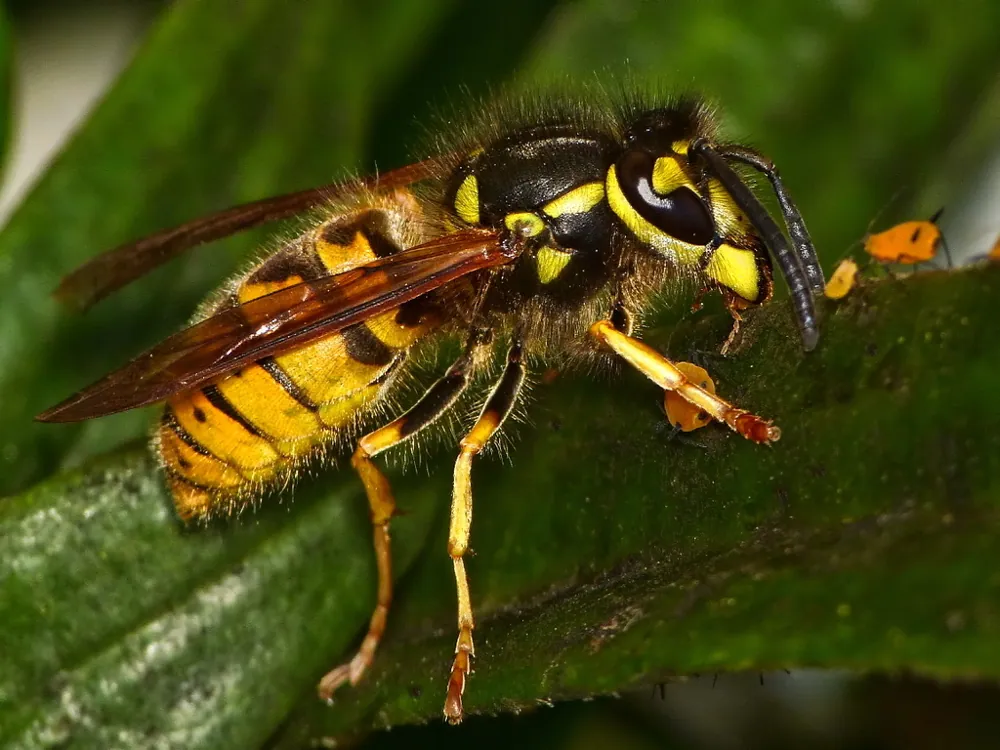
ÌtaniThe German wasp is a black and yellow social wasp that lives in colonies. It is native to Europe, Northern Africa and temperate Asia, but it has spread to many other parts of the world. Because it competes with local wildlife, it is treated as a pest in most areas outside its native range.1


 Bí o ṣe lè dá a mọ̀
- About 13 mm long, with typical wasp colours of black and yellow1
- Workers have three tiny black dots on the clypeus (the front part of the head, between the eyes and mouthparts)1
- Black marks on the abdomen are highly variable, so they are not a reliable way to identify it1
- Grey paper nests, often in the soil or in attics1
A sábà máa ń ṣì í mọ̀ sí: The German wasp is very similar to the common wasp (Vespula vulgaris). Unlike the common wasp, it has three tiny black dots on the clypeus, but this only applies to workers. In males, the normally unbroken black mark on the common wasp's clypeus can look broken, which makes it hard to tell the two apart. Members of Vespula are also often confused with the paper wasp Polistes dominula.1
Agbára oró
Oró ń jáde láti inú ohun ìtani.
Báwo ló ṣe léwu tó fún ènìyàn?
Ewu fún ènìyàn: Ó ń dunniÓ lè dunni gan-an, ṣùgbọ́n kì í fẹ́rẹ̀ẹ́ le rárá. Bí ó bá ta ni
- Ha ẹ̀gún ìtani oyin jáde kí o sì tu ibẹ̀ lára.
- Bí ẹni náà bá ń mí pẹ̀lú ìṣòro, tí ojú tàbí ọ̀fun rẹ̀ wú, tàbí tí ó ń fẹ́ dákú, pàjáwìrì àléjì ni: pe nọ́ńbà pàjáwìrì rẹ kí o sì lo kálámù abẹ́rẹ́ adrenaline rẹ̀ (auto-injector) bí ó bá ní ọ̀kan.
Máa kọ́kọ́ pe nọ́ńbà pàjáwìrì rẹ nígbà gbogbo (112, 000, 911). Èyí jẹ́ ìtọ́sọ́nà ìtọ́jú àkọ́kọ́ gbogbogbò, kì í ṣe ìmọ̀ràn ìṣègùn. Ìpìlẹ̀ ìtọ́jú àkọ́kọ́
 Wà láìléwu
- Má ṣe fọwọ́ kan, mú tàbí yọ ẹranko igbó lẹ́nu láéláé, kódà bí ó bá kéré, kódà bí ó bá dà bí ẹni pé ó ń sùn tàbí ó ti kú.
- Fún un ní àyè. Bí o bá pàdé ọ̀kan, farabalẹ̀, sẹ́yìn díẹ̀díẹ̀ kí o sì jẹ́ kí ó máa bá ọ̀nà rẹ̀ lọ.
- Bí ọ̀kan bá ta ọ́: farabalẹ̀, má ṣe mira, pe nọ́ńbà pàjáwìrì rẹ (112, 000, 911) tàbí lọ sí ilé ìwòsàn kíákíá. Rántí bí ó ṣe rí, fọ́tò máa ń ṣèrànwọ́.
Kò wá ọ kiri láti ṣe ọ́ léṣe. Ó ń lo oró rẹ̀ láti mú oúnjẹ tàbí láti dáàbò bo ara rẹ̀, ó sì fẹ́ràn láti farapamọ́ jù. Sí i nípa wíwà láìléwu
Báwo ló ṣe tóbi tó?
Báwo ló ṣe gùn tó?
Báwo ló ṣe wúwo tó?
 ó kéré débi pé ó lè jókòó lórí èékánná rẹ
 ó fúyẹ́ débi pé o kò ní mọ̀ ọ́n lára lọ́wọ́ rẹ
 lè fò kọjá gbogbo pápá bọ́ọ̀lù ní ìṣẹ́jú-àáyá 16
Báwo ni German wasp ṣe tóbi tó tí a bá fi wé ÌWỌ?
Ìṣirò nìkan nínú bráwúsà rẹ. A kò fi ohunkóhun pamọ́, a kò sì fi ránṣẹ́ sí ibikíbi.
Báwo ló ṣe yára tó?


Òtítọ́
German wasps are invasive. They have spread to many continents and are especially successful at colonising new areas.1
They can outcompete many other animals for food, which has caused considerable harm to native wildlife where they have invaded.1
Female bee moths (Aphomia sociella) sometimes lay eggs in German wasp nests. Their larvae feed on the eggs, larvae and pupae, and can destroy large parts of the nest.1
In Australia, nests can grow very large and some survive the winter. In England, none of the nests in the study survive the winter.1
Queens mate with between one and seven males, and workers can lay eggs, although worker policing keeps most of their sons from reaching adulthood.1
Colonies grow rapidly over summer, with a large increase in worker numbers and nest size. In late summer, the colony focuses on producing new queens and males.1
Olùfọ́ àròsọ
Àròsọ: German wasps are paper wasps because they build grey paper nests.
Òtítọ́: The name is used by mistake. Strictly speaking, paper wasps belong to the subfamily Polistinae, while German wasps belong to the genus Vespula.1
Fún àwọn amòye oró
- Orúkọ sáyẹ́ǹsì
- Vespula germanica
- Ẹgbẹ́
- Oyin, agbọ́n àti agbọ́n ńlá
- Ìdílé
- Vespidae2
- Ètò
- Hymenoptera
- Àwọn kọ́ńtínẹ́ńtì
- Yúróòpù, Éṣíà, Áfíríkà
- Àwọn ọmọ
- A single queen starts a nest in spring and lays eggs in hexagonal cells, with one wasp developing in each cell through the egg, larva and pupa stages.1
- Ewu fún ènìyàn
- 2 / 5: Ó ń dunni3
Ibi tí àwọn òtítọ́ ti wá
- Vespula germanica (Wikipedia (CC BY-SA 4.0))
- Vespula germanica (iNaturalist): orúkọ àti ìpínsísọ̀rí.
- Venom Wiki: ìpele ewu, ìtóbi déédé àti àfojúbù ìyára jẹ́ tiwa. Wo bí a ṣe ń ṣírò wọn: Bí a ṣe ń díwọ̀n ewu.
Gbogbo òtítọ́ ojú-ìwé yìí ní nọ́ńbà tó tọ́ka sí orísun rẹ̀. Bí a bá ṣe àṣìṣe, má bínú, olólùfẹ́ ẹranko ni wá, kì í ṣe ìwé ìròyìn sáyẹ́ǹsì. Sọ fún wa ní [email protected] a ó sì tún un ṣe.
 Ebi ń pa àkekèé! Iṣẹ́ akanṣe ẹnì kan ṣoṣo ni Venom Wiki: ọ̀fẹ́ ni, kò sí ìpolówó, kò sì sí olùtọpinpin. Ẹ̀bùn kékeré ń ràn án lọ́wọ́ láti wà lórí íńtánẹ́ẹ̀tì.Bọ́ àkekèé
Sí i láti inú ẹgbẹ́ kan náà: Oyin, agbọ́n àti agbọ́n ńlá
 Asian giant hornetOyin, agbọ́n àti agbọ́n ńláÓ lè pani
 Common waspOyin, agbọ́n àti agbọ́n ńláÓ kàn ń dunni
 European hornetOyin, agbọ́n àti agbọ́n ńláÓ kàn ń dunni
 Western honey beeOyin, agbọ́n àti agbọ́n ńláÓ kàn ń dunni
 Giant honey beeOyin, agbọ́n àti agbọ́n ńláÓ nílò dókítà
 Asian hornetOyin, agbọ́n àti agbọ́n ńláÓ kàn ń dunni
Ó tún ń gbé ní: Yúróòpù
 Common European adderViper àti paramọ́lẹ̀Ó nílò dókítà
 Spanish flyÀwọn ẹranko onímájèlé mìírànÓ nílò dókítàMá ṣe fọwọ́ kàn án
 Fire salamanderÀkèré onímájèlé, ọ̀pọ̀lọ́ àti newtÓ kàn ń dunniMá ṣe fọwọ́ kàn án
 Blunt-nosed viperViper àti paramọ́lẹ̀Ó lè pani
 Nose-horned viperViper àti paramọ́lẹ̀Ó lè pani
 Ottoman viperViper àti paramọ́lẹ̀Ó lè pani