
 Áfíríkà
 Éṣíà
Éṣíà Yúróòpù
 Gúúsù Amẹ́ríkà
 Ọsirélíà àti Òṣéáníà
 Antáktíkà
 Òkun Pàsífíìkì
 Òkun Àtìláńtíìkì
 Òkun Íńdíà
 Òkun Áktíkì
 Òkun Mẹditaréníà
 Òkun Pupa
 Òkun Káríbíànù
 Òkun Coral
 Òkun Gúúsù Ṣáínà
 Òkun Fílípínì
 Òkun Andaman
 Òkun Àríwá
 Òkun Tímọ̀ àti Òkun Àráfúrà
 Ìyawọlẹ̀ Òkun Bẹ̀ngál
 Ìyawọlẹ̀ Òkun Kalifọ́níà
Javan slow loris
 Ìbùjẹ
ÌbùjẹThe Javan slow loris is a small, slow-moving primate that lives only on the western and central parts of the island of Java in Indonesia. It moves through the trees at night, creeping along vines and branches rather than leaping. It is critically endangered, mainly because it is captured for the pet trade.1



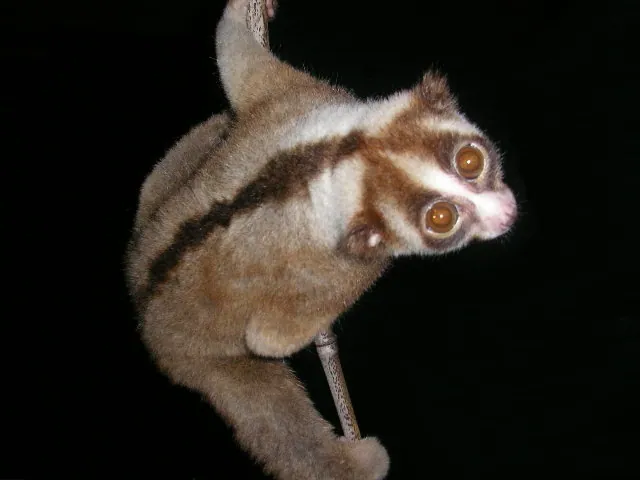
 Bí o ṣe lè dá a mọ̀
- A distinct white diamond pattern on the forehead, made by a stripe that runs over the head and forks towards the eyes and ears1
- Yellowish-grey body with cream-coloured head, neck and shoulders1
- Weighs between 565 and 687 g, with a head-body length of about 29 cm1
- Moves slowly through vines and lianas rather than jumping between trees, and is active at night1
A sábà máa ń ṣì í mọ̀ sí: It closely resembles the Bengal slow loris, which is similar in appearance, and the Sunda slow loris, which it was long considered a subspecies of. Rescue centres have sometimes misidentified it. It is larger than both the Sunda and Bornean slow lorises.1
Agbára oró
Oró ń jáde láti inú eyín oró tàbí eyín rẹ̀ nígbà tí ó bá bùjẹ.
Báwo ló ṣe léwu tó fún ènìyàn?
Ewu fún ènìyàn: Ó ń dunniÓ lè dunni gan-an, ṣùgbọ́n kì í fẹ́rẹ̀ẹ́ le rárá. Bí ó bá bùjẹ
- Fọ ọgbẹ́ náà dáadáa kí o sì wá ìrànlọ́wọ́ ìṣègùn.
Máa kọ́kọ́ pe nọ́ńbà pàjáwìrì rẹ nígbà gbogbo (112, 000, 911). Èyí jẹ́ ìtọ́sọ́nà ìtọ́jú àkọ́kọ́ gbogbogbò, kì í ṣe ìmọ̀ràn ìṣègùn. Ìpìlẹ̀ ìtọ́jú àkọ́kọ́
 Wà láìléwu
- Má ṣe fọwọ́ kan, mú tàbí yọ ẹranko igbó lẹ́nu láéláé, kódà bí ó bá kéré, kódà bí ó bá dà bí ẹni pé ó ń sùn tàbí ó ti kú.
- Fún un ní àyè. Bí o bá pàdé ọ̀kan, farabalẹ̀, sẹ́yìn díẹ̀díẹ̀ kí o sì jẹ́ kí ó máa bá ọ̀nà rẹ̀ lọ.
- Bí ọ̀kan bá bù ọ́ jẹ: farabalẹ̀, má ṣe mira, pe nọ́ńbà pàjáwìrì rẹ (112, 000, 911) tàbí lọ sí ilé ìwòsàn kíákíá. Rántí bí ó ṣe rí, fọ́tò máa ń ṣèrànwọ́.
Kò wá ọ kiri láti ṣe ọ́ léṣe. Ó ń lo oró rẹ̀ láti mú oúnjẹ tàbí láti dáàbò bo ara rẹ̀, ó sì fẹ́ràn láti farapamọ́ jù. Sí i nípa wíwà láìléwu
Báwo ló ṣe tóbi tó?
Báwo ló ṣe gùn tó?
Báwo ló ṣe wúwo tó?

 ó gùn tó bíríkì ìṣeré 9 tí a tò sí ìlà kan
 lè sáré mítà 100 ní ìṣẹ́jú-àáyá 180 (ènìyàn tó yára jùlọ nílò 9.6)
Báwo ni Javan slow loris ṣe tóbi tó tí a bá fi wé ÌWỌ?
Ìṣirò nìkan nínú bráwúsà rẹ. A kò fi ohunkóhun pamọ́, a kò sì fi ránṣẹ́ sí ibikíbi.
Báwo ló ṣe yára tó?


Òtítọ́
Local farmers have helped maintain mid-air walkways that conservationists built so the lorises can cross between treetops in cleared farmland. These walkways also serve as irrigation pipes.1
Unlike most primates, it sleeps curled up on exposed branches rather than in nest holes.1
It is the largest of the slow lorises found in Indonesia.1
It can move on the ground to cross open spaces in disturbed habitat.1
Olùfọ́ àròsọ
Àròsọ: It has magical and curative properties.
Òtítọ́: This is a myth. Even so, it is still sometimes used in traditional medicine in Indonesia, which adds to the pressure on the species.1
Ibi tí àwọn òtítọ́ ti wá
- Javan slow loris (Wikipedia (CC BY-SA 4.0))
- Nycticebus javanicus (iNaturalist): orúkọ àti ìpínsísọ̀rí.
- Venom Wiki: ìpele ewu, ìtóbi déédé àti àfojúbù ìyára jẹ́ tiwa. Wo bí a ṣe ń ṣírò wọn: Bí a ṣe ń díwọ̀n ewu.
Gbogbo òtítọ́ ojú-ìwé yìí ní nọ́ńbà tó tọ́ka sí orísun rẹ̀. Bí a bá ṣe àṣìṣe, má bínú, olólùfẹ́ ẹranko ni wá, kì í ṣe ìwé ìròyìn sáyẹ́ǹsì. Sọ fún wa ní [email protected] a ó sì tún un ṣe.
 Ebi ń pa àkekèé! Iṣẹ́ akanṣe ẹnì kan ṣoṣo ni Venom Wiki: ọ̀fẹ́ ni, kò sí ìpolówó, kò sì sí olùtọpinpin. Ẹ̀bùn kékeré ń ràn án lọ́wọ́ láti wà lórí íńtánẹ́ẹ̀tì.Bọ́ àkekèé
Sí i láti inú ẹgbẹ́ kan náà: Ẹranko afọmúbọ́mọ olóró
 Bengal slow lorisẸranko afọmúbọ́mọ olóróÓ kàn ń dunni
 Pygmy slow lorisẸranko afọmúbọ́mọ olóróÓ kàn ń dunni
 Sunda slow lorisẸranko afọmúbọ́mọ olóróÓ kàn ń dunni
 Kayan River slow lorisẸranko afọmúbọ́mọ olóróÓ kàn ń dunni
 Philippine slow lorisẸranko afọmúbọ́mọ olóróÓ kàn ń dunni
 Eurasian water shrewẸranko afọmúbọ́mọ olóróAláìléwu
 Deathstalker
 Indian cobra
 Indian saw-scaled viper
 King cobra
 Puff adder
 Paramọlẹ Russell