
 Áfíríkà
 Éṣíà
Éṣíà Yúróòpù
 Gúúsù Amẹ́ríkà
 Ọsirélíà àti Òṣéáníà
 Antáktíkà
 Òkun Pàsífíìkì
 Òkun Àtìláńtíìkì
 Òkun Íńdíà
 Òkun Áktíkì
 Òkun Mẹditaréníà
 Òkun Pupa
 Òkun Káríbíànù
 Òkun Coral
 Òkun Gúúsù Ṣáínà
 Òkun Fílípínì
 Òkun Andaman
 Òkun Àríwá
 Òkun Tímọ̀ àti Òkun Àráfúrà
 Ìyawọlẹ̀ Òkun Bẹ̀ngál
 Ìyawọlẹ̀ Òkun Kalifọ́níà
Large velvet ant
 Ìtani
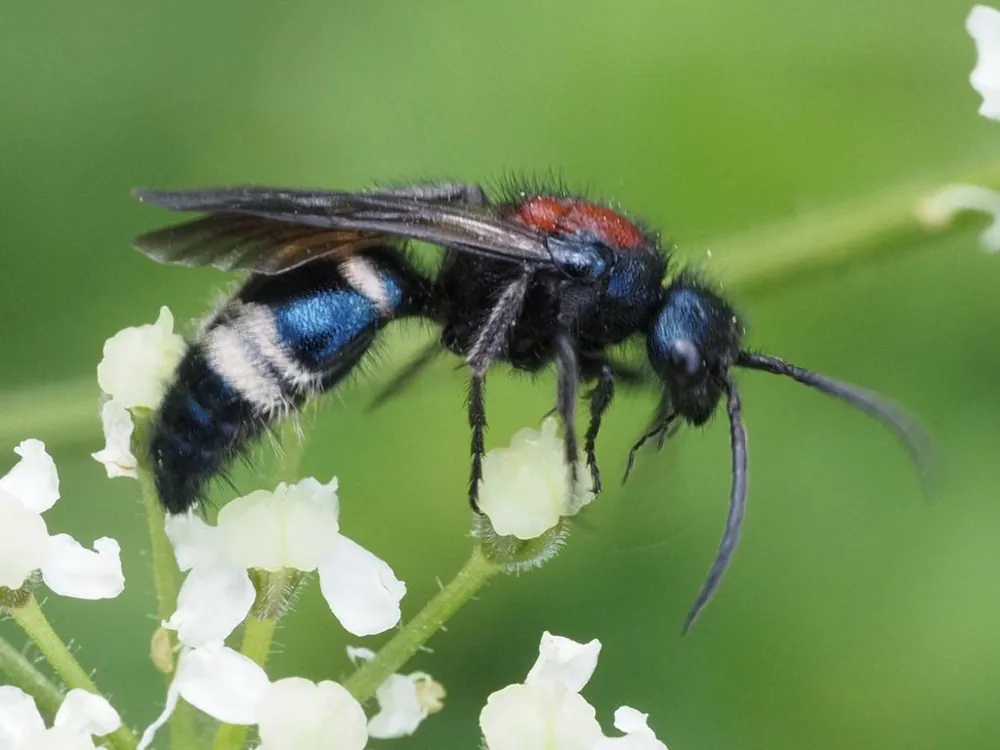
ÌtaniThe large velvet ant is not really an ant. It is a wasp, and the females have no wings and look like fuzzy ants. It lives in parts of Europe, Asia and North Africa, in heaths, moors, grasslands and woodland. Its sting is painful, but it is not aggressive.1


 Bí o ṣe lè dá a mọ̀
- Males are dark red on the tip of the mandibles (jaws) and on the thorax.1
- The first and second segments of the abdomen have bands of long silver bristles.1
- The tip of the abdomen and much of the body are covered in long black bristles.1
- Females have a red mesonotum (the upper middle part of the thorax) and silver-spotted flanks along the abdomen.1
- Some males are completely black, and colour varies between individuals.1
Agbára oró
Oró ń jáde láti inú ohun ìtani.
Kí ni oró rẹ̀ máa ń ṣe?
The sting is painful. Its venom is much less toxic than the venom of a honeybee.1
Báwo ló ṣe léwu tó fún ènìyàn?
Ewu fún ènìyàn: Ó ń dunniÓ lè dunni gan-an, ṣùgbọ́n kì í fẹ́rẹ̀ẹ́ le rárá.The wasp is not aggressive and only stings people when handled. Its sting is painful but less toxic than a honeybee's.1
Kí ni ó máa ń ṣe nígbà tí ẹ̀rù bá bà á?
When threatened, it stridulates by rubbing a raised structure called the plectrum over ridges on its abdomen, which makes a sound.1
 Bí ó bá ta ni
- Ha ẹ̀gún ìtani oyin jáde kí o sì tu ibẹ̀ lára.
- Bí ẹni náà bá ń mí pẹ̀lú ìṣòro, tí ojú tàbí ọ̀fun rẹ̀ wú, tàbí tí ó ń fẹ́ dákú, pàjáwìrì àléjì ni: pe nọ́ńbà pàjáwìrì rẹ kí o sì lo kálámù abẹ́rẹ́ adrenaline rẹ̀ (auto-injector) bí ó bá ní ọ̀kan.
Máa kọ́kọ́ pe nọ́ńbà pàjáwìrì rẹ nígbà gbogbo (112, 000, 911). Èyí jẹ́ ìtọ́sọ́nà ìtọ́jú àkọ́kọ́ gbogbogbò, kì í ṣe ìmọ̀ràn ìṣègùn. Ìpìlẹ̀ ìtọ́jú àkọ́kọ́
 Wà láìléwu
- Má ṣe fọwọ́ kan, mú tàbí yọ ẹranko igbó lẹ́nu láéláé, kódà bí ó bá kéré, kódà bí ó bá dà bí ẹni pé ó ń sùn tàbí ó ti kú.
- Fún un ní àyè. Bí o bá pàdé ọ̀kan, farabalẹ̀, sẹ́yìn díẹ̀díẹ̀ kí o sì jẹ́ kí ó máa bá ọ̀nà rẹ̀ lọ.
- Bí ọ̀kan bá ta ọ́: farabalẹ̀, má ṣe mira, pe nọ́ńbà pàjáwìrì rẹ (112, 000, 911) tàbí lọ sí ilé ìwòsàn kíákíá. Rántí bí ó ṣe rí, fọ́tò máa ń ṣèrànwọ́.
Kò wá ọ kiri láti ṣe ọ́ léṣe. Ó ń lo oró rẹ̀ láti mú oúnjẹ tàbí láti dáàbò bo ara rẹ̀, ó sì fẹ́ràn láti farapamọ́ jù. Sí i nípa wíwà láìléwu
Báwo ló ṣe tóbi tó?
Báwo ló ṣe gùn tó?
 ó kéré débi pé ó lè jókòó lórí èékánná rẹ
Báwo ni Large velvet ant ṣe tóbi tó tí a bá fi wé ÌWỌ?
Ìṣirò nìkan nínú bráwúsà rẹ. A kò fi ohunkóhun pamọ́, a kò sì fi ránṣẹ́ sí ibikíbi.
Báwo ló ṣe yára tó?


Òtítọ́
Their thick, armoured skin is so strong that related species in North America have been reported to escape from the mouths of lizards and frogs.1
Females can sneak into the nests of paper wasps and steal their food stores, possibly because they can disguise their scent so the paper wasps cannot detect them.1
The size of the adult wasp depends partly on the size of its host: wasps raised in honeybees are smaller than those raised in bumblebees.1
Females are wingless, but males have wings.1
Males die soon after emerging in autumn, while females hibernate over winter, sometimes in the host nest or at the roots of low plants.1
Olùfọ́ àròsọ
Àròsọ: The nickname "cow killer" means the sting can kill cows.
Òtítọ́: The nickname is inappropriate. Its sting is painful, but its venom is much less toxic than a honeybee's, and it is not aggressive.1
Ibi tí àwọn òtítọ́ ti wá
- Mutilla europaea (Wikipedia (CC BY-SA 4.0))
- Mutilla europaea (iNaturalist): orúkọ àti ìpínsísọ̀rí.
- Venom Wiki: ìpele ewu, ìtóbi déédé àti àfojúbù ìyára jẹ́ tiwa. Wo bí a ṣe ń ṣírò wọn: Bí a ṣe ń díwọ̀n ewu.
Gbogbo òtítọ́ ojú-ìwé yìí ní nọ́ńbà tó tọ́ka sí orísun rẹ̀. Bí a bá ṣe àṣìṣe, má bínú, olólùfẹ́ ẹranko ni wá, kì í ṣe ìwé ìròyìn sáyẹ́ǹsì. Sọ fún wa ní [email protected] a ó sì tún un ṣe.
 Ebi ń pa àkekèé! Iṣẹ́ akanṣe ẹnì kan ṣoṣo ni Venom Wiki: ọ̀fẹ́ ni, kò sí ìpolówó, kò sì sí olùtọpinpin. Ẹ̀bùn kékeré ń ràn án lọ́wọ́ láti wà lórí íńtánẹ́ẹ̀tì.Bọ́ àkekèé
Sí i láti inú ẹgbẹ́ kan náà: Oyin, agbọ́n àti agbọ́n ńlá
 Asian giant hornetOyin, agbọ́n àti agbọ́n ńláÓ lè pani
 Common waspOyin, agbọ́n àti agbọ́n ńláÓ kàn ń dunni
 European hornetOyin, agbọ́n àti agbọ́n ńláÓ kàn ń dunni
 Western honey beeOyin, agbọ́n àti agbọ́n ńláÓ kàn ń dunni
 Giant honey beeOyin, agbọ́n àti agbọ́n ńláÓ nílò dókítà
 Asian hornetOyin, agbọ́n àti agbọ́n ńláÓ kàn ń dunni
Ó tún ń gbé ní: Yúróòpù
 Common European adderViper àti paramọ́lẹ̀Ó nílò dókítà
 Spanish flyÀwọn ẹranko onímájèlé mìírànÓ nílò dókítàMá ṣe fọwọ́ kàn án
 Fire salamanderÀkèré onímájèlé, ọ̀pọ̀lọ́ àti newtÓ kàn ń dunniMá ṣe fọwọ́ kàn án
 Blunt-nosed viperViper àti paramọ́lẹ̀Ó lè pani
 Nose-horned viperViper àti paramọ́lẹ̀Ó lè pani
 Ottoman viperViper àti paramọ́lẹ̀Ó lè pani