
 Áfíríkà
 Éṣíà
Éṣíà Yúróòpù
 Gúúsù Amẹ́ríkà
 Ọsirélíà àti Òṣéáníà
 Antáktíkà
 Òkun Pàsífíìkì
 Òkun Àtìláńtíìkì
 Òkun Íńdíà
 Òkun Áktíkì
 Òkun Mẹditaréníà
 Òkun Pupa
 Òkun Káríbíànù
 Òkun Coral
 Òkun Gúúsù Ṣáínà
 Òkun Fílípínì
 Òkun Andaman
 Òkun Àríwá
 Òkun Tímọ̀ àti Òkun Àráfúrà
 Ìyawọlẹ̀ Òkun Bẹ̀ngál
 Ìyawọlẹ̀ Òkun Kalifọ́níà
Oriental hornet
 Ìtani
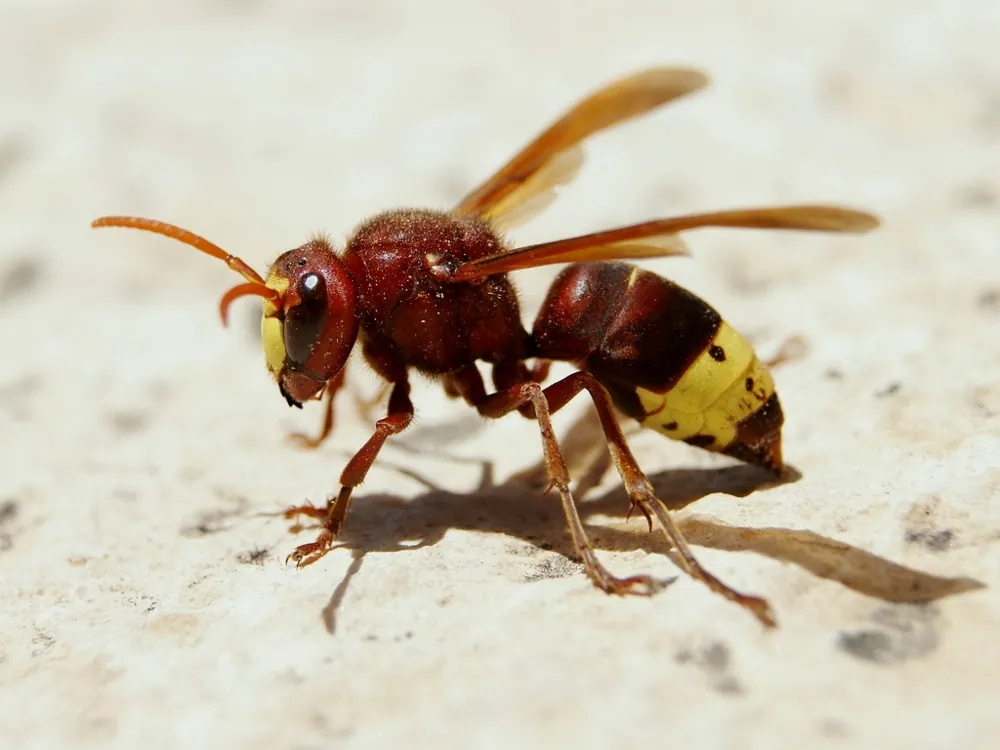
ÌtaniThe Oriental hornet is a large social wasp that lives in colonies of thousands of insects, led by a single queen. It lives in parts of Southwest Asia, Northeast Africa, the Middle East and Southern Europe, and it is one of the main pests of honey bees. Its sting can be very painful.1



 Bí o ṣe lè dá a mọ̀
- Reddish-brown body1
- Thick yellow bands across the abdomen1
- Yellow patches on the head between the eyes1
- Body 25 to 35 mm long; the queen and drones are larger than workers1
- Very strong jaws, and will bite if provoked1
A sábà máa ń ṣì í mọ̀ sí: It looks similar to the European hornet (Vespa crabro). The Asian giant hornet of East Asia should not be confused with it. Males (drones) have 13 antenna segments, while workers and the queen have 12.1
Agbára oró
Oró ń jáde láti inú ohun ìtani.
Kí ni oró rẹ̀ máa ń ṣe?
The sting is quite painful to people. Some people are allergic to these stings. Tests on the venom showed that it slowed the growth of some Gram-positive bacteria, a group of bacteria, so it may be useful as a medicine.1
Báwo ló ṣe léwu tó fún ènìyàn?
Ewu fún ènìyàn: Ó ń dunniÓ lè dunni gan-an, ṣùgbọ́n kì í fẹ́rẹ̀ẹ́ le rárá.The sting can be quite painful, and some people are allergic to it.1
Kí ni ó máa ń ṣe nígbà tí ẹ̀rù bá bà á?
Workers defend the colony, and will bite if provoked.1
 Bí ó bá ta ni
- Ha ẹ̀gún ìtani oyin jáde kí o sì tu ibẹ̀ lára.
- Bí ẹni náà bá ń mí pẹ̀lú ìṣòro, tí ojú tàbí ọ̀fun rẹ̀ wú, tàbí tí ó ń fẹ́ dákú, pàjáwìrì àléjì ni: pe nọ́ńbà pàjáwìrì rẹ kí o sì lo kálámù abẹ́rẹ́ adrenaline rẹ̀ (auto-injector) bí ó bá ní ọ̀kan.
Máa kọ́kọ́ pe nọ́ńbà pàjáwìrì rẹ nígbà gbogbo (112, 000, 911). Èyí jẹ́ ìtọ́sọ́nà ìtọ́jú àkọ́kọ́ gbogbogbò, kì í ṣe ìmọ̀ràn ìṣègùn. Ìpìlẹ̀ ìtọ́jú àkọ́kọ́
 Wà láìléwu
- Má ṣe fọwọ́ kan, mú tàbí yọ ẹranko igbó lẹ́nu láéláé, kódà bí ó bá kéré, kódà bí ó bá dà bí ẹni pé ó ń sùn tàbí ó ti kú.
- Fún un ní àyè. Bí o bá pàdé ọ̀kan, farabalẹ̀, sẹ́yìn díẹ̀díẹ̀ kí o sì jẹ́ kí ó máa bá ọ̀nà rẹ̀ lọ.
- Bí ọ̀kan bá ta ọ́: farabalẹ̀, má ṣe mira, pe nọ́ńbà pàjáwìrì rẹ (112, 000, 911) tàbí lọ sí ilé ìwòsàn kíákíá. Rántí bí ó ṣe rí, fọ́tò máa ń ṣèrànwọ́.
Kò wá ọ kiri láti ṣe ọ́ léṣe. Ó ń lo oró rẹ̀ láti mú oúnjẹ tàbí láti dáàbò bo ara rẹ̀, ó sì fẹ́ràn láti farapamọ́ jù. Sí i nípa wíwà láìléwu
Báwo ló ṣe tóbi tó?
Báwo ló ṣe gùn tó?
 ó gùn tó pínì ìwé (paper clip)
 lè fò kọjá gbogbo pápá bọ́ọ̀lù ní ìṣẹ́jú-àáyá 12
Báwo ni Oriental hornet ṣe tóbi tó tí a bá fi wé ÌWỌ?
Ìṣirò nìkan nínú bráwúsà rẹ. A kò fi ohunkóhun pamọ́, a kò sì fi ránṣẹ́ sí ibikíbi.
Báwo ló ṣe yára tó?


Òtítọ́
The yellow stripe on its exoskeleton can absorb sunlight and generate a small electrical potential, which may help supply energy for digging.1
A 2024 study found that hornets fed sugary solutions containing up to 80% ethanol for a week showed no harmful effects on behaviour or lifespan. Most animals tolerate only up to 4%.1
It is the primary pest that attacks honey bee colonies in many countries.1
It is the only member of the genus Vespa that lives in desert climates, such as those in North Africa and the Middle East.1
Unlike most wasps, which are most active early in the morning, it is most active in the middle of the day.1
Its sisters are closely related, with each worker on average 75% related to her sisters, so workers help raise the colony's young.1
Fún àwọn amòye oró
Ibi tí àwọn òtítọ́ ti wá
- Oriental hornet (Wikipedia (CC BY-SA 4.0))
- Vespa orientalis (iNaturalist): orúkọ àti ìpínsísọ̀rí.
- Venom Wiki: ìpele ewu, ìtóbi déédé àti àfojúbù ìyára jẹ́ tiwa. Wo bí a ṣe ń ṣírò wọn: Bí a ṣe ń díwọ̀n ewu.
Gbogbo òtítọ́ ojú-ìwé yìí ní nọ́ńbà tó tọ́ka sí orísun rẹ̀. Bí a bá ṣe àṣìṣe, má bínú, olólùfẹ́ ẹranko ni wá, kì í ṣe ìwé ìròyìn sáyẹ́ǹsì. Sọ fún wa ní [email protected] a ó sì tún un ṣe.
 Ebi ń pa àkekèé! Iṣẹ́ akanṣe ẹnì kan ṣoṣo ni Venom Wiki: ọ̀fẹ́ ni, kò sí ìpolówó, kò sì sí olùtọpinpin. Ẹ̀bùn kékeré ń ràn án lọ́wọ́ láti wà lórí íńtánẹ́ẹ̀tì.Bọ́ àkekèé
Sí i láti inú ẹgbẹ́ kan náà: Oyin, agbọ́n àti agbọ́n ńlá
 Asian giant hornetOyin, agbọ́n àti agbọ́n ńláÓ lè pani
 Common waspOyin, agbọ́n àti agbọ́n ńláÓ kàn ń dunni
 European hornetOyin, agbọ́n àti agbọ́n ńláÓ kàn ń dunni
 Western honey beeOyin, agbọ́n àti agbọ́n ńláÓ kàn ń dunni
 Giant honey beeOyin, agbọ́n àti agbọ́n ńláÓ nílò dókítà
 Asian hornetOyin, agbọ́n àti agbọ́n ńláÓ kàn ń dunni
Ó tún ń gbé ní: Yúróòpù
 Common European adderViper àti paramọ́lẹ̀Ó nílò dókítà
 Spanish flyÀwọn ẹranko onímájèlé mìírànÓ nílò dókítàMá ṣe fọwọ́ kàn án
 Fire salamanderÀkèré onímájèlé, ọ̀pọ̀lọ́ àti newtÓ kàn ń dunniMá ṣe fọwọ́ kàn án
 Blunt-nosed viperViper àti paramọ́lẹ̀Ó lè pani
 Nose-horned viperViper àti paramọ́lẹ̀Ó lè pani
 Ottoman viperViper àti paramọ́lẹ̀Ó lè pani