
 Áfíríkà
 Éṣíà
Éṣíà Yúróòpù
 Gúúsù Amẹ́ríkà
 Ọsirélíà àti Òṣéáníà
 Antáktíkà
 Òkun Pàsífíìkì
 Òkun Àtìláńtíìkì
 Òkun Íńdíà
 Òkun Áktíkì
 Òkun Mẹditaréníà
 Òkun Pupa
 Òkun Káríbíànù
 Òkun Coral
 Òkun Gúúsù Ṣáínà
 Òkun Fílípínì
 Òkun Andaman
 Òkun Àríwá
 Òkun Tímọ̀ àti Òkun Àráfúrà
 Ìyawọlẹ̀ Òkun Bẹ̀ngál
 Ìyawọlẹ̀ Òkun Kalifọ́níà
Palestine viper
 Ìbùjẹ
ÌbùjẹThe Palestine viper is a venomous snake found in the Levant, the region around the eastern Mediterranean. It is considered a leading cause of snakebite within its range, so knowing what it looks like is important. It is also special because it lays eggs, unlike most other vipers.1
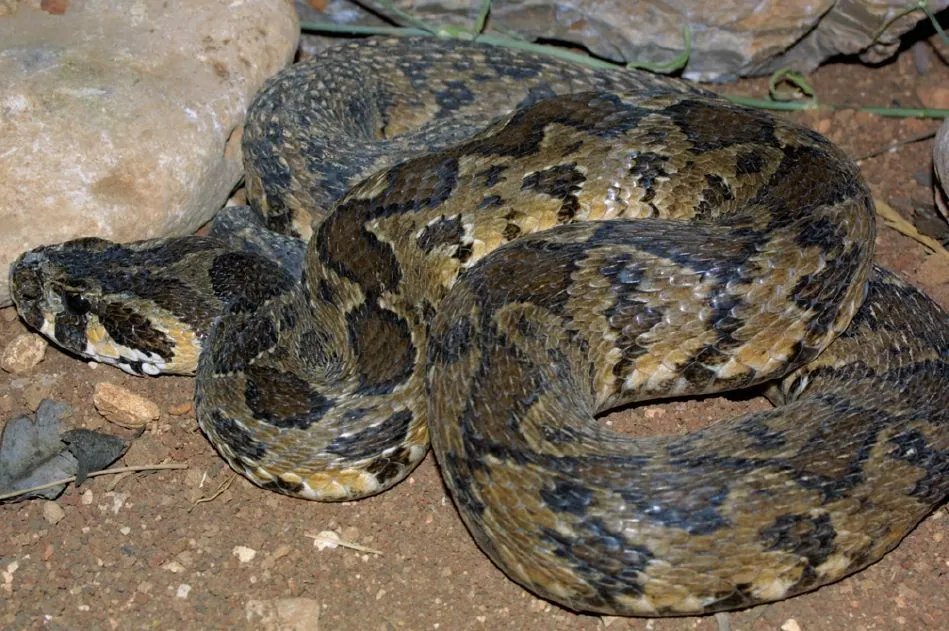
 Bí o ṣe lè dá a mọ̀
- The head is triangular and clearly separate from the neck, covered in small scales.1
- The upper body has large dark, diamond-shaped (rhomboid) blotches, sometimes forming a zig-zag pattern.1
- It usually measures 70 to 90 cm in total length (body plus tail), and can reach 130 cm.1
A sábà máa ń ṣì í mọ̀ sí: The harmless coin-marked snake lives in the same areas and is similar in length, colouring and defensive behaviour, so people often confuse the two. This resemblance is probably a case of Batesian mimicry, where a harmless animal copies a dangerous one.1
Agbára oró
Oró ń jáde láti inú eyín oró tàbí eyín rẹ̀ nígbà tí ó bá bùjẹ.
Kí ni oró rẹ̀ máa ń ṣe?
Its venom contains several groups of active compounds, including neurotoxins (which attack the nerves) and hemorrhagins (which damage blood vessels and cause bleeding). Other compounds include angioneurin growth factors and integrin inhibitors. Its LD50, a standard measure of how toxic a venom is, is 0.34 mg/kg.1
Báwo ló ṣe léwu tó fún ènìyàn?
Ewu fún ènìyàn: Ó léwu gan-anÓ lè pa ènìyàn tí kò bá rí ìtọ́jú.It is considered a leading cause of snakebite within its range. About 0.5% to 2% of people who are bitten die. At least 7 people are reported to have died from its bite in Israel in the 21st century so far.1
 Ìròyìn ayọ̀: àwọn dókítà ní oògùn (antivenom) tàbí ìtọ́jú fún èyí.1
 Bí ó bá bùjẹ
- Jẹ́ kí ẹni náà wà láìmira kí ó sì farabalẹ̀, jẹ́ kí apá tàbí ẹsẹ̀ tí ó bù jẹ wà ní ìpele ọkàn, yọ òrùka àti àwọn nǹkan tó há, kí ẹ sì lọ sí ilé ìwòsàn kíákíá.
Máa kọ́kọ́ pe nọ́ńbà pàjáwìrì rẹ nígbà gbogbo (112, 000, 911). Èyí jẹ́ ìtọ́sọ́nà ìtọ́jú àkọ́kọ́ gbogbogbò, kì í ṣe ìmọ̀ràn ìṣègùn. Ìpìlẹ̀ ìtọ́jú àkọ́kọ́
 Wà láìléwu
- Má ṣe fọwọ́ kan, mú tàbí yọ ẹranko igbó lẹ́nu láéláé, kódà bí ó bá kéré, kódà bí ó bá dà bí ẹni pé ó ń sùn tàbí ó ti kú.
- Fún un ní àyè. Bí o bá pàdé ọ̀kan, farabalẹ̀, sẹ́yìn díẹ̀díẹ̀ kí o sì jẹ́ kí ó máa bá ọ̀nà rẹ̀ lọ.
- Bí ọ̀kan bá bù ọ́ jẹ: farabalẹ̀, má ṣe mira, pe nọ́ńbà pàjáwìrì rẹ (112, 000, 911) tàbí lọ sí ilé ìwòsàn kíákíá. Rántí bí ó ṣe rí, fọ́tò máa ń ṣèrànwọ́.
Kò wá ọ kiri láti ṣe ọ́ léṣe. Ó ń lo oró rẹ̀ láti mú oúnjẹ tàbí láti dáàbò bo ara rẹ̀, ó sì fẹ́ràn láti farapamọ́ jù. Sí i nípa wíwà láìléwu
Báwo ló ṣe tóbi tó?
Báwo ló ṣe gùn tó?
 ó gùn tó ológbò ilé 2.5 láti imú dé ìrù
 ó gùn tó ọ̀gẹ̀dẹ̀ 7 tí a tò tẹ̀léra
 lè sáré mítà 100 ní ìṣẹ́jú-àáyá 100 (ènìyàn tó yára jùlọ nílò 9.6)
Báwo ni Palestine viper ṣe tóbi tó tí a bá fi wé ÌWỌ?
Ìṣirò nìkan nínú bráwúsà rẹ. A kò fi ohunkóhun pamọ́, a kò sì fi ránṣẹ́ sí ibikíbi.
Báwo ló ṣe yára tó?


Òtítọ́
In the 1991 Gulf War, the code phrase "Nahash Tsefa" (Viper Snake) was broadcast on radio and TV to tell Israelis to put on their gas masks during missile attacks from Iraq.1
In 2018 it was chosen as the national snake of Israel, after a public campaign.1
The Israeli Air Force named its Bell AH-1 Cobra helicopter Tzefa, and the IDF's paratroopers battalion #202 is called the Tzefa Battalion.1
Some modern scholars think the tsefa snake mentioned in the Hebrew Bible is this species.1
A list of venomous snakes in the Brooklyn Papyrus, from the first millennium BC in ancient Egypt, probably includes it.1
Fún àwọn amòye oró
- Orúkọ sáyẹ́ǹsì
- Daboia palaestinae
- Ẹgbẹ́
- Viper àti paramọ́lẹ̀
- Ìdílé
- Viperidae2
- Ètò
- Squamata
- Àwọn kọ́ńtínẹ́ńtì
- Éṣíà
- Àwọn ọmọ
- Unlike most vipers, which give birth to live young, it lays eggs around August. The eggs hatch 1.5 to 2 months later, and the young can already bite and kill prey.1
- Bí ó ṣe ń ṣe nínú igbó
- Least Concern1
- Ewu fún ènìyàn
- 4 / 5: Ó léwu gan-an3
Ibi tí àwọn òtítọ́ ti wá
- Daboia palaestinae (Wikipedia (CC BY-SA 4.0))
- Daboia palaestinae (iNaturalist): orúkọ àti ìpínsísọ̀rí.
- Venom Wiki: ìpele ewu, ìtóbi déédé àti àfojúbù ìyára jẹ́ tiwa. Wo bí a ṣe ń ṣírò wọn: Bí a ṣe ń díwọ̀n ewu.
Gbogbo òtítọ́ ojú-ìwé yìí ní nọ́ńbà tó tọ́ka sí orísun rẹ̀. Bí a bá ṣe àṣìṣe, má bínú, olólùfẹ́ ẹranko ni wá, kì í ṣe ìwé ìròyìn sáyẹ́ǹsì. Sọ fún wa ní [email protected] a ó sì tún un ṣe.
 Ebi ń pa àkekèé! Iṣẹ́ akanṣe ẹnì kan ṣoṣo ni Venom Wiki: ọ̀fẹ́ ni, kò sí ìpolówó, kò sì sí olùtọpinpin. Ẹ̀bùn kékeré ń ràn án lọ́wọ́ láti wà lórí íńtánẹ́ẹ̀tì.Bọ́ àkekèé
 Indian saw-scaled viper
 Puff adder
 Paramọlẹ Russell
 Common European adder
 Eastern Russell's viper
 Northeast African carpet viper
 Deathstalker
 Indian cobra
 King cobra
 Asian giant hornet
 Komodo dragon
 Spanish fly