
 Áfíríkà
 Éṣíà
Éṣíà Yúróòpù
 Gúúsù Amẹ́ríkà
 Ọsirélíà àti Òṣéáníà
 Antáktíkà
 Òkun Pàsífíìkì
 Òkun Àtìláńtíìkì
 Òkun Íńdíà
 Òkun Áktíkì
 Òkun Mẹditaréníà
 Òkun Pupa
 Òkun Káríbíànù
 Òkun Coral
 Òkun Gúúsù Ṣáínà
 Òkun Fílípínì
 Òkun Andaman
 Òkun Àríwá
 Òkun Tímọ̀ àti Òkun Àráfúrà
 Ìyawọlẹ̀ Òkun Bẹ̀ngál
 Ìyawọlẹ̀ Òkun Kalifọ́níà
Yellow-bellied toad
 Májèlé nínú awọ rẹ̀
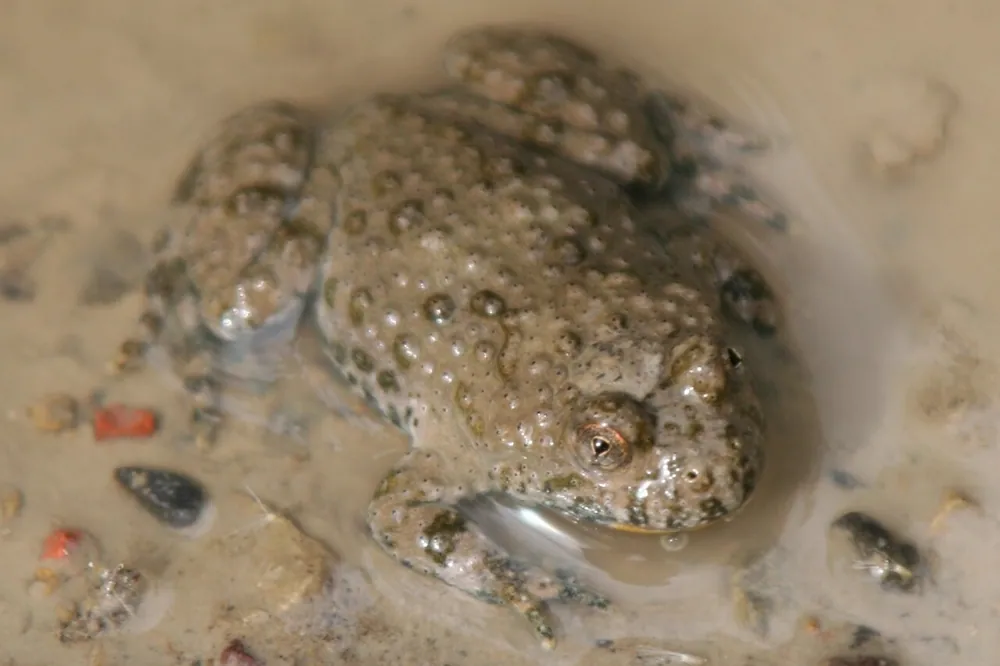
The yellow-bellied toad is a small toad with a bright yellow and black belly that it shows only when it feels threatened. It lives mainly in mountain areas of western Europe. Its skin toxins are not fatal to people, but they can harm smaller animals.1
 Bí o ṣe lè dá a mọ̀
- Grey-brown or dark brown and green upper body, often with faded, bright spots1
- Bright yellow to orange patches on the underside, usually covering more than half of the belly1
- Underside is grey-blue to black-blue between the yellow patches1
- Compact body and a rounded snout1
- Heart-shaped pupils, with the eardrums not visible1
- Warty skin with raised swirls on the back1
A sábà máa ń ṣì í mọ̀ sí: The European fire-bellied toad (Bombina bombina) is a close relative and lives in the same region. The yellow-bellied toad has a more compact body that is not as flat.1
Agbára májèlé
Awọ rẹ̀ ní májèlé. Ó léwu láti fọwọ́ kàn án, lá a tàbí jẹ ẹ́.
Kí ni májèlé rẹ̀ máa ń ṣe?
The toad has toxins in its skin, released through the warts on its back when it is threatened. The toxin is not fatal to humans, but it can cause significant discomfort to most animals and is fatal to smaller ones.1
Báwo ló ṣe léwu tó fún ènìyàn?
Ewu fún ènìyàn: Fúyẹ́Bí ìtani oyin tàbí kò tó bẹ́ẹ̀. Kò fẹ́rẹ̀ẹ́ léwu fún ènìyàn.The toxin is not fatal to humans, although it can still cause discomfort to most animals.1
Kí ni ó máa ń ṣe nígbà tí ẹ̀rù bá bà á?
It stays still and camouflaged most of the time, and when threatened it shows its yellow belly, puffs up its chest and releases toxins from its warts.1
 Bí ẹnìkan bá fọwọ́ kàn án tàbí jẹ ẹ́
- Bí ẹnìkan bá fọwọ́ kan ọ̀kan: fọ ọwọ́ dáadáa, má sì fọwọ́ kan ojú tàbí ẹnu. Bí ọmọdé tàbí ẹran ọ̀sìn bá lá ọ̀kan tàbí jẹ ẹ́: pe ibùdó ìmọ̀ràn májèlé tàbí nọ́ńbà pàjáwìrì.
Máa kọ́kọ́ pe nọ́ńbà pàjáwìrì rẹ nígbà gbogbo (112, 000, 911). Èyí jẹ́ ìtọ́sọ́nà ìtọ́jú àkọ́kọ́ gbogbogbò, kì í ṣe ìmọ̀ràn ìṣègùn. Ìpìlẹ̀ ìtọ́jú àkọ́kọ́
 Wà láìléwu
- Má ṣe fọwọ́ kan, mú tàbí yọ ẹranko igbó lẹ́nu láéláé, kódà bí ó bá kéré, kódà bí ó bá dà bí ẹni pé ó ń sùn tàbí ó ti kú.
- Fún un ní àyè. Bí o bá pàdé ọ̀kan, farabalẹ̀, sẹ́yìn díẹ̀díẹ̀ kí o sì jẹ́ kí ó máa bá ọ̀nà rẹ̀ lọ.
- Bí o bá fọwọ́ kàn án tàbí jẹ ẹ́: má ṣe fọwọ́ pa ojú tàbí ẹnu rẹ, fọ ọwọ́ rẹ kí o sì wá ìrànlọ́wọ́ ìṣègùn.
Kò wá ọ kiri láti ṣe ọ́ léṣe. Májèlé rẹ̀ wà níbẹ̀ kìkì kí ohunkóhun má baà jẹ ẹ́. Sí i nípa wíwà láìléwu
Báwo ló ṣe tóbi tó?
Báwo ló ṣe gùn tó?
Báwo ló ṣe wúwo tó?
 ó kúrú ju ọmọdínrín ìka rẹ lọ
 ó fúyẹ́ débi pé o kò ní mọ̀ ọ́n lára lọ́wọ́ rẹ
 lè sáré mítà 100 ní ìṣẹ́jú-àáyá 180 (ènìyàn tó yára jùlọ nílò 9.6)
Báwo ni Yellow-bellied toad ṣe tóbi tó tí a bá fi wé ÌWỌ?
Ìṣirò nìkan nínú bráwúsà rẹ. A kò fi ohunkóhun pamọ́, a kò sì fi ránṣẹ́ sí ibikíbi.
Báwo ló ṣe yára tó?


Òtítọ́
When a male is threatened or wants to attract a female, he kicks his hind legs into a small pond to make a wave-like pattern. This marks his territory and only works in ponds of a certain depth.1
They can change the shade of their colour to suit lighter or darker surroundings by moving pigment within their cells.1
Yellow-bellied toads breed in unpredictable places, such as shallow pools that can disappear overnight. Within their family, they are the only species that chooses such sites.1
Their life span ranges from 5 to 23 years, and climate plays a large role in how long an individual lives.1
Males have longer forelimbs than females, which is thought to help them during mating and fights with other males.1
Fún àwọn amòye oró
- Orúkọ sáyẹ́ǹsì
- Bombina variegata
- Ẹgbẹ́
- Àkèré onímájèlé, ọ̀pọ̀lọ́ àti newt
- Ìdílé
- Bombinatoridae2
- Ètò
- Anura
- Àwọn kọ́ńtínẹ́ńtì
- Yúróòpù
- Àwọn ọmọ
- Females can lay over 200 eggs at one time, but typically lay about 40. Eggs are laid in ponds, and tadpoles develop rapidly.1
- Bí ó ṣe ń ṣe nínú igbó
- Endangered in Germany1
- Ewu fún ènìyàn
- 1 / 5: Fúyẹ́3
Ibi tí àwọn òtítọ́ ti wá
- Yellow-bellied toad (Wikipedia (CC BY-SA 4.0))
- Bombina variegata (iNaturalist): orúkọ àti ìpínsísọ̀rí.
- Venom Wiki: ìpele ewu, ìtóbi déédé àti àfojúbù ìyára jẹ́ tiwa. Wo bí a ṣe ń ṣírò wọn: Bí a ṣe ń díwọ̀n ewu.
Gbogbo òtítọ́ ojú-ìwé yìí ní nọ́ńbà tó tọ́ka sí orísun rẹ̀. Bí a bá ṣe àṣìṣe, má bínú, olólùfẹ́ ẹranko ni wá, kì í ṣe ìwé ìròyìn sáyẹ́ǹsì. Sọ fún wa ní [email protected] a ó sì tún un ṣe.
 Ebi ń pa àkekèé! Iṣẹ́ akanṣe ẹnì kan ṣoṣo ni Venom Wiki: ọ̀fẹ́ ni, kò sí ìpolówó, kò sì sí olùtọpinpin. Ẹ̀bùn kékeré ń ràn án lọ́wọ́ láti wà lórí íńtánẹ́ẹ̀tì.Bọ́ àkekèé
Sí i láti inú ẹgbẹ́ kan náà: Àkèré onímájèlé, ọ̀pọ̀lọ́ àti newt
 Fire salamanderÀkèré onímájèlé, ọ̀pọ̀lọ́ àti newtÓ kàn ń dunniMá ṣe fọwọ́ kàn án
 Common toadÀkèré onímájèlé, ọ̀pọ̀lọ́ àti newtÓ kàn ń dunniMá ṣe fọwọ́ kàn án
 European fire-bellied toadÀkèré onímájèlé, ọ̀pọ̀lọ́ àti newtAláìléwu
 Iberian ribbed newtÀkèré onímájèlé, ọ̀pọ̀lọ́ àti newtAláìléwu
 Natterjack toadÀkèré onímájèlé, ọ̀pọ̀lọ́ àti newtAláìléwu
 Alpine salamanderÀkèré onímájèlé, ọ̀pọ̀lọ́ àti newtAláìléwu
Ó tún ń gbé ní: Yúróòpù
 Common European adderViper àti paramọ́lẹ̀Ó nílò dókítà
 Spanish flyÀwọn ẹranko onímájèlé mìírànÓ nílò dókítàMá ṣe fọwọ́ kàn án
 Common waspOyin, agbọ́n àti agbọ́n ńláÓ kàn ń dunni
 European hornetOyin, agbọ́n àti agbọ́n ńláÓ kàn ń dunni
 Western honey beeOyin, agbọ́n àti agbọ́n ńláÓ kàn ń dunni
 Blunt-nosed viperViper àti paramọ́lẹ̀Ó lè pani