
 Áfíríkà
 Éṣíà
Éṣíà Yúróòpù
 Gúúsù Amẹ́ríkà
 Ọsirélíà àti Òṣéáníà
 Antáktíkà
 Òkun Pàsífíìkì
 Òkun Àtìláńtíìkì
 Òkun Íńdíà
 Òkun Áktíkì
 Òkun Mẹditaréníà
 Òkun Pupa
 Òkun Káríbíànù
 Òkun Coral
 Òkun Gúúsù Ṣáínà
 Òkun Fílípínì
 Òkun Andaman
 Òkun Àríwá
 Òkun Tímọ̀ àti Òkun Àráfúrà
 Ìyawọlẹ̀ Òkun Bẹ̀ngál
 Ìyawọlẹ̀ Òkun Kalifọ́níà
Common toad
 Májèlé nínú awọ rẹ̀
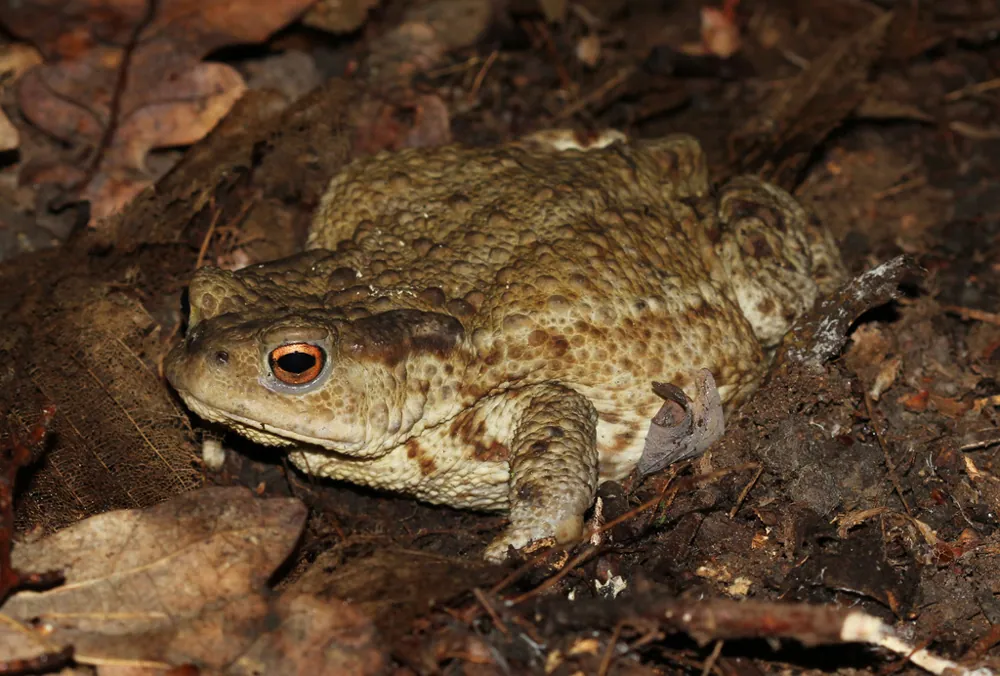
The common toad is a stout, warty toad that lives across most of Europe, in western North Asia and in a small part of northwest Africa. It hides under stones and leaves by day and hunts slugs, beetles and worms at night. Its skin releases a foul-tasting toxin that helps protect it from predators.1
 Bí o ṣe lè dá a mọ̀
- Greyish-brown, olive-brown or brown skin covered in small, wart-like lumps1
- Bulging paratoid glands just behind the eyes, which are a clear sign of a toad1
- Yellow or copper-coloured eyes with horizontal, slit-shaped pupils1
- No tail, no teeth, and no neck visible between the head and body1
- Walks slowly or makes short shuffling hops, rather than leaping1
A sábà máa ń ṣì í mọ̀ sí: The natterjack toad is usually smaller and has a yellow band down its back. The European green toad has a distinctive mottled pattern. The paratoid glands of both of these run parallel to each other, not slanting as in the common toad. The common frog has a less rounded snout, damp smooth skin, and usually leaps.1
Agbára májèlé
Awọ rẹ̀ ní májèlé. Ó léwu láti fọwọ́ kàn án, lá a tàbí jẹ ẹ́.
Kí ni májèlé rẹ̀ máa ń ṣe?
The toad is poisonous rather than venomous, so it does not inject venom. Its paratoid glands and other skin glands secrete a noxious, foul-tasting substance containing bufotoxin, which is enough to deter many predators. Grass snakes seem to be unaffected by it.1
Báwo ló ṣe léwu tó fún ènìyàn?
Ewu fún ènìyàn: Ó ń dunniÓ lè dunni gan-an, ṣùgbọ́n kì í fẹ́rẹ̀ẹ́ le rárá.Kí ni ó máa ń ṣe nígbà tí ẹ̀rù bá bà á?
When attacked, it inflates its body and stands with its hindquarters raised and its head lowered.1
 Bí ẹnìkan bá fọwọ́ kàn án tàbí jẹ ẹ́
- Bí ẹnìkan bá fọwọ́ kan ọ̀kan: fọ ọwọ́ dáadáa, má sì fọwọ́ kan ojú tàbí ẹnu. Bí ọmọdé tàbí ẹran ọ̀sìn bá lá ọ̀kan tàbí jẹ ẹ́: pe ibùdó ìmọ̀ràn májèlé tàbí nọ́ńbà pàjáwìrì.
Máa kọ́kọ́ pe nọ́ńbà pàjáwìrì rẹ nígbà gbogbo (112, 000, 911). Èyí jẹ́ ìtọ́sọ́nà ìtọ́jú àkọ́kọ́ gbogbogbò, kì í ṣe ìmọ̀ràn ìṣègùn. Ìpìlẹ̀ ìtọ́jú àkọ́kọ́
 Wà láìléwu
- Má ṣe fọwọ́ kan, mú tàbí yọ ẹranko igbó lẹ́nu láéláé, kódà bí ó bá kéré, kódà bí ó bá dà bí ẹni pé ó ń sùn tàbí ó ti kú.
- Fún un ní àyè. Bí o bá pàdé ọ̀kan, farabalẹ̀, sẹ́yìn díẹ̀díẹ̀ kí o sì jẹ́ kí ó máa bá ọ̀nà rẹ̀ lọ.
- Bí o bá fọwọ́ kàn án tàbí jẹ ẹ́: má ṣe fọwọ́ pa ojú tàbí ẹnu rẹ, fọ ọwọ́ rẹ kí o sì wá ìrànlọ́wọ́ ìṣègùn.
Kò wá ọ kiri láti ṣe ọ́ léṣe. Májèlé rẹ̀ wà níbẹ̀ kìkì kí ohunkóhun má baà jẹ ẹ́. Sí i nípa wíwà láìléwu
Báwo ló ṣe tóbi tó?
Báwo ló ṣe gùn tó?
 ó gùn tó bíríkì ìṣeré 5 tí a tò sí ìlà kan
 lè sáré mítà 100 ní ìṣẹ́jú-àáyá 180 (ènìyàn tó yára jùlọ nílò 9.6)
Báwo ni Common toad ṣe tóbi tó tí a bá fi wé ÌWỌ?
Ìṣirò nìkan nínú bráwúsà rẹ. A kò fi ohunkóhun pamọ́, a kò sì fi ránṣẹ́ sí ibikíbi.
Báwo ló ṣe yára tó?


Òtítọ́
Common toads have been recorded at depths of about 99 m in Loch Ness, Scotland, which surprised researchers because it is an air-breathing animal.1
Crows have been seen puncturing the toad's skin and pecking out its liver to avoid the toxin.1
They can live for about ten to twelve years in the wild and have survived for fifty years in captivity.1
Toads can see prey in low light where humans cannot see anything.1
Adults often return to the same breeding pond year after year, and over 80% of males marked as juveniles were found to return to the pond where they were spawned.1
Fún àwọn amòye oró
- Orúkọ sáyẹ́ǹsì
- Bufo bufo
- Ẹgbẹ́
- Àkèré onímájèlé, ọ̀pọ̀lọ́ àti newt
- Ìdílé
- Bufonidae2
- Ètò
- Anura
- Àwọn kọ́ńtínẹ́ńtì
- Yúróòpù, Éṣíà
- Àwọn ọmọ
- The female lays eggs in gelatinous strings in the water. These hatch into tadpoles, which take several months to grow and sprout limbs before becoming tiny toads.1
- Ọjọ́ ayé
- nǹkan bí ọdún 101
- Bí ó ṣe ń ṣe nínú igbó
- Least Concern1
- Ewu fún ènìyàn
- 2 / 5: Ó ń dunni3
Ibi tí àwọn òtítọ́ ti wá
- Common toad (Wikipedia (CC BY-SA 4.0))
- Bufo bufo (iNaturalist): orúkọ àti ìpínsísọ̀rí.
- Venom Wiki: ìpele ewu, ìtóbi déédé àti àfojúbù ìyára jẹ́ tiwa. Wo bí a ṣe ń ṣírò wọn: Bí a ṣe ń díwọ̀n ewu.
Gbogbo òtítọ́ ojú-ìwé yìí ní nọ́ńbà tó tọ́ka sí orísun rẹ̀. Bí a bá ṣe àṣìṣe, má bínú, olólùfẹ́ ẹranko ni wá, kì í ṣe ìwé ìròyìn sáyẹ́ǹsì. Sọ fún wa ní [email protected] a ó sì tún un ṣe.
 Ebi ń pa àkekèé! Iṣẹ́ akanṣe ẹnì kan ṣoṣo ni Venom Wiki: ọ̀fẹ́ ni, kò sí ìpolówó, kò sì sí olùtọpinpin. Ẹ̀bùn kékeré ń ràn án lọ́wọ́ láti wà lórí íńtánẹ́ẹ̀tì.Bọ́ àkekèé
Sí i láti inú ẹgbẹ́ kan náà: Àkèré onímájèlé, ọ̀pọ̀lọ́ àti newt
 Fire salamanderÀkèré onímájèlé, ọ̀pọ̀lọ́ àti newtÓ kàn ń dunniMá ṣe fọwọ́ kàn án
 Japanese fire-bellied newtÀkèré onímájèlé, ọ̀pọ̀lọ́ àti newtÓ nílò dókítàMá ṣe fọwọ́ kàn án
 European fire-bellied toadÀkèré onímájèlé, ọ̀pọ̀lọ́ àti newtAláìléwu
 Iberian ribbed newtÀkèré onímájèlé, ọ̀pọ̀lọ́ àti newtAláìléwu
 Natterjack toadÀkèré onímájèlé, ọ̀pọ̀lọ́ àti newtAláìléwu
 Oriental fire-bellied toadÀkèré onímájèlé, ọ̀pọ̀lọ́ àti newtAláìléwu
Ó tún ń gbé ní: Yúróòpù
 Common European adderViper àti paramọ́lẹ̀Ó nílò dókítà
 Spanish flyÀwọn ẹranko onímájèlé mìírànÓ nílò dókítàMá ṣe fọwọ́ kàn án
 Common waspOyin, agbọ́n àti agbọ́n ńláÓ kàn ń dunni
 European hornetOyin, agbọ́n àti agbọ́n ńláÓ kàn ń dunni
 Western honey beeOyin, agbọ́n àti agbọ́n ńláÓ kàn ń dunni
 Blunt-nosed viperViper àti paramọ́lẹ̀Ó lè pani