
 Abibirem
 Asia
Asia Yuropu
 Amerika Anaafoɔ
 Australia ne Oceania
 Antarctica
 Pacific Po
 Atlantic Po
 India Po
 Arctic Po
 Mediterranean Po
 Po Kɔkɔɔ
 Caribbean Po
 Coral Po
 China Anaafoɔ Po
 Philippine Po
 Andaman Po
 Atifi Po
 Timor ne Arafura Po
 Bengal Ɛpo Ano
 California Ɛpo Ano
Ashe's spitting cobra
 Ɔpete anaa ɔtu
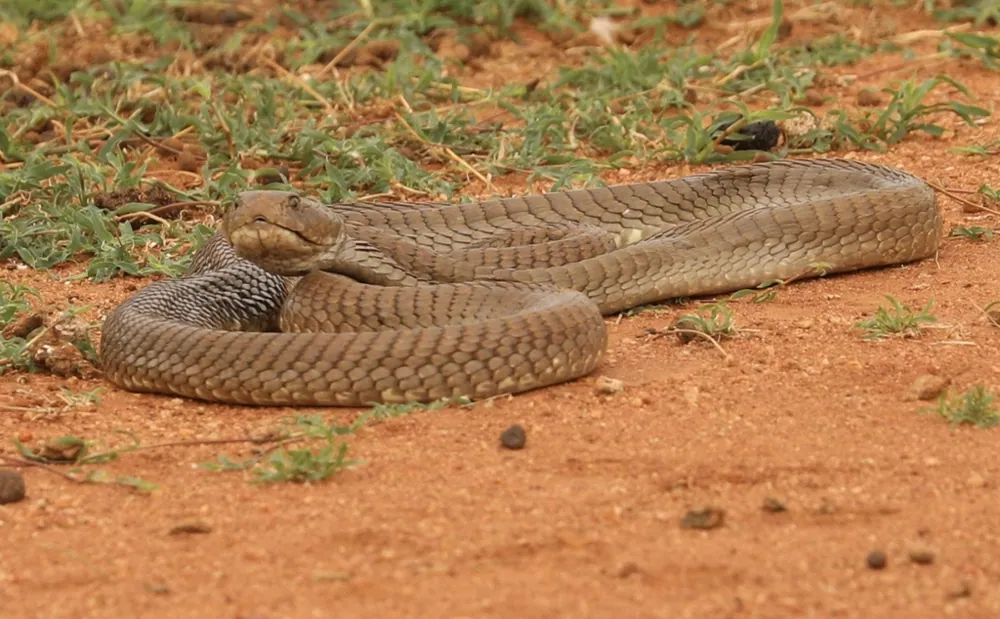
Ashe's spitting cobra is a large venomous snake from eastern and northeastern Africa. It is the largest of all the spitting cobras, and it can spray venom from a distance as well as bite. Its venom can cause blindness if it gets into the eyes and not treated at once.1
 Sɛdeɛ wobɛhunu no
- Very heavily built, with a big head1
- Colour ranges from light grey and pale mustard to dark brown1
- Pale along the belly, sometimes with slight speckling or blotches1
- A dark brown band across the throat1
- Average length about 1.3 to 2.0 m including the tail, making it the largest spitting cobra1
Wɔtaa fa no sɛ: It was once thought to be a brown form of the black-necked spitting cobra. It was classed as a separate species in 2007.1
Bɔre ahoɔden
Ɛpete anaa ɛtu nsuo bi a ɛhye honam gu wɔn a wɔto hyɛ no so.
Ne bɔre yɛ dɛn?
Its venom is neurotoxic, meaning it attacks the nerves, and cytotoxic, meaning it destroys cells. It is very similar to the venom of other spitting cobras, but it can inject a much larger volume in one bite. Its venom also causes strong tissue death around a wound.1
Ne asiane ma nnipa te sɛn?
Asiane ma nnipa: Asiane kɛseɛ womƐtumi kum onipa a wɔnhwɛ no yareɛ.The venom has low whole-body toxicity, so survival is very likely with proper treatment. Survivors may be left disfigured by tissue damage. If venom gets into the eyes and is not treated immediately, blindness is likely. Even with antivenom, amputation may be needed after a full dose from a large specimen.1
 Asɛmpa: dɔkotafoɔ wɔ aduro (antivenom) anaa ayaresa ma yei.1
Ɛyɛ dɛn bere a ehu aka no?
It is very defensive and does not hesitate to spit when it feels cornered. It can keep spitting for hours without running out of venom straight away.1
 Sɛ ɛka anaa ɛtu bɔre a
- If venom gets into the eyes, rinse them straight away with water or another bland liquid, as delay can cause permanent blindness. Whether the person has been bitten or spat at, they should see a doctor as soon as possible. Treatment is the appropriate antivenom, SAVP polyvalent from South African Vaccine Producers, and the dose may need to be higher than for the average black-necked spitting cobra bite.1
- Ma onipa no ntena dinn na ne bo nnwo, yi kawa ne nneɛma a ɛkyere no den, na kɔ ayaresabea ntɛm: antivenom ne ayaresa no.
- Sɛ ɛtu bɔre gu n'ani mu a, fa nsuo kronkron pii hohoro n'ani ntɛm ara.
Di kan frɛ wo ahohiahia nɔma (112, 000, 911). Yei yɛ mmoa a ɛdi kan ho akwankyerɛ, ɛnyɛ dɔkota afotuo. Mmoa a ɛdi kan ho nsɛm titiriw
 Hwɛ wo ho so
- Mfa wo nsa nka wiram aboa biara, nkyere no na mfa no nni agorɔ, sɛ ɔyɛ ketewa mpo, na sɛ ɛte sɛ ɔrededa anaa wawu mpo a.
- Ma no kwan. Sɛ wohyia baako a, ma wo bo nnwo, san w'akyi brɛoo na ma ɔnkɔ ne kwan.
- Sɛ baako ka wo anaa ɛtu bɔre gu w'ani mu a: ma wo bo nnwo, tena dinn, frɛ wo ahohiahia nɔma (112, 000, 911) anaa kɔ ayaresabea ntɛm. Kae sɛdeɛ na ɛte, mfonini bɛboa.
Ɛnhwehwɛ wo sɛ ɛbɛpira wo. Ɛde ne bɔre kyere aduane anaa ɛbɔ ne ho ban, na ɛpɛ sɛ ɛhinta sene biribiara. Nsɛm pii fa ahobammɔ ho
Wiase mu baabi bɛn?
Ne kɛseɛ te sɛn?
Ne tenten te sɛn?
 ne tenten te sɛ nkraman 2,5 a wɔde hwene ne dua to ntoatoasoɔ mu
 ne tenten te sɛ kwadu 15 a wɔde to ntoatoasoɔ mu
 ɛbɛtumi atu mita 100 wɔ anibu 41 mu (onipa a ɔwɔ ntɛm sen biara hia 9.6)
Ashe's spitting cobra kɛseɛ te sɛn sɛ wode toto WO ho a?
Akontabuo kɛkɛ wɔ wo browser mu. Wɔnkora hwee, na wɔmfa hwee nkɔ baabiara.
Ne ntɛm te sɛn?


Nsɛm
It is the world's largest species of spitting cobra.1
It can spit venom in large amounts for hours.1
The largest specimen recorded, caught in Kenya, measured 270 cm in total length.1
One milked specimen at the Bio-Ken Snake Farm in 2004 produced a wet venom yield of 6.2 ml.1
It is most closely related to the Mozambique spitting cobra.1
Atosɛm sɛefoɔ
Atosɛm: It is just a brown form of the black-necked spitting cobra.
Nokorɛ: It was classed as a separate species in 2007, after experts recognised its differences from other spitting cobras.1
Baabi a nsɛm no fi
- Naja ashei (Wikipedia (CC BY-SA 4.0))
- Naja ashei (iNaturalist): din ne nkyekyɛmu.
- Venom Wiki: asiane gyinabea, kɛseɛ a ɛtaa yɛ ne ntɛm susuo no yɛ yɛn ankasa deɛ. Hwɛ sɛdeɛ yɛbu no: Sɛdeɛ yɛkyerɛ asiane gyinabea.
Nsɛm biara a ɛwɔ kratafa yi so wɔ nɔma a ɛkyerɛ ne fibea. Sɛ yɛfom biribi a, kafra, yɛyɛ mmoa ho akɔnnɔfoɔ, ɛnyɛ nyansahu nwoma. Ka kyerɛ yɛn wɔ [email protected] na yɛbɛsiesie.
 Ɔkɔm de akekantwerɛ no! Onipa baako na ɔyɛ Venom Wiki: ɛyɛ kwa, dawurubɔ nni so na biribiara nni so a ɛdi w'akyi. Akyɛdeɛ ketewa bi boa ma ɛkɔ so tena internet so.Ma akekantwere no aduane
 Black mamba
 Egyptian cobra
 Cape cobra
 Eastern green mamba
 Jameson's mamba
 Western green mamba
 Deathstalker
 Puff adder
 Boomslang
 Fat-tailed scorpion
 Gaboon viper
 Western honey bee