
 Abibirem
 Asia
Asia Yuropu
 Amerika Anaafoɔ
 Australia ne Oceania
 Antarctica
 Pacific Po
 Atlantic Po
 India Po
 Arctic Po
 Mediterranean Po
 Po Kɔkɔɔ
 Caribbean Po
 Coral Po
 China Anaafoɔ Po
 Philippine Po
 Andaman Po
 Atifi Po
 Timor ne Arafura Po
 Bengal Ɛpo Ano
 California Ɛpo Ano
Jameson's mamba
 Ka
KaJameson's mamba is a highly venomous snake that lives in the forests and woodlands of equatorial Africa. It spends much of its time in trees and is often found near towns, farms and plantations. Its venom attacks the nerves, so it is a snake to treat with respect and keep well away from.1



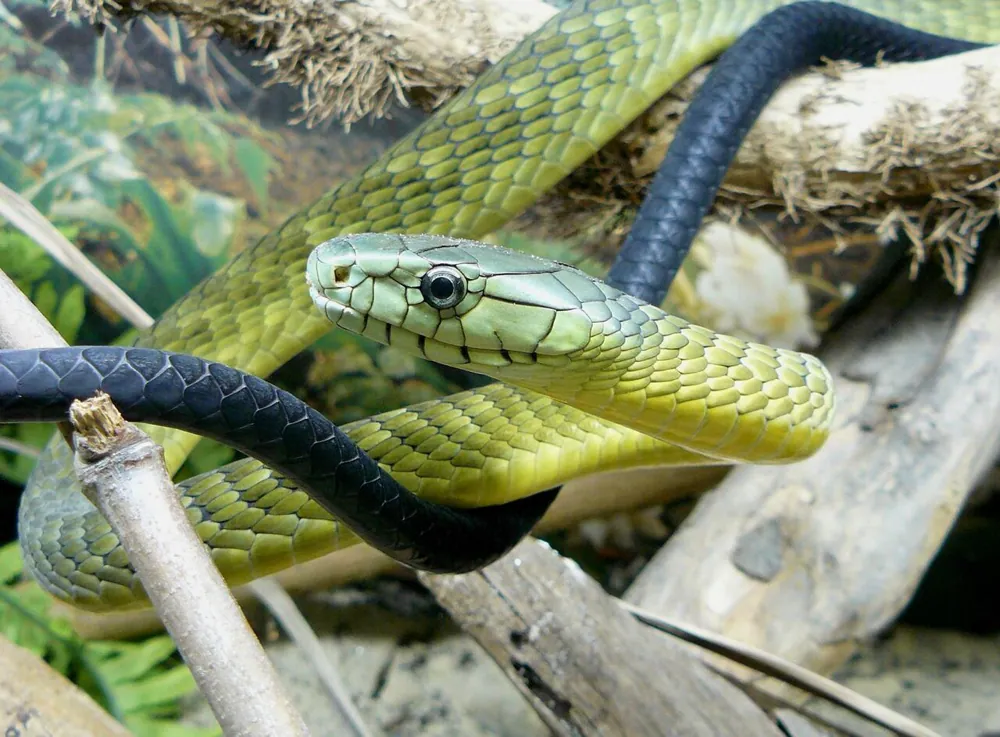
 Sɛdeɛ wobɛhunu no
- Slender body with dull green upper parts that fade to pale green towards the belly1
- Neck, throat and underparts are cream or yellowish1
- Narrow, elongated head with small eyes and round pupils1
- Tail is black in the eastern subspecies (kaimosae) and pale green or yellow in the central and western subspecies1
- Adults typically measure 1.5 to 2.2 metres in total length1
Bɔre ahoɔden
Bɔre fi ne se mu ba bere a ɔka.
Ne bɔre yɛ dɛn?
The venom is highly neurotoxic, meaning it attacks the nerves, and also contains cardiotoxins, which affect the heart. Bite pain and swelling are followed by chills, sweating, abdominal pain and vomiting. Later symptoms can include slurred speech, difficulty breathing and paralysis.1
Ne asiane ma nnipa te sɛn?
Asiane ma nnipa: ƐkumMmoa a asiane wɔ wɔn ho sen biara wɔ wiase no mu baako.The World Health Organization classes it as a Snake of Medical Importance in sub-Saharan Africa, although few bites are recorded. Deaths have been recorded within three to four hours of a bite. An unconfirmed report describes a child dying within 30 minutes. Access to antivenom is difficult in some areas, and workers in palm oil plantations have died after falling from trees when they met one in the canopy.1
 Asɛmpa: dɔkotafoɔ wɔ aduro (antivenom) anaa ayaresa ma yei.1
Ɛyɛ dɛn bere a ehu aka no?
When threatened, it flattens its neck like a cobra, and it will usually try to escape rather than attack.1
 Sɛ ɛka a
- Apply a pressure bandage, keep the victim as still as possible and get them to a hospital or clinic quickly. An arterial tourniquet may help because of the neurotoxic venom. Antivenom is the main treatment, and tetanus toxoid is sometimes given.1
- Ma onipa no ntena dinn na ne bo nnwo, yi kawa ne nneɛma a ɛkyere no den, na kɔ ayaresabea ntɛm: antivenom ne ayaresa no.
Di kan frɛ wo ahohiahia nɔma (112, 000, 911). Yei yɛ mmoa a ɛdi kan ho akwankyerɛ, ɛnyɛ dɔkota afotuo. Mmoa a ɛdi kan ho nsɛm titiriw
 Hwɛ wo ho so
- Mfa wo nsa nka wiram aboa biara, nkyere no na mfa no nni agorɔ, sɛ ɔyɛ ketewa mpo, na sɛ ɛte sɛ ɔrededa anaa wawu mpo a.
- Ma no kwan. Sɛ wohyia baako a, ma wo bo nnwo, san w'akyi brɛoo na ma ɔnkɔ ne kwan.
- Sɛ baako ka wo a: ma wo bo nnwo, tena dinn, frɛ wo ahohiahia nɔma (112, 000, 911) anaa kɔ ayaresabea ntɛm. Kae sɛdeɛ na ɛte, mfonini bɛboa.
Ɛnhwehwɛ wo sɛ ɛbɛpira wo. Ɛde ne bɔre kyere aduane anaa ɛbɔ ne ho ban, na ɛpɛ sɛ ɛhinta sene biribiara. Nsɛm pii fa ahobammɔ ho
Wiase mu baabi bɛn?
Ne kɛseɛ te sɛn?
Ne tenten te sɛn?
 ne tenten te sɛ nkraman 2,5 a wɔde hwene ne dua to ntoatoasoɔ mu
 ne tenten te sɛ kwadu 15 a wɔde to ntoatoasoɔ mu
 ɛbɛtumi atu mita 100 wɔ anibu 41 mu (onipa a ɔwɔ ntɛm sen biara hia 9.6)
Jameson's mamba kɛseɛ te sɛn sɛ wode toto WO ho a?
Akontabuo kɛkɛ wɔ wo browser mu. Wɔnkora hwee, na wɔmfa hwee nkɔ baabiara.
Ne ntɛm te sɛn?


Nsɛm
Females lay their eggs in abandoned termite colonies.1
In Nigeria, males fight each other for access to females during the dry season.1
Its main predators are birds of prey, including the martial eagle, the bateleur and the Congo serpent eagle.1
It is difficult to study in the wild because it lives in trees and its green colouring helps it hide among leaves.1
Baabi a nsɛm no fi
- Jameson's mamba (Wikipedia (CC BY-SA 4.0))
- Dendroaspis jamesoni (iNaturalist): din ne nkyekyɛmu.
- Venom Wiki: asiane gyinabea, kɛseɛ a ɛtaa yɛ ne ntɛm susuo no yɛ yɛn ankasa deɛ. Hwɛ sɛdeɛ yɛbu no: Sɛdeɛ yɛkyerɛ asiane gyinabea.
Nsɛm biara a ɛwɔ kratafa yi so wɔ nɔma a ɛkyerɛ ne fibea. Sɛ yɛfom biribi a, kafra, yɛyɛ mmoa ho akɔnnɔfoɔ, ɛnyɛ nyansahu nwoma. Ka kyerɛ yɛn wɔ [email protected] na yɛbɛsiesie.
 Ɔkɔm de akekantwerɛ no! Onipa baako na ɔyɛ Venom Wiki: ɛyɛ kwa, dawurubɔ nni so na biribiara nni so a ɛdi w'akyi. Akyɛdeɛ ketewa bi boa ma ɛkɔ so tena internet so.Ma akekantwere no aduane
 Black mamba
 Egyptian cobra
 Cape cobra
 Eastern green mamba
 Western green mamba
 Ashe's spitting cobra
 Deathstalker
 Puff adder
 Boomslang
 Fat-tailed scorpion
 Gaboon viper
 Western honey bee
.jpg)