
 Abibirem
 Asia
Asia Yuropu
 Amerika Anaafoɔ
 Australia ne Oceania
 Antarctica
 Pacific Po
 Atlantic Po
 India Po
 Arctic Po
 Mediterranean Po
 Po Kɔkɔɔ
 Caribbean Po
 Coral Po
 China Anaafoɔ Po
 Philippine Po
 Andaman Po
 Atifi Po
 Timor ne Arafura Po
 Bengal Ɛpo Ano
 California Ɛpo Ano
Goldie's tree cobra
 Ka
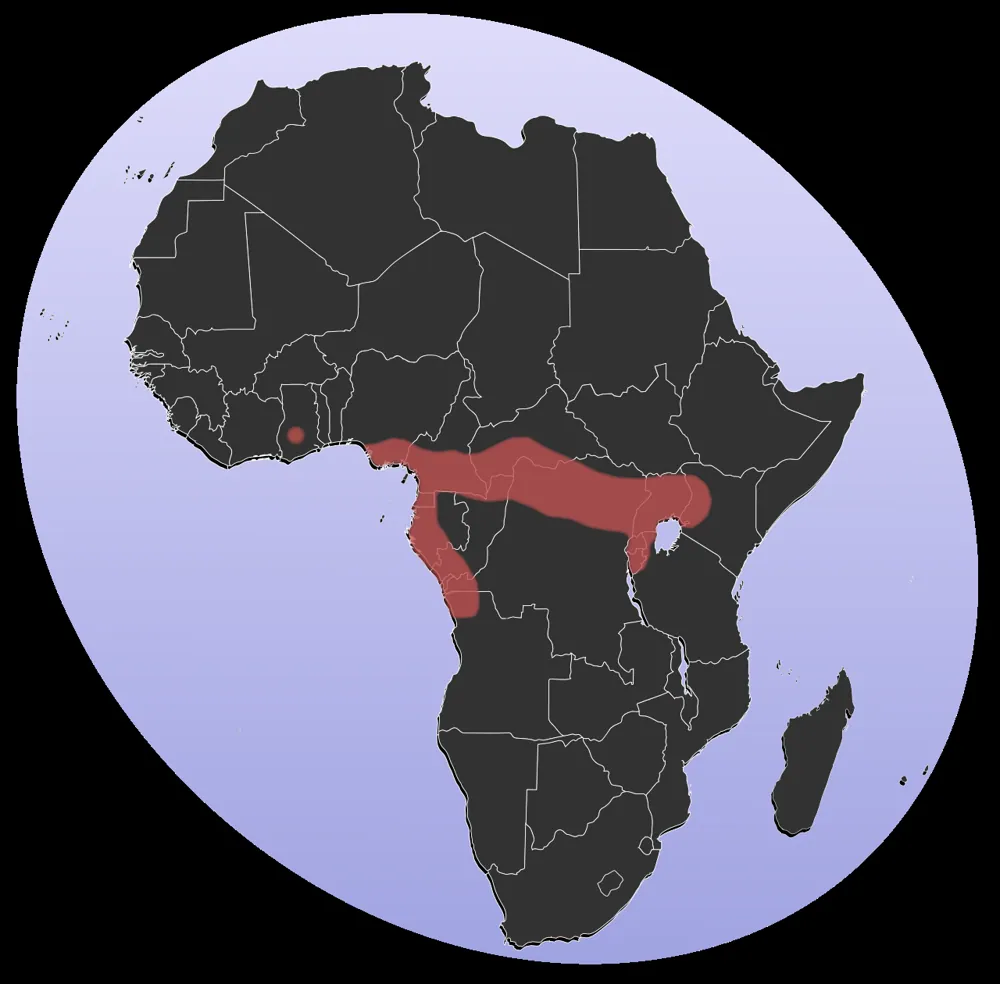
KaGoldie's tree cobra is a large, glossy black snake that lives in the trees, on the ground and in water across Central and Western Africa. It is one of the most venomous snakes in Africa, so it is important to know what it looks like and to keep well away from it.1



 Sɛdeɛ wobɛhunu no
- Its dorsal (upper) body colour is glossy black.1
- It is a long, slim snake, measuring 2.2 to 2.7 m including the tail.1
- It has a small head with exceptionally large eyes.1
- It has a long, spiky tail, which helps it move through trees.1
- When threatened, it rears up and spreads a cobra-like hood, which is much narrower than that of Naja naja.1
Bɔre ahoɔden
Bɔre fi ne se mu ba bere a ɔka.
Ne bɔre yɛ dɛn?
Its venom is mainly a neurotoxin, which attacks the nerves, as in most cobras. It acts quickly and is extremely potent. Bite symptoms include swelling and stinging pain around the wound, numbness of the limbs and lips, severe difficulty breathing, heavy sweating and blurred vision. Victims may die of respiratory failure, which means the lungs stop working properly.1
Ne asiane ma nnipa te sɛn?
Asiane ma nnipa: Asiane kɛseɛ womƐtumi kum onipa a wɔnhwɛ no yareɛ.It is one of the most toxic and deadly snakes in Africa. Its venom can easily kill a person, and a number of people are killed by this species each year.1
Ɛyɛ dɛn bere a ehu aka no?
When threatened it rears up and spreads its narrow hood, and if provoked further it may bite; if restrained, it may also use its tail spike to defend itself.1
 Sɛ ɛka a
- Ma onipa no ntena dinn na ne bo nnwo, yi kawa ne nneɛma a ɛkyere no den, na kɔ ayaresabea ntɛm: antivenom ne ayaresa no.
Di kan frɛ wo ahohiahia nɔma (112, 000, 911). Yei yɛ mmoa a ɛdi kan ho akwankyerɛ, ɛnyɛ dɔkota afotuo. Mmoa a ɛdi kan ho nsɛm titiriw
 Hwɛ wo ho so
- Mfa wo nsa nka wiram aboa biara, nkyere no na mfa no nni agorɔ, sɛ ɔyɛ ketewa mpo, na sɛ ɛte sɛ ɔrededa anaa wawu mpo a.
- Ma no kwan. Sɛ wohyia baako a, ma wo bo nnwo, san w'akyi brɛoo na ma ɔnkɔ ne kwan.
- Sɛ baako ka wo a: ma wo bo nnwo, tena dinn, frɛ wo ahohiahia nɔma (112, 000, 911) anaa kɔ ayaresabea ntɛm. Kae sɛdeɛ na ɛte, mfonini bɛboa.
Ɛnhwehwɛ wo sɛ ɛbɛpira wo. Ɛde ne bɔre kyere aduane anaa ɛbɔ ne ho ban, na ɛpɛ sɛ ɛhinta sene biribiara. Nsɛm pii fa ahobammɔ ho
Wiase mu baabi bɛn?
Ne kɛseɛ te sɛn?
Ne tenten te sɛn?
 ne tenten te sɛ nkraman 2,5 a wɔde hwene ne dua to ntoatoasoɔ mu
 ne tenten te sɛ kwadu 15 a wɔde to ntoatoasoɔ mu
 ɛbɛtumi atu mita 100 wɔ anibu 40 mu (onipa a ɔwɔ ntɛm sen biara hia 9.6)
Goldie's tree cobra kɛseɛ te sɛn sɛ wode toto WO ho a?
Akontabuo kɛkɛ wɔ wo browser mu. Wɔnkora hwee, na wɔmfa hwee nkɔ baabiara.
Ne ntɛm te sɛn?


Nsɛm
It is one of the largest venomous snakes in Africa.1
Despite its size, it is very agile and moves as easily on the ground and in water as it does in trees.1
It cannot spit its venom, but its bite is very potent.1
It is one of the few snakes considered aggressive, and it is reputed to be ill-tempered.1
Its large eyes give it excellent eyesight.1
Atosɛm sɛefoɔ
Atosɛm: It is often called "Gold's tree cobra".
Nokorɛ: That spelling is an error. The species is named after George Taubman Goldie, so the correct name is Goldie's tree cobra.1
Baabi a nsɛm no fi
- Goldie's tree cobra (Wikipedia (CC BY-SA 4.0))
- Pseudohaje goldii (iNaturalist): din ne nkyekyɛmu.
- Venom Wiki: asiane gyinabea, kɛseɛ a ɛtaa yɛ ne ntɛm susuo no yɛ yɛn ankasa deɛ. Hwɛ sɛdeɛ yɛbu no: Sɛdeɛ yɛkyerɛ asiane gyinabea.
Nsɛm biara a ɛwɔ kratafa yi so wɔ nɔma a ɛkyerɛ ne fibea. Sɛ yɛfom biribi a, kafra, yɛyɛ mmoa ho akɔnnɔfoɔ, ɛnyɛ nyansahu nwoma. Ka kyerɛ yɛn wɔ [email protected] na yɛbɛsiesie.
 Ɔkɔm de akekantwerɛ no! Onipa baako na ɔyɛ Venom Wiki: ɛyɛ kwa, dawurubɔ nni so na biribiara nni so a ɛdi w'akyi. Akyɛdeɛ ketewa bi boa ma ɛkɔ so tena internet so.Ma akekantwere no aduane
 Black mamba
 Egyptian cobra
 Cape cobra
 Eastern green mamba
 Jameson's mamba
 Western green mamba
 Deathstalker
 Puff adder
 Boomslang
 Fat-tailed scorpion
 Gaboon viper
 Western honey bee