
 Abibirem
 Asia
Asia Yuropu
 Amerika Anaafoɔ
 Australia ne Oceania
 Antarctica
 Pacific Po
 Atlantic Po
 India Po
 Arctic Po
 Mediterranean Po
 Po Kɔkɔɔ
 Caribbean Po
 Coral Po
 China Anaafoɔ Po
 Philippine Po
 Andaman Po
 Atifi Po
 Timor ne Arafura Po
 Bengal Ɛpo Ano
 California Ɛpo Ano
Mozambique spitting cobra
 Ɔpete anaa ɔtu
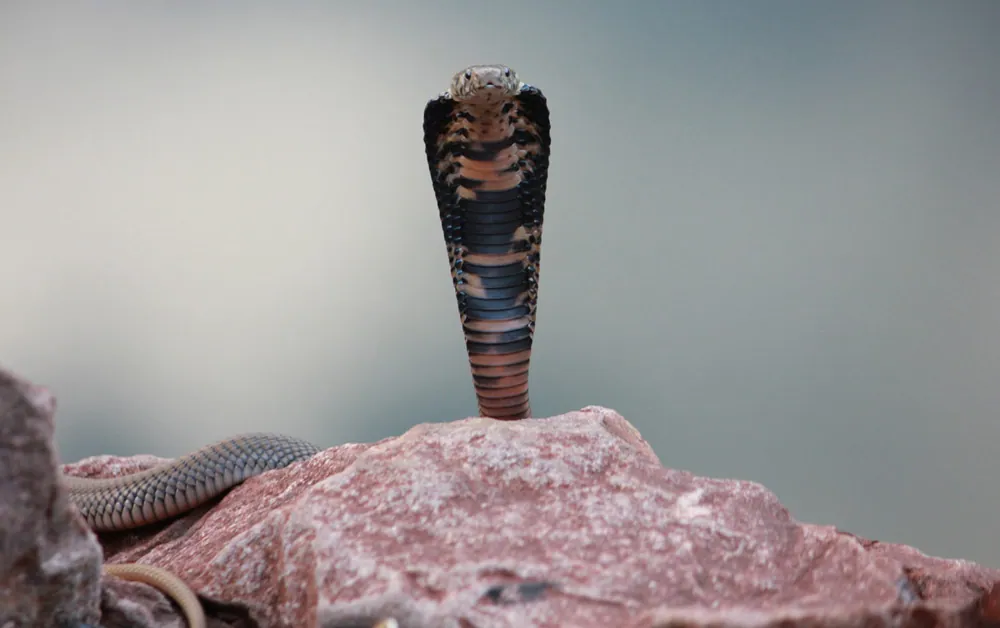
The Mozambique spitting cobra is a highly venomous snake from southern and eastern Africa. It lives mostly in savanna, the open grassy country of hot regions. It is special because it can spit its venom accurately, and its bite and venom are very dangerous.1



 Sɛdeɛ wobɛhunu no
- Above, it is slate, blue, olive or tawny black, and many scales have black edging.1
- Below, it is salmon pink to purplish yellow, with black bars across the neck.1
- Young snakes sometimes have pink or yellow bars on the throat.1
- Adults are usually 90 cm to 105 cm long.1
- When threatened, it can rear up and spread a long, narrow hood.1
Bɔre ahoɔden
Ɛpete anaa ɛtu nsuo bi a ɛhye honam gu wɔn a wɔto hyɛ no so.
Ne bɔre yɛ dɛn?
Its venom contains a postsynaptic neurotoxin, which attacks the nerves, and a cytotoxin, which destroys cells. Its bite causes severe destruction of the tissue around the wound. Venom that gets into the eyes can cause impaired vision or blindness. Its venom is about as toxic as that of the Mojave rattlesnake.1
Ne asiane ma nnipa te sɛn?
Asiane ma nnipa: Asiane kɛseɛ womƐtumi kum onipa a wɔnhwɛ no yareɛ.It is considered one of the most dangerous snakes in Africa. Only a few people have died from its bites, but survivors are mostly left disfigured.1
Ɛyɛ dɛn bere a ehu aka no?
When confronted at close range, it rears up, spreads its hood and spits, usually from a raised position. It may also bite, or feign death to avoid further disturbance.1
 Sɛ ɛka anaa ɛtu bɔre a
- Ma onipa no ntena dinn na ne bo nnwo, yi kawa ne nneɛma a ɛkyere no den, na kɔ ayaresabea ntɛm: antivenom ne ayaresa no.
- Sɛ ɛtu bɔre gu n'ani mu a, fa nsuo kronkron pii hohoro n'ani ntɛm ara.
Di kan frɛ wo ahohiahia nɔma (112, 000, 911). Yei yɛ mmoa a ɛdi kan ho akwankyerɛ, ɛnyɛ dɔkota afotuo. Mmoa a ɛdi kan ho nsɛm titiriw
 Hwɛ wo ho so
- Mfa wo nsa nka wiram aboa biara, nkyere no na mfa no nni agorɔ, sɛ ɔyɛ ketewa mpo, na sɛ ɛte sɛ ɔrededa anaa wawu mpo a.
- Ma no kwan. Sɛ wohyia baako a, ma wo bo nnwo, san w'akyi brɛoo na ma ɔnkɔ ne kwan.
- Sɛ baako ka wo anaa ɛtu bɔre gu w'ani mu a: ma wo bo nnwo, tena dinn, frɛ wo ahohiahia nɔma (112, 000, 911) anaa kɔ ayaresabea ntɛm. Kae sɛdeɛ na ɛte, mfonini bɛboa.
Ɛnhwehwɛ wo sɛ ɛbɛpira wo. Ɛde ne bɔre kyere aduane anaa ɛbɔ ne ho ban, na ɛpɛ sɛ ɛhinta sene biribiara. Nsɛm pii fa ahobammɔ ho
Wiase mu baabi bɛn?
Ne kɛseɛ te sɛn?
Ne tenten te sɛn?
 ne tenten te sɛ fie agyinamoa 3 a wɔde hwene ne dua to ntoatoasoɔ mu
 ne tenten te sɛ kwadu 9 a wɔde to ntoatoasoɔ mu
 ɛbɛtumi atu mita 100 wɔ anibu 52 mu (onipa a ɔwɔ ntɛm sen biara hia 9.6)
Mozambique spitting cobra kɛseɛ te sɛn sɛ wode toto WO ho a?
Akontabuo kɛkɛ wɔ wo browser mu. Wɔnkora hwee, na wɔmfa hwee nkɔ baabiara.
Ne ntɛm te sɛn?


Nsɛm
It is immune to the venom of the black mamba, and it sometimes eats black mambas.1
It can spit its venom 2 to 3 metres with great accuracy.1
It can spit without rearing up or spreading its hood, and it can spit from very tight spaces.1
It can rear up to two-thirds of its own length when confronted.1
Hatchlings are already about 23 cm to 25 cm long.1
Baabi a nsɛm no fi
- Mozambique spitting cobra (Wikipedia (CC BY-SA 4.0))
- Naja mossambica (iNaturalist): din ne nkyekyɛmu.
- Venom Wiki: asiane gyinabea, kɛseɛ a ɛtaa yɛ ne ntɛm susuo no yɛ yɛn ankasa deɛ. Hwɛ sɛdeɛ yɛbu no: Sɛdeɛ yɛkyerɛ asiane gyinabea.
Nsɛm biara a ɛwɔ kratafa yi so wɔ nɔma a ɛkyerɛ ne fibea. Sɛ yɛfom biribi a, kafra, yɛyɛ mmoa ho akɔnnɔfoɔ, ɛnyɛ nyansahu nwoma. Ka kyerɛ yɛn wɔ [email protected] na yɛbɛsiesie.
 Ɔkɔm de akekantwerɛ no! Onipa baako na ɔyɛ Venom Wiki: ɛyɛ kwa, dawurubɔ nni so na biribiara nni so a ɛdi w'akyi. Akyɛdeɛ ketewa bi boa ma ɛkɔ so tena internet so.Ma akekantwere no aduane
 Black mamba
 Egyptian cobra
 Cape cobra
 Eastern green mamba
 Jameson's mamba
 Western green mamba
 Deathstalker
 Puff adder
 Boomslang
 Fat-tailed scorpion
 Gaboon viper
 Western honey bee
.jpg)