
 Abibirem
 Asia
Asia Yuropu
 Amerika Anaafoɔ
 Australia ne Oceania
 Antarctica
 Pacific Po
 Atlantic Po
 India Po
 Arctic Po
 Mediterranean Po
 Po Kɔkɔɔ
 Caribbean Po
 Coral Po
 China Anaafoɔ Po
 Philippine Po
 Andaman Po
 Atifi Po
 Timor ne Arafura Po
 Bengal Ɛpo Ano
 California Ɛpo Ano
Spur-winged goose
 Ɛyɛ awuduro sɛ wodi a
The spur-winged goose is a large waterbird from Sub-Saharan Africa, and on average it is the world's largest goose. Some populations are poisonous to eat: birds that feed on many blister beetles carry a poison called cantharidin in their body tissue.1



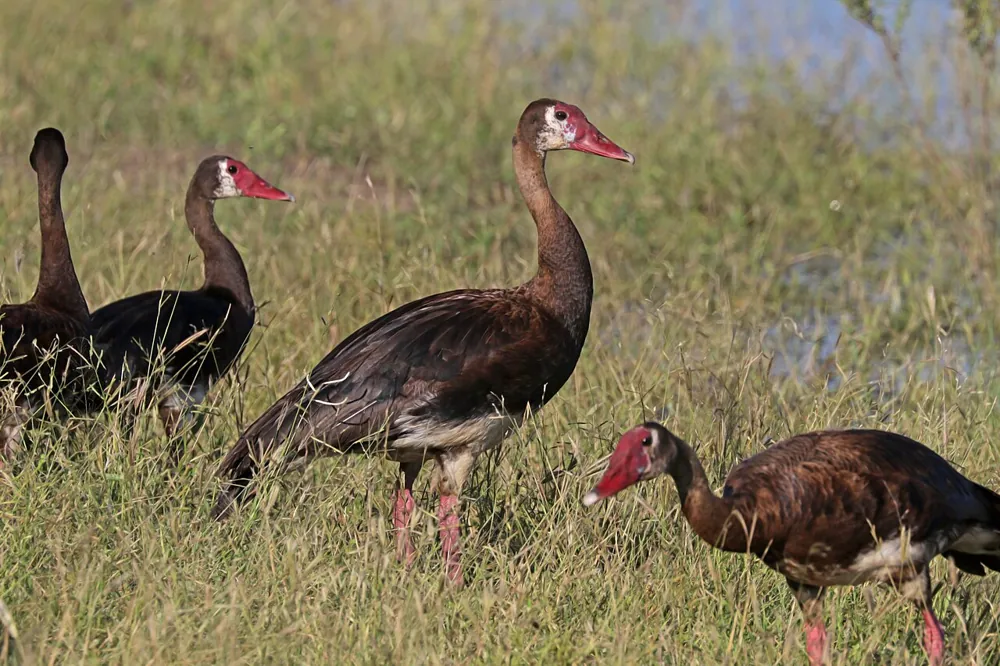
 Sɛdeɛ wobɛhunu no
Awuduro ahoɔden
Ɛyɛ asiane bere a biribi adi no nko ara.
Ne ho awuduro yɛ dɛn?
This goose is not venomous. Its poison, cantharidin, is held in the bird's tissue and comes from blister beetles it eats. Eating the cooked goose poisons the person who eats it.1
Ne asiane ma nnipa te sɛn?
Asiane ma nnipa: Ɛyɛ yawƐtumi yɛ yaw paa, nanso ɛkame ayɛ sɛ ɛnyɛ asiane kɛseɛ da.Only populations whose diet includes large amounts of blister beetles are poisonous. A dose of 10 mg of cantharidin can kill a human. The risk is to people who eat the cooked goose.1
Ɛyɛ dɛn bere a ehu aka no?
Its alarm call is a soft bubbling "cherwit" when it takes flight or feels alarmed.1
 Sɛ obi de ne nsa ka anaa ɔdi a
- Sɛ obi adi bi anaa ne ho anyɛ no dɛ bere a wadi akyi a: frɛ wo ahohiahia nɔma anaa awuduro ho mmoa adwumayɛbea (poison centre) ntɛm ara.
Di kan frɛ wo ahohiahia nɔma (112, 000, 911). Yei yɛ mmoa a ɛdi kan ho akwankyerɛ, ɛnyɛ dɔkota afotuo. Mmoa a ɛdi kan ho nsɛm titiriw
 Hwɛ wo ho so
- Mfa wo nsa nka wiram aboa biara, nkyere no na mfa no nni agorɔ, sɛ ɔyɛ ketewa mpo, na sɛ ɛte sɛ ɔrededa anaa wawu mpo a.
- Ma no kwan. Sɛ wohyia baako a, ma wo bo nnwo, san w'akyi brɛoo na ma ɔnkɔ ne kwan.
- Sɛ wode wo nsa kaa no anaa wodii a: mfa wo nsa ntwitwi w'ani anaa w'ano, hohoro wo nsa na hwehwɛ dɔkota mmoa.
Ɛnhwehwɛ wo sɛ ɛbɛpira wo. Ne ho awuduro no wɔ hɔ sɛdeɛ ɛbɛyɛ a biribiara renni no. Nsɛm pii fa ahobammɔ ho
Wiase mu baabi bɛn?
Ne kɛseɛ te sɛn?
Ne tenten te sɛn?
Ne mu duru te sɛn?
 ne tenten te sɛ fie agyinamoa 2,5 a wɔde hwene ne dua to ntoatoasoɔ mu
 ne tenten te sɛ kwadu 6 a wɔde to ntoatoasoɔ mu
 ɛbɛtumi atu atwa bɔɔlobɔ agodibea mu nyinaa wɔ anibu 9,5 mu
Spur-winged goose kɛseɛ te sɛn sɛ wode toto WO ho a?
Akontabuo kɛkɛ wɔ wo browser mu. Wɔnkora hwee, na wɔmfa hwee nkɔ baabiara.
Ne ntɛm te sɛn?


Nsɛm
On average, it is the world's largest goose. It is also one of the largest African waterfowl, after the wading Goliath heron.1
During the breeding season, it is highly aggressive. It can use the spur on the bend of its wing in fights with other birds.1
Its wingspan can reach 150 to 200 cm, which is wider than most adults are tall.1
Its nests can be found in unusual places, including tree holes, rock cavities, old nests of other birds, termite mounds and aardvark burrows.1
Although it belongs to the duck, goose and swan family, Anatidae, its unique features place it in its own subfamily, the Plectropterinae.1
Baabi a nsɛm no fi
- Spur-winged goose (Wikipedia (CC BY-SA 4.0))
- Plectropterus gambensis (iNaturalist): din ne nkyekyɛmu.
- Venom Wiki: asiane gyinabea, kɛseɛ a ɛtaa yɛ ne ntɛm susuo no yɛ yɛn ankasa deɛ. Hwɛ sɛdeɛ yɛbu no: Sɛdeɛ yɛkyerɛ asiane gyinabea.
Nsɛm biara a ɛwɔ kratafa yi so wɔ nɔma a ɛkyerɛ ne fibea. Sɛ yɛfom biribi a, kafra, yɛyɛ mmoa ho akɔnnɔfoɔ, ɛnyɛ nyansahu nwoma. Ka kyerɛ yɛn wɔ [email protected] na yɛbɛsiesie.
 Ɔkɔm de akekantwerɛ no! Onipa baako na ɔyɛ Venom Wiki: ɛyɛ kwa, dawurubɔ nni so na biribiara nni so a ɛdi w'akyi. Akyɛdeɛ ketewa bi boa ma ɛkɔ so tena internet so.Ma akekantwere no aduane
Pii fi kuo korɔ no mu: Mmoa afoforɔ a wɔn ho yɛ awuduro
 African crested ratMmoa afoforɔ a wɔn ho yɛ awuduroƐhia dɔkotaMfa wo nsa nka
 Common quailMmoa afoforɔ a wɔn ho yɛ awuduroƐyɛ yaw kɛkɛ
 Fahaka pufferfishMmoa afoforɔ a wɔn ho yɛ awuduroƐtumi kum
 Red-striped oil beetleMmoa afoforɔ a wɔn ho yɛ awuduroƐyɛ yaw kɛkɛMfa wo nsa nka
 Japanese pufferfishMmoa afoforɔ a wɔn ho yɛ awuduroƐkum
 Hawksbill sea turtleMmoa afoforɔ a wɔn ho yɛ awuduroƐtumi kum
 Black mamba
 Deathstalker
 Egyptian cobra
 Puff adder
 Boomslang
 Fat-tailed scorpion
.jpg)