
 Afrik
Afrik Aazi
Aazi Orop
Orop Amerik Worgo
 Ostaraali e Oseyaani
 Antarktik
 Geec Pasifik
 Geec Atlantik
 Geec Enndo
 Geec Arktik
 Geec Mediteraane
 Geec Boɗeejo
 Geec Karayib
 Geec Korayl
 Geec Siin Worgo
 Geec Filipiin
 Geec Andaman
 Geec Rewo
 Geec Timor e Arafura
 Gulf Bengal
 Gulf Kaliforni
Paradise tree snake
 Ŋatgol
The paradise tree snake is a snake that can glide through the air. It lives in forests in Southeast Asia, where it flattens its body and launches itself from treetops to travel between trees. It is special because it has no legs or wings, yet it can move through the air in a controlled way.1

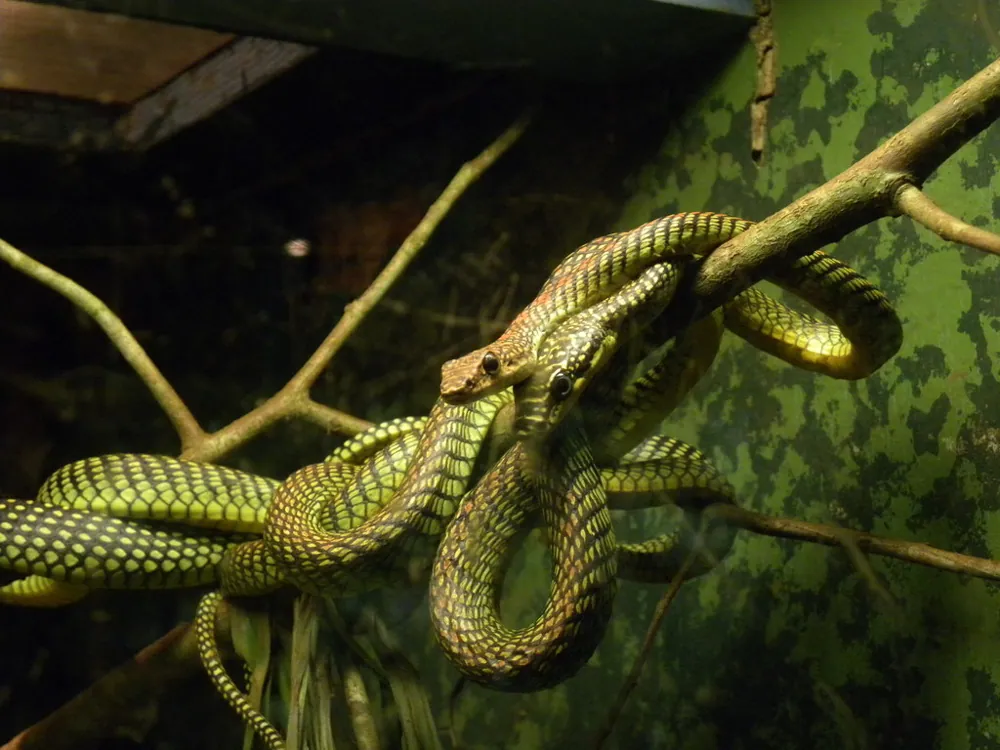
 No anndirte ngal
Doole tooke
Tooke ngal ina yaltira ñiiƴe mum so ina ŋata.
Hol ko tooke ŋatgol mum waɗata?
It is mildly venomous and has enlarged teeth at the back of the upper jaw, known as rear fangs. Its venom is made in Duvernoy's glands, which are found in many related snakes. The venom is delivered by these rear fangs during a bite.1
Hol no bone mum heewiri e yimɓe?
Bone e yimɓe: HoyɗoNo jukkugol ñaaki walla ko ɓuri famɗude. Ko ɓuri heewde alaa bone e yimɓe.It is considered mildly venomous. Because it is uncommon and lives high in trees, bites to people are rare. One reported bite in 2013 was to a 45-year-old woman's right thumb when she tried to close her bedroom windows.1
 So ina ŋata
- Loot nokku ŋataaɗo oo, deƴƴin neɗɗo oo, heɓ ballal cafrol. Noone goɗɗe (ko wayi no boomslang) ina mbaawi warde caggal waktuuji.
Adii fof noddu nimero urgence (112, 000, 911). Ɗum ko anndinal ballal adiingal, wonaa saaraangal doktoor. Ko adii e ballal adiingal
 Reen hoore maa
- Wota a meem, wota a nanngu, wota a ñiŋŋu kullal ladde haa abada, hay so ngal ina famɗi, hay so ina nanndi e ɗaaniingal walla maayngal.
- Accu ngal nokku. So a fotti e ngal, deƴƴu, ruttu ɓaawo seeɗa seeɗa, accu ngal yaha laawol mum.
- So gooto ŋatii ma: deƴƴu, wota a dillu, noddu nimero urgence (112, 000, 911) walla yahu opitaal law. Jogo e hakkille no ngal nanndi, natal ina walla.
Ngal faalaaka gaañde ma. Ina huutoroo tooke mum ngam nanngude ñaamdu walla reenaade, ina ɓuri yiɗde suuɗaade. Ɓeydu anndude no reentortoo
Hol to e aduna?
Hol no mawniri?
Hol no juutiri?
 juutde no ulluuɗi galle 2, hinere haa lawol
 juutde no banaanaaji 6 sammondiraaɗi
 ina waawi taƴde 100 meeteer e segonde 68 (neɗɗo ɓurɗo yaawde ina sokli 9,6)
Hol no Paradise tree snake mawniri, so fooɗondiraama e AN?
Limgal tan e navigatoor maa. Alaa ko danndetee walla ko neldetee.
Hol no yaawiri?


Humpito
It can glide a horizontal distance of 10 metres (33 feet) or more from the top of a tree.1
To glide, it flattens its body into a strip by spreading its ribs.1
In the air, its cross-section becomes triangular, which helps it glide.1
Slow-motion photography shows it moves its body in waves during flight, suggesting controlled flight.1
It usually starts a glide with an anchored J-loop take-off.1
Ɗo humpito iwri
- Chrysopelea paradisi (Wikipedia (CC BY-SA 4.0))
- Chrysopelea paradisi (iNaturalist): inɗe e ceergal.
- Venom Wiki: tolno bone, mawnude heewnde e miijo yaawde ko amen. Yiy no men keɓirta ɗum: No men tolnirta bone.
Kala humpito e ngoo hello ina jogii limoore hollirnde iwdi mum. So men juumii, yaafo, men ko yiɗɓe kulle, wonaa jaaynde ganndal. Wiy men e [email protected], men feewnita.
 Yaare nden ina weelaa! Venom Wiki ko golle neɗɗo gooto: yoɓetaake, alaa ko jeeyetee, alaa rewɓe. Ndokkal seeɗa ina walla ngam heddude e enternet.Ñaam yaare nden
 Brown tree snake
 Tiger keelback
 Red-necked keelback
 Green cat snake
 Mangrove snake
 Asian vine snake
 Yaare oolnde maayde
 Kobra Enndo
 Wipeer cerkeeje siy Enndo
 Kobra laamɗo
 Mbaa-ndiyam (Puff adder)
 Ladde Russell