
 Afrika
 Asia
Asia Yuropu
 Amerika yeKumaodzanyemba
 Australia neOceania
 Antarctica
 Gungwa rePacific
 Gungwa reAtlantic
 Gungwa reIndia
 Gungwa reArctic
 Gungwa reMediterranean
 Gungwa Dzvuku
 Gungwa reCaribbean
 Gungwa reCoral
 Gungwa reChina yeKumaodzanyemba
 Gungwa rePhilippines
 Gungwa reAndaman
 Gungwa reKuchamhembe
 Gungwa reTimor neArafura
 Gungwa reBengal
 Gulf yeCalifornia
Lehmann's poison frog
 Chepfu muganda rayoInodya: ZvipukananaIne chepfu, haina uturu hwekuruma kana kubaya
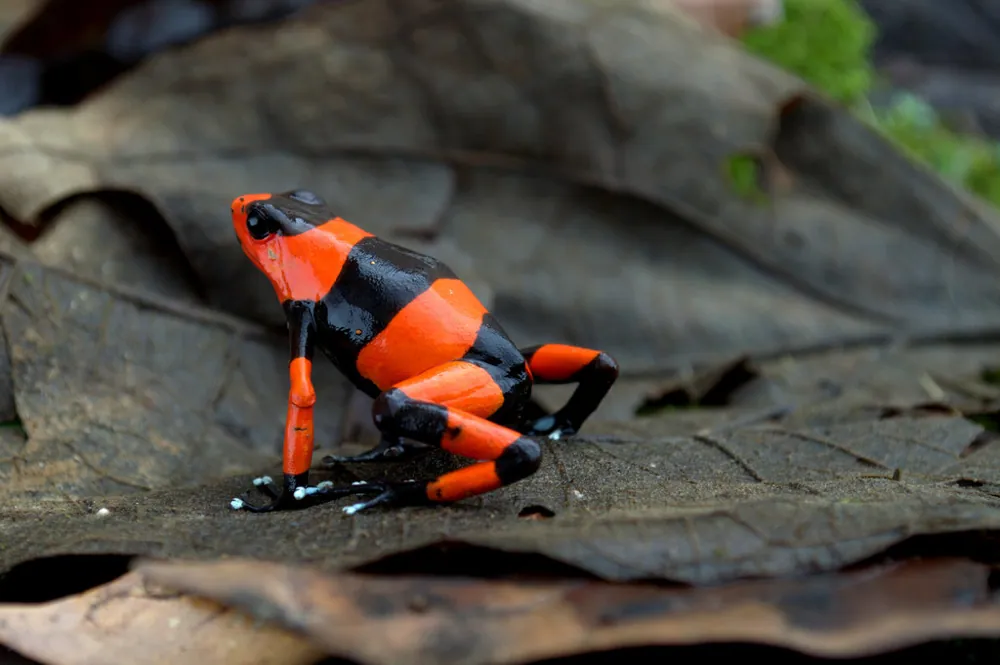
Lehmann's poison frog is a small, brightly marked frog that lives only in a small part of western Colombia. Its skin produces strong toxins, and its bright colours warn predators to leave it alone. It is critically endangered, so it matters for conservation as well as for safety.1


 Maziviro ayo
- Black or dark brown background with two bright, broad bands of colour round the body1
- Coloured bands on the arms and legs, and on the belly1
- Red, orange or yellow colour forms; each frog has its own unique pattern1
- Males have silver-tipped toes1
- Adults measure 31 to 36 mm from snout to vent1
Inowanzovhiringidzwa ne: The harlequin poison frog (Oophaga histrionicus) looks very similar and can interbreed with it. Scientists still debate whether Lehmann's poison frog is a separate species. The main difference is that Lehmann's frog lacks histrionicotoxins, a type of toxin found in the harlequin frog. Males also have calls that differ between northern and southern populations.1
Simba rechepfu
Ganda rayo rine chepfu. Ine ngozi kubata, kunanzva kana kudya.
Chepfu yayo inoitei?
It is not venomous. Its skin produces toxins, including alkaloids such as pumiliotoxins, that can be very poisonous. Frogs bred in captivity are not poisonous, because their diet lacks the chemicals needed to make the toxins.1
Ine ngozi yakadii kuvanhu?
Ngozi kuvanhu: YakakombaKana munhu akaibata kana kuidya, enda kuna chiremba. Kufa hakuwanzoitiki zvachose.The skin toxins can be very poisonous to predators, and some native tribes of Colombia used them to coat their darts. Frogs in captivity are not poisonous.1
Inoitei kana yatya?
Its bright, vivid colours act as a warning to predators that it is inedible.1
 Kana munhu akaibata kana kuidya
- Kana munhu akabata imwe: geza maoko zvakanaka uye usabata maziso kana muromo. Kana mwana kana chipfuwo chakananzva kana kudya imwe: fonera nzvimbo yeruzivo rwechepfu kana nhamba yechimbichimbi.
Gara uchitanga wafonera nhamba yechimbichimbi (112, 000, 911). Iri izano rakajairika rerubatsiro rwekutanga, kwete zano rechiremba. Zvakakosha zverubatsiro rwekutanga
 Gara wakachengeteka
- Usambobata mhuka yesango, kuedza kuitora kana kuinetsa, kunyange iri diki, uye kunyange ichiita seyakarara kana yakafa.
- Ipa nzvimbo. Kana ukasangana nayo, dzikama, dzokera shure zvishoma nezvishoma uirege iende nenzira yayo.
- Kana wakaibata kana kuidya: usakwesha maziso kana muromo wako, geza maoko ako uye wana rubatsiro rwechiremba.
Haisi kukutsvaga. Chepfu yayo iripo chete kuti pasava nechinhu chinoidya. Zvimwe pamusoro pekugara wakachengeteka
Yakakura sei?
Yakareba zvakadii?
 inenge kureba sechibatanidzo chemapepa
 inogona kumhanya mamita 100 mumasekondi 97 (munhu anomhanyisa kupfuura vose anoda 9.6)
Lehmann's poison frog yakakura sei kana yaenzaniswa NEWE?
Masvomhu chete mubrowser yako. Hapana chinochengetwa kana kutumirwa kupi zvako.
Inomhanya zvakadii?


Chokwadi
In the wild, this frog is toxic, but frogs kept in captivity lose their toxicity because the toxins come from their diet.1
Tadpoles in the same pool may eat each other, so the male carries them to separate water pools.1
The male is the one who guards the eggs and carries the tadpoles on his back for two to four weeks.1
Its skin toxins are being studied for possible medicinal uses.1
Its bright colours are a warning, a strategy called aposematism.1
Kuputsa ngano
Ngano: Lehmann's poison frog is always poisonous.
Chokwadi: Wild frogs are toxic, but frogs bred in captivity are not, because their diet lacks the chemicals needed to make the poison.1
Kune nyanzvi dzeuturu
- Zita resainzi
- Oophaga lehmanni
- Boka
- Matatya ane chepfu, matoad nemanewt
- Mhuri
- Dendrobatidae2
- Odha
- Anura
- Makondinendi
- Amerika yeKumaodzanyemba
- Vacheche
- The female lays a small number of large eggs on leaves about 1.2 metres above the forest floor. The male fertilises them, keeps them moist, then carries the tadpoles on his back to small water pools such as tree hollows and bromeliad rosettes.1
- Iri kurarama sei musango
- Critically endangered (IUCN); listed on CITES Appendix II1
- Ngozi kuvanhu
- 3 / 5: Yakakomba3
Kwakabva chokwadi
- Lehmann's poison frog (Wikipedia (CC BY-SA 4.0))
- Oophaga lehmanni (iNaturalist): mazita nekurongwa kwemhuka.
- Venom Wiki: danho rengozi, saizi yakajairika nekufungidzira kwekumhanya ndezvedu. Ona kuti tinozviwana sei: Matinoyera ngozi.
Chokwadi chimwe nechimwe pane peji rino chine nhamba inoratidza kwachakabva. Kana takakanganisa, ruregerero, tiri vanoda mhuka, kwete magazini yesainzi. Tiudze pa[email protected] tichazvigadzirisa.
 Chinyavada chine nzara! Venom Wiki iprojekiti yemunhu mumwe: yemahara, isina kushambadza uye isina zvinokuteedzera. Chipo chidiki chinobatsira kuti irambe iri paindaneti.Fudza chinyavada
Zvimwe kubva muboka rimwe chete: Matatya ane chepfu, matoad nemanewt
 Golden poison frogMatatya ane chepfu, matoad nemanewtInourayaUsabata
 Cane toadMatatya ane chepfu, matoad nemanewtInoda chirembaUsabata
 Dyeing poison dart frogMatatya ane chepfu, matoad nemanewtInongorwadzaUsabata
 Black-legged poison frogMatatya ane chepfu, matoad nemanewtInogona kuurayaUsabata
 Bruno's casque-headed frogMatatya ane chepfu, matoad nemanewtInoda chirembaUsabata
 Harlequin poison frogMatatya ane chepfu, matoad nemanewtInoda chirembaUsabata
 Terciopelo
 Brazilian wandering spider
 Eyelash viper
 Golden lancehead
 South American bushmaster
 Peruvian giant centipede