
 Áfíríkà
 Éṣíà
Éṣíà Yúróòpù
 Gúúsù Amẹ́ríkà
 Ọsirélíà àti Òṣéáníà
 Antáktíkà
 Òkun Pàsífíìkì
 Òkun Àtìláńtíìkì
 Òkun Íńdíà
 Òkun Áktíkì
 Òkun Mẹditaréníà
 Òkun Pupa
 Òkun Káríbíànù
 Òkun Coral
 Òkun Gúúsù Ṣáínà
 Òkun Fílípínì
 Òkun Andaman
 Òkun Àríwá
 Òkun Tímọ̀ àti Òkun Àráfúrà
 Ìyawọlẹ̀ Òkun Bẹ̀ngál
 Ìyawọlẹ̀ Òkun Kalifọ́níà
Dog-toothed cat snake
 Ìbùjẹ
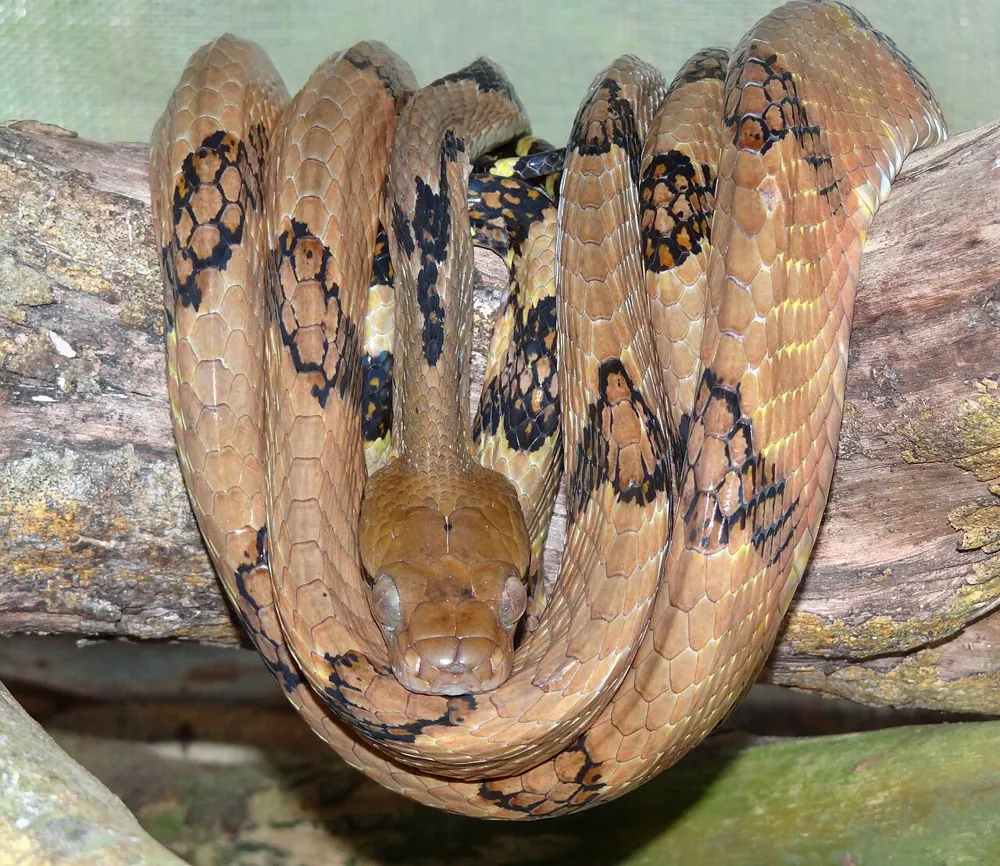
ÌbùjẹThe dog-toothed cat snake is a large, nocturnal snake that is active at night. It lives across Southeast Asia, from southern Thailand to the Philippines and Indonesia, and it is often found in gardens, plantations and towns as well as forests. It is a rear-fanged snake, so its venom is delivered through teeth at the back of its mouth.1


 Bí o ṣe lè dá a mọ̀
- A slender, large snake that can reach more than 2 m in total length1
- Yellowish or pale reddish-brown back with dark brown or black crossbars or spots1
- A wavy or irregular dark stripe behind each eye, with a dark streak on each side of the head1
- Yellowish belly, sometimes plain or marbled with brown1
- Strongly enlarged front teeth in the upper and lower jaws. Indonesian populations include black individuals.1
A sábà máa ń ṣì í mọ̀ sí: Other similar snakes have a more even or nearly even upper and lower line behind the eye, while this species has a distinctly wavy or irregular one. The closely related Boiga hoeseli is found in the Lesser Sundas east of Bali, including Sumbawa and Flores, and not where this species lives.1
Agbára oró
Oró ń jáde láti inú eyín oró tàbí eyín rẹ̀ nígbà tí ó bá bùjẹ.
Kí ni oró rẹ̀ máa ń ṣe?
It may have a potent neurotoxic venom, which attacks the nerves. Its effects have been shown to be reversible with neostigmine, a drug that affects nerve signalling, so envenoming from this species can be treated with anticholinesterase therapy.1
Báwo ló ṣe léwu tó fún ènìyàn?
Ewu fún ènìyàn: Ó ń dunniÓ lè dunni gan-an, ṣùgbọ́n kì í fẹ́rẹ̀ẹ́ le rárá.Its venom may be potent, so any bite should be taken seriously. The effects of the venom have been shown to be reversible with treatment.1
 Bí ó bá bùjẹ
- Envenoming from this species is said to be treatable with anticholinesterase therapy, which is a medical treatment.1
- Fọ ibi ìbùjẹ náà, jẹ́ kí ẹni náà farabalẹ̀, kí o sì wá ìrànlọ́wọ́ ìṣègùn. Àwọn irú kan (bí boomslang) lè pani ní wákàtí púpọ̀ lẹ́yìn náà.
Máa kọ́kọ́ pe nọ́ńbà pàjáwìrì rẹ nígbà gbogbo (112, 000, 911). Èyí jẹ́ ìtọ́sọ́nà ìtọ́jú àkọ́kọ́ gbogbogbò, kì í ṣe ìmọ̀ràn ìṣègùn. Ìpìlẹ̀ ìtọ́jú àkọ́kọ́
 Wà láìléwu
- Má ṣe fọwọ́ kan, mú tàbí yọ ẹranko igbó lẹ́nu láéláé, kódà bí ó bá kéré, kódà bí ó bá dà bí ẹni pé ó ń sùn tàbí ó ti kú.
- Fún un ní àyè. Bí o bá pàdé ọ̀kan, farabalẹ̀, sẹ́yìn díẹ̀díẹ̀ kí o sì jẹ́ kí ó máa bá ọ̀nà rẹ̀ lọ.
- Bí ọ̀kan bá bù ọ́ jẹ: farabalẹ̀, má ṣe mira, pe nọ́ńbà pàjáwìrì rẹ (112, 000, 911) tàbí lọ sí ilé ìwòsàn kíákíá. Rántí bí ó ṣe rí, fọ́tò máa ń ṣèrànwọ́.
Kò wá ọ kiri láti ṣe ọ́ léṣe. Ó ń lo oró rẹ̀ láti mú oúnjẹ tàbí láti dáàbò bo ara rẹ̀, ó sì fẹ́ràn láti farapamọ́ jù. Sí i nípa wíwà láìléwu
Báwo ló ṣe tóbi tó?
Báwo ló ṣe gùn tó?
 ó gùn tó ológbò ilé 4 láti imú dé ìrù
 ó gùn tó ọ̀gẹ̀dẹ̀ 11 tí a tò tẹ̀léra
 lè sáré mítà 100 ní ìṣẹ́jú-àáyá 54 (ènìyàn tó yára jùlọ nílò 9.6)
Báwo ni Dog-toothed cat snake ṣe tóbi tó tí a bá fi wé ÌWỌ?
Ìṣirò nìkan nínú bráwúsà rẹ. A kò fi ohunkóhun pamọ́, a kò sì fi ránṣẹ́ sí ibikíbi.
Báwo ló ṣe yára tó?


Òtítọ́
Its venom is neurotoxic, but its effects have been shown to be reversible with a drug called neostigmine.1
It is known to live high in the forest canopy, where it hunts birds, lizards and small bats.1
The eggs often stick together in a clutch, and the young cut a slit from inside the egg about one day before they hatch.1
The black spitting cobra (Naja sumatrana) is known to prey on this snake.1
Fún àwọn amòye oró
- Orúkọ sáyẹ́ǹsì
- Boiga cynodon
- Ẹgbẹ́
- Ejò oníyín ẹ̀yìn
- Ìdílé
- Colubridae2
- Ètò
- Squamata
- Àwọn kọ́ńtínẹ́ńtì
- Éṣíà
- Àwọn ọmọ
- It is egg-laying (oviparous). Females lay 6 to 12 eggs per clutch, and the eggs are about 52 mm long and 24.6 mm wide on average.1
- Bí ó ṣe ń ṣe nínú igbó
- Least concern1
- Ewu fún ènìyàn
- 2 / 5: Ó ń dunni3
Ibi tí àwọn òtítọ́ ti wá
- Boiga cynodon (Wikipedia (CC BY-SA 4.0))
- Boiga cynodon (iNaturalist): orúkọ àti ìpínsísọ̀rí.
- Venom Wiki: ìpele ewu, ìtóbi déédé àti àfojúbù ìyára jẹ́ tiwa. Wo bí a ṣe ń ṣírò wọn: Bí a ṣe ń díwọ̀n ewu.
Gbogbo òtítọ́ ojú-ìwé yìí ní nọ́ńbà tó tọ́ka sí orísun rẹ̀. Bí a bá ṣe àṣìṣe, má bínú, olólùfẹ́ ẹranko ni wá, kì í ṣe ìwé ìròyìn sáyẹ́ǹsì. Sọ fún wa ní [email protected] a ó sì tún un ṣe.
 Ebi ń pa àkekèé! Iṣẹ́ akanṣe ẹnì kan ṣoṣo ni Venom Wiki: ọ̀fẹ́ ni, kò sí ìpolówó, kò sì sí olùtọpinpin. Ẹ̀bùn kékeré ń ràn án lọ́wọ́ láti wà lórí íńtánẹ́ẹ̀tì.Bọ́ àkekèé
 Brown tree snake
 Tiger keelback
 Red-necked keelback
 Green cat snake
 Mangrove snake
 Asian vine snake
 Deathstalker
 Indian cobra
 Indian saw-scaled viper
 King cobra
 Puff adder
 Paramọlẹ Russell