
 Áfíríkà
 Éṣíà
Éṣíà Yúróòpù
 Gúúsù Amẹ́ríkà
 Ọsirélíà àti Òṣéáníà
 Antáktíkà
 Òkun Pàsífíìkì
 Òkun Àtìláńtíìkì
 Òkun Íńdíà
 Òkun Áktíkì
 Òkun Mẹditaréníà
 Òkun Pupa
 Òkun Káríbíànù
 Òkun Coral
 Òkun Gúúsù Ṣáínà
 Òkun Fílípínì
 Òkun Andaman
 Òkun Àríwá
 Òkun Tímọ̀ àti Òkun Àráfúrà
 Ìyawọlẹ̀ Òkun Bẹ̀ngál
 Ìyawọlẹ̀ Òkun Kalifọ́níà
Walking catfish
 Ẹ̀gún olóró
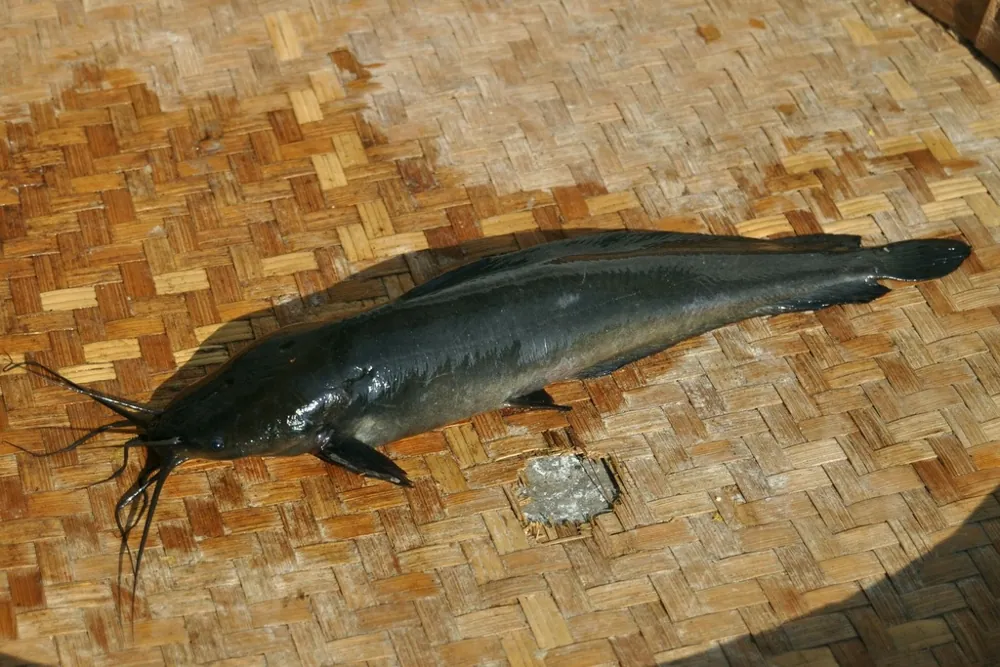
The walking catfish is a freshwater fish that can crawl across wet land to reach new water. It lives in Southeast Asia and has also been introduced to places such as Florida. Its spiny defence is the reason it needs careful handling.1


 Bí o ṣe lè dá a mọ̀
- Elongated body, grey or grey-brown in colour1
- Often covered on its sides with small white spots1
- Long dorsal and anal fins, and several pairs of sensory barbels1
- Scaleless skin covered in mucus1
- No adipose fin, a small fleshy fin on the back near the tail1
A sábà máa ń ṣì í mọ̀ sí: It is often confused with North American ictalurid catfish and with close relatives such as C. magur. The walking catfish can be told apart from the North American ictalurid catfish because it lacks an adipose fin.1
Agbára oró
Ẹ̀gún mímú ló ń gbé oró náà. Títẹ̀ ẹ́ mọ́lẹ̀ tàbí dídì í mú máa ń dunni.
Báwo ló ṣe léwu tó fún ènìyàn?
Ewu fún ènìyàn: Ó ń dunniÓ lè dunni gan-an, ṣùgbọ́n kì í fẹ́rẹ̀ẹ́ le rárá.It must be handled carefully when fished because of its embedded sting or thorn-like spines. It is also harmful as an invasive species, because it eats the food of native fish, preys on their young and can destroy fish farms.1
Kí ni ó máa ń ṣe nígbà tí ẹ̀rù bá bà á?
It has a sting or thorn-like spine hidden behind its fins, which it uses to defend itself.1
 Bí ẹ̀gún rẹ̀ bá gún ọ
- Fi ọgbẹ́ náà sínú omi gbígbóná, tó gbóná tó bí ẹni náà ṣe lè fara dà á láìjóná (fi ọwọ́ ara rẹ dán an wò), fún ìṣẹ́jú 30 sí 90. Wá ìrànlọ́wọ́ ìṣègùn, pàápàá fún ẹja òkúta àti stingray.
Máa kọ́kọ́ pe nọ́ńbà pàjáwìrì rẹ nígbà gbogbo (112, 000, 911). Èyí jẹ́ ìtọ́sọ́nà ìtọ́jú àkọ́kọ́ gbogbogbò, kì í ṣe ìmọ̀ràn ìṣègùn. Ìpìlẹ̀ ìtọ́jú àkọ́kọ́
 Wà láìléwu
- Má ṣe fọwọ́ kan, mú tàbí yọ ẹranko igbó lẹ́nu láéláé, kódà bí ó bá kéré, kódà bí ó bá dà bí ẹni pé ó ń sùn tàbí ó ti kú.
- Fún un ní àyè. Bí o bá pàdé ọ̀kan, farabalẹ̀, sẹ́yìn díẹ̀díẹ̀ kí o sì jẹ́ kí ó máa bá ọ̀nà rẹ̀ lọ.
- Bí ẹ̀gún rẹ̀ bá gún ọ: farabalẹ̀, má ṣe mira, pe nọ́ńbà pàjáwìrì rẹ (112, 000, 911) tàbí lọ sí ilé ìwòsàn kíákíá. Rántí bí ó ṣe rí, fọ́tò máa ń ṣèrànwọ́.
Kò wá ọ kiri láti ṣe ọ́ léṣe. Ó ń lo oró rẹ̀ láti mú oúnjẹ tàbí láti dáàbò bo ara rẹ̀, ó sì fẹ́ràn láti farapamọ́ jù. Sí i nípa wíwà láìléwu
Báwo ló ṣe tóbi tó?
Báwo ló ṣe gùn tó?
Báwo ló ṣe wúwo tó?
 ó gùn tó ọ̀gẹ̀dẹ̀ 3 tí a tò tẹ̀léra
 ó gùn tó bíríkì ìṣeré 16 tí a tò sí ìlà kan
 lè lúwẹ̀ẹ́ gígùn adágún ìwẹ̀ ńlá (50 m) ní ìṣẹ́jú-àáyá 30
Báwo ni Walking catfish ṣe tóbi tó tí a bá fi wé ÌWỌ?
Ìṣirò nìkan nínú bráwúsà rẹ. A kò fi ohunkóhun pamọ́, a kò sì fi ránṣẹ́ sí ibikíbi.
Báwo ló ṣe yára tó?
Òtítọ́
It can survive 18 hours out of water.1
It moves over land with snake-like wiggles, using its pectoral fins to stay upright.1
In Florida, fish farmers have had to put up fences to protect their ponds from them.1
It often rises to the surface to gulp air, because it breathes air as well as using water.1
Walking catfish were imported to Florida in the early 1960s for aquaculture, and escapes led to wild populations.1
In Indonesia it is known as lele and is the main ingredient in dishes such as pecel lele.1
Olùfọ́ àròsọ
Àròsọ: The walking catfish truly walks on land like a four-legged or two-legged animal.
Òtítọ́: It does not walk in that way. It uses its pectoral fins to stay upright while it wiggles its body in snake-like movements.1
Ibi tí àwọn òtítọ́ ti wá
- Walking catfish (Wikipedia (CC BY-SA 4.0))
- Clarias batrachus (iNaturalist): orúkọ àti ìpínsísọ̀rí.
- Venom Wiki: ìpele ewu, ìtóbi déédé àti àfojúbù ìyára jẹ́ tiwa. Wo bí a ṣe ń ṣírò wọn: Bí a ṣe ń díwọ̀n ewu.
Gbogbo òtítọ́ ojú-ìwé yìí ní nọ́ńbà tó tọ́ka sí orísun rẹ̀. Bí a bá ṣe àṣìṣe, má bínú, olólùfẹ́ ẹranko ni wá, kì í ṣe ìwé ìròyìn sáyẹ́ǹsì. Sọ fún wa ní [email protected] a ó sì tún un ṣe.
 Ebi ń pa àkekèé! Iṣẹ́ akanṣe ẹnì kan ṣoṣo ni Venom Wiki: ọ̀fẹ́ ni, kò sí ìpolówó, kò sì sí olùtọpinpin. Ẹ̀bùn kékeré ń ràn án lọ́wọ́ láti wà lórí íńtánẹ́ẹ̀tì.Bọ́ àkekèé
Sí i láti inú ẹgbẹ́ kan náà: Ẹja olóró
 Giant freshwater stingrayẸja olóróÓ nílò dókítà
 Asian stinging catfishẸja olóróÓ nílò dókítàMá ṣe fọwọ́ kàn án
 Reef stonefishẸja olóróÓ lè paniMá ṣe fọwọ́ kàn án
 Red lionfishẸja olóróÓ nílò dókítàMá ṣe fọwọ́ kàn án
 Estuarine stonefishẸja olóróÓ lè paniMá ṣe fọwọ́ kàn án
 Short-tail stingrayẸja olóróÓ lè pani
 Deathstalker
 Indian cobra
 Indian saw-scaled viper
 King cobra
 Puff adder
 Paramọlẹ Russell