
 Afrika
 Asia
Asia Ulaya
Ulaya Amerika Kusini
 Australia na Oceania
 Antaktika
 Bahari ya Pasifiki
 Bahari ya Atlantiki
 Bahari ya Hindi
 Bahari ya Aktiki
 Bahari ya Mediterania
 Bahari ya Shamu
 Bahari ya Karibi
 Bahari ya Matumbawe
 Bahari ya Kusini ya China
 Bahari ya Ufilipino
 Bahari ya Andaman
 Bahari ya Kaskazini
 Bahari ya Timor na Arafura
 Ghuba ya Bengal
 Ghuba ya California
Buff-tailed bumblebee
 Kudungwa
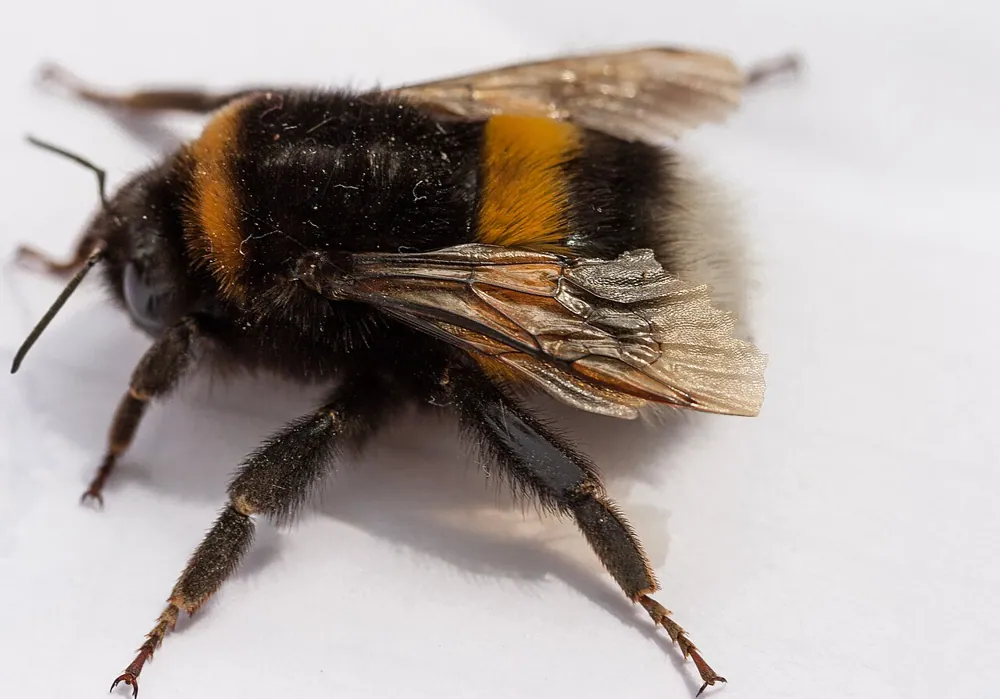
The buff-tailed bumblebee is a fuzzy, striped bee and one of the most common bumblebees in Europe. It lives in colonies and is one of the main bees used to pollinate greenhouse crops. It can also be found in many places outside its home range, where it has spread after escaping from greenhouses.1


 Jinsi ya kumtambua
- Workers have white-ended abdomens.1
- The queen has a buff-white abdomen tip, which gives the bee its name.1
- Yellowish bands that are darker than those of the white-tailed bumblebee when the two are compared side by side.1
- Queens are 20 to 22 mm long, males 14 to 16 mm and workers 11 to 17 mm.1
Mara nyingi huchanganywa na: The white-tailed bumblebee (Bombus lucorum), a close relative, looks almost identical. When the two are compared side by side, the yellowish bands of the buff-tailed bumblebee look darker.1
Nguvu ya sumu
Sumu hutoka kupitia mdungo.
Ana hatari gani kwa watu?
Hatari kwa watu: HafifuKama kudungwa na nyuki au chini ya hapo. Kimsingi hana madhara kwa watu.Hufanya nini akiogopa?
Workers defend the colony.1
 Akidunga
- Kwangua mwiba wa nyuki na upoze mahali hapo.
- Mtu akipata shida ya kupumua, uso au koo likivimba, au akijisikia kuzimia, hiyo ni dharura ya mzio: piga namba ya dharura na umtumie kalamu yake ya adrenalini kama anayo.
Daima piga namba ya dharura kwanza (112, 000, 911). Huu ni mwongozo wa jumla wa huduma ya kwanza, si ushauri wa kitabibu. Misingi ya huduma ya kwanza
 Kaa salama
- Kamwe usimguse, kumkamata wala kumchokoza mnyama wa porini, hata akiwa mdogo, na hata akionekana amelala au amekufa.
- Mpe nafasi. Ukikutana naye, tulia, rudi nyuma polepole na umwache aende zake.
- Akikudunga: tulia, usitikisike, piga namba yako ya dharura (112, 000, 911) au nenda hospitali haraka. Kumbuka alivyoonekana, picha husaidia.
Hakuwindi wewe. Hutumia sumu yake kukamata chakula au kujilinda, na hupendelea zaidi kujificha. Zaidi kuhusu kukaa salama
Ana ukubwa gani?
Ana urefu gani?
Ana uzito gani?
 karibu urefu sawa na kibanio cha karatasi
 mwepesi kiasi kwamba usingemhisi mkononi
 angeweza kuruka kuvuka uwanja mzima wa mpira kwa sekunde 14
Buff-tailed bumblebee ana ukubwa gani ukilinganisha na WEWE?
Ni hesabu tu kwenye kivinjari chako. Hakuna kinachohifadhiwa wala kutumwa popote.
Ana kasi gani?


Ukweli
Worker bees vary unusually widely in size, with thorax lengths from 2.3 to 6.9 mm. This is unusual among bees.1
It has escaped from captivity and is now considered an invasive species in places such as Japan, Chile, Argentina and Tasmania.1
It is one of the main species used for greenhouse pollination, which is why it is found in many countries where it is not native.1
The queen usually mates with only one male, unlike many social insects.1
The colony works as a team. It has three social castes, with the queen laying eggs, workers foraging and defending the nest, and males leaving to find mates.1
Kwa wataalamu wa sumu
Ukweli unatoka wapi
- Bombus terrestris (Wikipedia (CC BY-SA 4.0))
- Bombus terrestris (iNaturalist): majina na uainishaji.
- Venom Wiki: kiwango cha hatari, ukubwa wa kawaida na makadirio ya kasi ni yetu wenyewe. Ona jinsi tunavyovipata: Jinsi tunavyopima hatari.
Kila ukweli kwenye ukurasa huu una namba inayoonyesha chanzo chake. Kama tumekosea kitu, samahani, sisi ni wapenzi wa wanyama, si jarida la kisayansi. Tuambie kupitia [email protected] nasi tutarekebisha.
 Nge ana njaa! Venom Wiki ni mradi wa mtu mmoja: bure, bila matangazo na bila vifuatiliaji. Mchango mdogo husaidia kuiweka hewani.Mlishe nge
Zaidi kutoka kundi hilohilo: Nyuki, nyigu na mavu
 Asian giant hornet
 Common wasp
 European hornet
 Western honey bee
 Giant honey bee
 Asian hornet
Pia anaishi: Ulaya
 Common European adderNyoka aina ya fira na kifutuAnahitaji daktari
 Spanish flyWanyama wengine wenye sumu ya kugusa au kulaAnahitaji daktariUsiguse
 Fire salamanderVyura wa sumu, chura na mijusi-majiInauma tuUsiguse
 Blunt-nosed viperNyoka aina ya fira na kifutuAnaweza kuua
 Nose-horned viperNyoka aina ya fira na kifutuAnaweza kuua
 Ottoman viperNyoka aina ya fira na kifutuAnaweza kuua