
 ஆப்பிரிக்கா
 ஆசியா
ஆசியா ஐரோப்பா
 தென் அமெரிக்கா
 ஆஸ்திரேலியா மற்றும் ஓசியானியா
 அண்டார்டிகா
 பசிபிக் பெருங்கடல்
 அட்லாண்டிக் பெருங்கடல்
 இந்தியப் பெருங்கடல்
 ஆர்க்டிக் பெருங்கடல்
 மத்தியதரைக் கடல்
 செங்கடல்
 கரீபியன் கடல்
 பவளக் கடல்
 தென் சீனக் கடல்
 பிலிப்பைன்ஸ் கடல்
 அந்தமான் கடல்
 வட கடல்
 திமோர் மற்றும் அரபுரா கடல்
 வங்காள விரிகுடா
 கலிபோர்னியா வளைகுடா
Flower urchin
 கொட்டுகள்
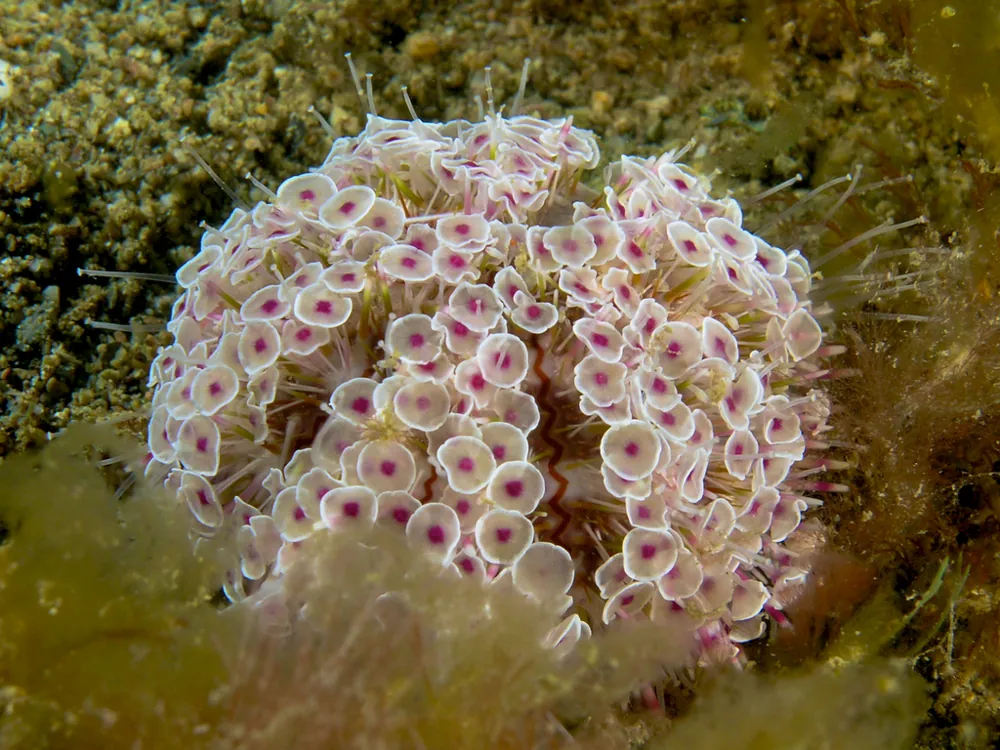
The flower urchin is a sea urchin with flower-shaped claws that can sting. It lives on coral reefs, in seagrass beds and on rocky or sandy sea floors across the Indo-West Pacific. It is one of the sea urchins most likely to cause a painful and medically significant sting.1
 இதை எப்படி அடையாளம் காண்பது
- Flower-like claws (globiferous pedicellariae) that are pinkish-white to yellowish-white, with a central purple dot and a bright white rim1
- A rigid shell (test) that is deep red and grey, with a purple zigzag pattern along each of the five ambulacral segments; rarely it is greenish or pale purple1
- Short, blunt spines, usually hidden beneath the flower-like claws1
- A body diameter of about 15 to 20 cm1
அடிக்கடி இதனுடன் குழப்பப்படுகிறது: Other Toxopneustes urchins look similar. Toxopneustes roseus has a uniform pink, brown or purple test and lives only in the eastern Pacific. Toxopneustes elegans, found only around Japan, has a dark stripe just below the tips of its spines. Toxopneustes maculatus is very rare, known from Réunion, Christmas Island and Palmyra Atoll, and has bright violet on its underside and a violet band around its middle.1
நஞ்சு சக்தி
நஞ்சு ஒரு கொடுக்கு வழியாக வெளியேறும்.
இதன் நஞ்சு என்ன செய்யும்?
Its venom is made in glands at the base of the flower-like claws, not in the spines. The claws have sharp fang-like tips that can penetrate human skin, and when touched they snap shut and inject venom. The sting is described as extremely painful and medically significant.1
மனிதர்களுக்கு இது எவ்வளவு ஆபத்தானது?
மனிதர்களுக்கு ஆபத்து: மிக ஆபத்தானதுசிகிச்சை பெறாத ஒருவரை இது கொல்லக்கூடும்.It is considered highly dangerous to people. Its stings are extremely painful and medically significant. Larger individuals with bigger claws are thought to be more dangerous, because the strength of the venom is linked to claw size.1
பயப்படும்போது இது என்ன செய்யும்?
When touched or brushed against, its flower-like claws snap shut and inject venom. The claws can break off and stay attached to the skin, continuing to inject venom for several hours.1
 கொட்டினால்
- காயத்தைச் சூடான நீரில் வை, அந்த நபர் சுடாமல் தாங்கும் அளவுக்குச் சூடாக, முட்களை எடுக்க மருத்துவ உதவி பெறு. நீயே தோண்டி எடுக்காதே.
எப்போதும் முதலில் உன் அவசர எண்ணை (112, 000, 911) அழை. இது பொதுவான முதலுதவி வழிகாட்டல், மருத்துவ ஆலோசனை அல்ல. முதலுதவி அடிப்படைகள்
 பாதுகாப்பாக இரு
- காட்டு விலங்கை ஒருபோதும் தொடாதே, பிடிக்காதே, சீண்டாதே, அது சிறியதாக இருந்தாலும், தூங்குவது போல அல்லது இறந்தது போலத் தெரிந்தாலும்.
- அதற்கு இடம் கொடு. சந்தித்தால், அமைதியாக இரு, மெதுவாகப் பின்வாங்கு, அதை அதன் வழியில் போக விடு.
- இது உன்னைக் கொட்டினால்: அமைதியாக இரு, அசையாதே, உன் அவசர எண்ணை (112, 000, 911) அழை அல்லது விரைவாக மருத்துவமனைக்குச் செல். அது எப்படி இருந்தது என்று நினைவில் வை, புகைப்படம் உதவும்.
இது உன்னைத் தேடி வரவில்லை. உணவைப் பிடிக்கவோ தன்னைக் காத்துக்கொள்ளவோ நஞ்சைப் பயன்படுத்துகிறது, ஒளிந்துகொள்வதையே அதிகம் விரும்புகிறது. பாதுகாப்பாக இருப்பது பற்றி மேலும்
உலகில் எங்கே?
இது எவ்வளவு பெரியது?
இது எவ்வளவு நீளமானது?
 வரிசையாக வைத்த 6 பொம்மைக் கட்டடச் செங்கற்களின் நீளம்
 தோட்ட நத்தையைவிட மெதுவானது
உன்னுடன் ஒப்பிடும்போது Flower urchin எவ்வளவு பெரியது?
உன் உலாவியில் சிறிய கணக்கு மட்டும். எதுவும் சேமிக்கப்படுவதில்லை, எங்கும் அனுப்பப்படுவதில்லை.
இது எவ்வளவு வேகமானது?

உண்மைகள்
Unlike most venomous sea urchins, it does not sting through its spines. Its venom is delivered through the claws.1
A zebra crab, Zebrida adamsii, often lives attached to its shell. The crab is thought to be immune to its venom.1
Its flower-like claws are the source of its common name and are its most striking feature.1
Tiny shrimp, Athanas areteformis, sometimes live among its spines.1
In the seashell trade, its empty shells are called "mushroom urchins" because they look like mushroom caps.1
கட்டுக்கதை உடைப்பான்
கட்டுக்கதை: Sea urchins sting with their spines.
உண்மை: Flower urchins do not deliver venom through their spines. Their venom comes from the flower-like claws, which snap shut and inject it.1
நஞ்சு நிபுணர்களுக்கு
- அறிவியல் பெயர்
- Toxopneustes pileolus
- குழு
- முள்ளெலிகள், நட்சத்திர மீன்கள், புழுக்கள்
- குடும்பம்
- Toxopneustidae2
- வரிசை
- Camarodonta
- கண்டங்கள்
- இந்தியப் பெருங்கடல், பசிபிக் பெருங்கடல், செங்கடல், பவளக் கடல், பிலிப்பைன்ஸ் கடல், திமோர் மற்றும் அரபுரா கடல், வங்காள விரிகுடா, பெருங்கடல்கள்
- குட்டிகள்
- Eggs and sperm are released into the water during mass spawning events, and fertilisation happens outside the body.1
- மனிதர்களுக்கு ஆபத்து
- 4 / 5: மிக ஆபத்தானது3
உண்மைகள் எங்கிருந்து வருகின்றன
- Toxopneustes pileolus (Wikipedia (CC BY-SA 4.0))
- Toxopneustes pileolus (iNaturalist): பெயர்களும் வகைப்பாடும்.
- Venom Wiki: ஆபத்து நிலை, வழக்கமான அளவு, வேக ஊகம் எங்களுடையவை. நாங்கள் எப்படிக் கணக்கிடுகிறோம் என்று பார்: நாங்கள் ஆபத்தை எப்படி மதிப்பிடுகிறோம்.
இந்தப் பக்கத்தில் உள்ள ஒவ்வொரு உண்மைக்கும் அதன் ஆதாரத்தைக் காட்டும் ஒரு எண் உண்டு. நாங்கள் ஏதாவது தவறு செய்திருந்தால் மன்னிக்கவும், நாங்கள் விலங்கு ரசிகர்கள், அறிவியல் இதழ் அல்ல. [email protected]-இல் எங்களுக்குச் சொல், நாங்கள் சரிசெய்வோம்.
 தேளுக்குப் பசிக்கிறது! Venom Wiki ஒரே ஒருவரின் திட்டம்: இலவசம், விளம்பரமில்லை, கண்காணிப்பு இல்லை. ஒரு சிறிய உதவி அதை இணையத்தில் வைத்திருக்க உதவும்.தேளுக்கு உணவளி
அதே குழுவிலிருந்து மேலும்: முள்ளெலிகள், நட்சத்திர மீன்கள், புழுக்கள்
 Crown-of-thorns starfishமுள்ளெலிகள், நட்சத்திர மீன்கள், புழுக்கள்மருத்துவர் தேவைதொடாதே
 Fire urchinமுள்ளெலிகள், நட்சத்திர மீன்கள், புழுக்கள்மருத்துவர் தேவைதொடாதே
 Bearded firewormமுள்ளெலிகள், நட்சத்திர மீன்கள், புழுக்கள்வலிக்கும் மட்டும்தொடாதே
 Black long-spined urchinமுள்ளெலிகள், நட்சத்திர மீன்கள், புழுக்கள்வலிக்கும் மட்டும்தொடாதே
 Bloodwormமுள்ளெலிகள், நட்சத்திர மீன்கள், புழுக்கள்வலிக்கும் மட்டும்
 Bobbit wormமுள்ளெலிகள், நட்சத்திர மீன்கள், புழுக்கள்வலிக்கும் மட்டும்
இங்கும் வாழ்கிறது: இந்தியப் பெருங்கடல்
 Australian box jellyfishஜெல்லிமீன்களும் கடல் கொட்டிகளும்உயிர்க்கொல்லிதொடாதே
 Geography coneகூம்பு நத்தைகளும் ஆக்டோபஸ்களும்உயிர்க்கொல்லி
 Greater blue-ringed octopusகூம்பு நத்தைகளும் ஆக்டோபஸ்களும்உயிர்க்கொல்லி
 Southern blue-ringed octopusகூம்பு நத்தைகளும் ஆக்டோபஸ்களும்உயிர்க்கொல்லி
 Hawksbill sea turtleமற்ற நச்சுள்ள விலங்குகள்கொல்லக்கூடும்
 Irukandji jellyfishஜெல்லிமீன்களும் கடல் கொட்டிகளும்கொல்லக்கூடும்தொடாதே