
 África
 Asia
Asia Europa
 Sudamérica
 Australia y Oceanía
 Antártida
 Océano Pacífico
 Océano Atlántico
 Océano Índico
 Océano Ártico
 Mar Mediterráneo
 Mar Rojo
 Mar Caribe
 Mar del Coral
 Mar de China Meridional
 Mar de Filipinas
 Mar de Andamán
 Mar del Norte
 Mar de Timor y de Arafura
 Golfo de Bengala
 Golfo de California
Alpine salamander
 Veneno en la piel
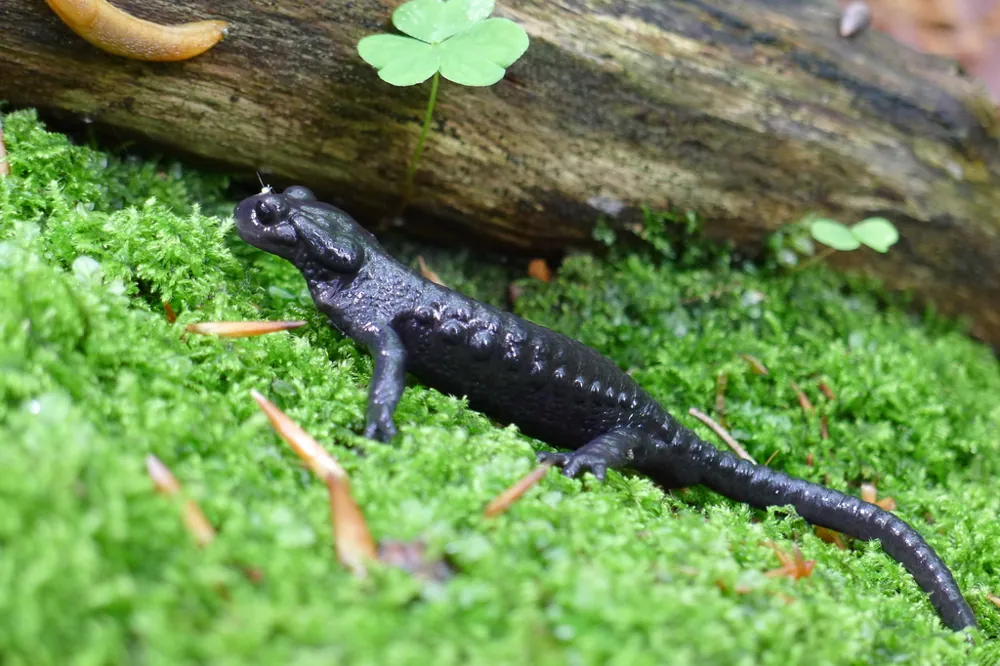
The alpine salamander is a dark, slow-moving amphibian that lives high in the mountains of Europe. It spends its whole life on land, sheltering under stones, logs and in rock crevices. It produces toxic compounds from its skin, which help protect it from predators.1
 Cómo reconocerlo
- Usually small and dark brown or black1
- Some forms have yellow, golden or white spots or marks on the back and head1
- Males have swollen, visible cloacae and are slimmer than females1
- Elongated head shape, with glands behind and beside the eyes1
- Between 11 and 13 grooves along each side of the body, and a double row of glands down the back1
Se confunde a menudo con: Lanza's alpine salamander (Salamandra lanzai) is a similar species that lives in one small area of the western Alps. The Corsican fire salamander (Salamandra corsica) is the alpine salamander's closest related species.1
Poder tóxico
Su piel es venenosa. Es peligroso tocarlo, lamerlo o comerlo.
¿Qué hace su toxina?
Alpine salamanders produce toxic compounds from their skin. These compounds may protect them from predators and from microbes.1
¿Qué peligro tiene para las personas?
Peligro para las personas: LeveComo una picadura de abeja o menos. Prácticamente inofensivo para las personas.¿Qué hace cuando se asusta?
Their yellow markings are thought to be a warning colour that deters predators, and the pure black colouring may also warn some predators off.1
 Si alguien lo tocó o se lo comió
- Si alguien tocó uno: lávale bien las manos y que no se toque los ojos ni la boca. Si un niño o una mascota lo lamió o se lo comió: llama al centro de toxicología o a emergencias.
Llama siempre primero a tu número de emergencias (112, 000, 911). Esto son pautas generales de primeros auxilios, no consejo médico. Primeros auxilios básicos
 Mantente a salvo
- Nunca toques, atrapes ni molestes a un animal salvaje, aunque sea pequeño y aunque parezca dormido o muerto.
- Déjale espacio. Si te encuentras uno, mantén la calma, retrocede despacio y deja que siga su camino.
- Si lo tocaste o te lo comiste: no te frotes los ojos ni la boca, lávate las manos y busca ayuda médica.
No va a por ti. Su veneno solo está ahí para que nadie se lo coma. Más sobre cómo protegerte
¿En qué parte del mundo?
¿Qué tamaño tiene?
¿Cuánto mide?
 mide como 5 piezas de construcción de juguete en fila
¿Qué tamaño tiene Alpine salamander comparado contigo?
Solo cálculos en tu navegador. No se guarda ni se envía nada a ningún sitio.
¿Qué velocidad alcanza?


Datos
Alpine salamanders are fully terrestrial, so they never need water to breed. Unlike many salamanders, their young do not develop as larvae in water.1
Young snakes, especially juvenile European adders, are a notable predator. In some locations, alpine salamanders make up just under half of these snakes' diet.1
They mark their territory with faecal pellets. Their scent tells other salamanders whether a pellet was left by a member of the same sex and species, and warns them that the site is already claimed.1
They are very stationary animals. The furthest a tracked individual was seen to travel in one summer was 12 metres.1
Their colour varies a great deal. Some populations are completely black, while others have bright yellow, white or grey spotting.1
Alpine salamanders cannot regulate their own body temperature, so losing a shelter can be extremely costly, and even fatal.1
Para expertos en veneno
- Nombre científico
- Salamandra atra
- Grupo
- Ranas venenosas, sapos y tritones
- Familia
- Salamandridae2
- Orden
- Caudata
- Continentes
- Europa
- Crías
- They give birth to live young. Their larvae do not develop in water, because the whole life cycle takes place on land.1
- Esperanza de vida
- unos 10 años1
- Cómo le va en la naturaleza
- Least Concern (IUCN Red List), although their numbers are decreasing and the subspecies S. a. aurorae is declining more quickly1
- Peligro para las personas
- 1 / 5: Leve3
De dónde salen los datos
- Alpine salamander (Wikipedia (CC BY-SA 4.0))
- Salamandra atra (iNaturalist): nombres y clasificación.
- Venom Wiki: el nivel de peligro, el tamaño típico y la velocidad estimada son nuestros. Mira cómo los calculamos: Cómo valoramos el peligro.
Cada dato de esta página tiene un número que lleva a su fuente. Si nos hemos equivocado en algo, perdón, somos fans de los animales, no una revista científica. Escríbenos a [email protected] y lo arreglamos.
 ¡El escorpión tiene hambre! Venom Wiki es un proyecto de una sola persona: gratis, sin anuncios y sin rastreadores. Una pequeña propina ayuda a mantenerlo en línea.Alimenta al escorpión
Más del mismo grupo: Ranas venenosas, sapos y tritones
 Fire salamanderRanas venenosas, sapos y tritonesSolo dueleNo tocar
 Common toadRanas venenosas, sapos y tritonesSolo dueleNo tocar
 European fire-bellied toadRanas venenosas, sapos y tritonesInofensivo
 Iberian ribbed newtRanas venenosas, sapos y tritonesInofensivo
 Natterjack toadRanas venenosas, sapos y tritonesInofensivo
 European green toadRanas venenosas, sapos y tritonesInofensivo
 Common European adder
 Spanish fly
 Common wasp
 European hornet
 Western honey bee
 Blunt-nosed viper