
 África
 Asia
Asia Europa
 Sudamérica
 Australia y Oceanía
 Antártida
 Océano Pacífico
 Océano Atlántico
 Océano Índico
 Océano Ártico
 Mar Mediterráneo
 Mar Rojo
 Mar Caribe
 Mar del Coral
 Mar de China Meridional
 Mar de Filipinas
 Mar de Andamán
 Mar del Norte
 Mar de Timor y de Arafura
 Golfo de Bengala
 Golfo de California
Compass jellyfish
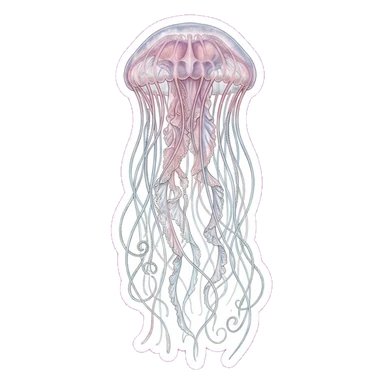 Tentáculos urticantes
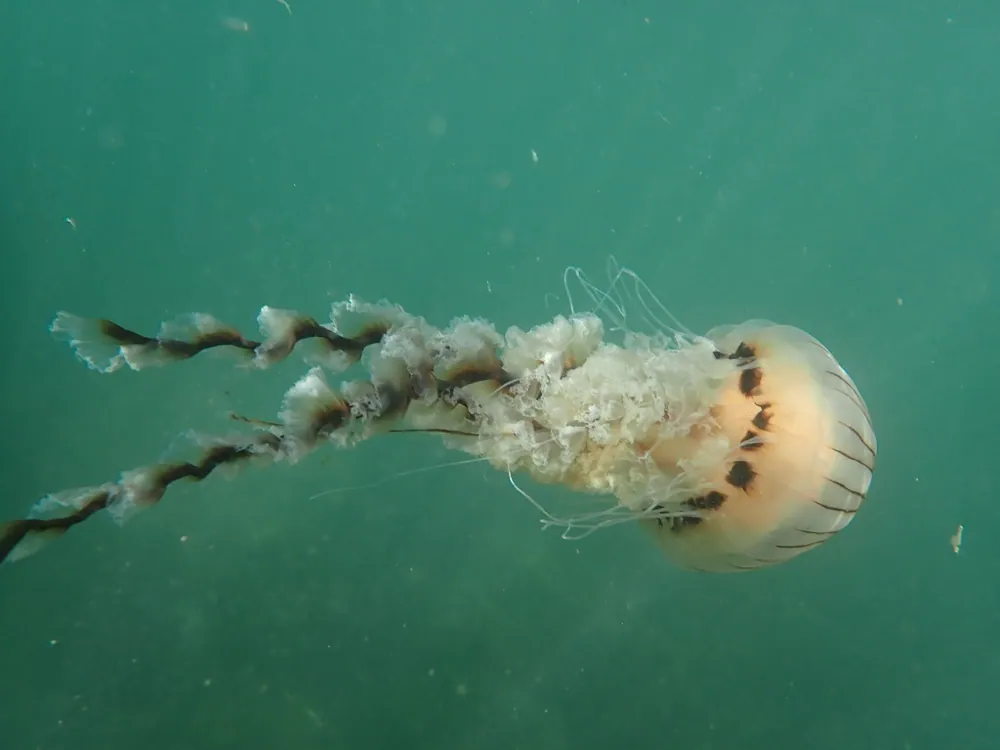
The compass jellyfish is a common jellyfish that lives in cool coastal seas of the northeast Atlantic, including the North Sea and the Mediterranean. Its bell has a pattern that looks like the face of a compass, which gives it its name. Its tentacles carry stinging cells, so it is best left alone.1
 Cómo reconocerlo
- Adults have a bell 15 to 25 cm across, usually yellowish white with some brown.1
- The bell has 16 brown, elongated V-shaped markings around a central brown spot.1
- It has 24 tentacles arranged in eight groups of three.1
- It has four oral arms that are noticeably longer than the tentacles and look folded and frilly.1
- Juveniles lack the compass pattern. They look white and polka-dotted, with a reddish fringe on the bell edge.1
Se confunde a menudo con: Records of this species from the southeastern Atlantic, including South Africa, were caused by confusion with close relatives: C. africana, C. fulgida and an undescribed species tentatively called "C. agulhensis".1
Poder del veneno
Miles de células urticantes diminutas se disparan cuando algo las toca.
¿Qué hace su veneno?
Each tentacle has stinging cells used to capture prey and to defend against predators. Jellyfish stings are painful and can be deadly to humans.1
¿Qué peligro tiene para las personas?
Peligro para las personas: DolorosoPuede doler de verdad, pero casi nunca es grave.Jellyfish stings are painful and sometimes deadly to humans.1
¿Qué hace cuando se asusta?
Stinging cells on its tentacles are used to defend it from predators.1
 Si pica
- Sal del agua y quita los tentáculos que queden (con guantes o un trapo).
- Para las cubomedusas tropicales: echa vinagre sobre las picaduras al menos 30 segundos, pide ayuda y prepárate para hacer RCP. Para fragatas portuguesas y la mayoría de las demás: aclara con agua de mar y luego agua caliente para el dolor.
Llama siempre primero a tu número de emergencias (112, 000, 911). Esto son pautas generales de primeros auxilios, no consejo médico. Primeros auxilios básicos
 Mantente a salvo
- Nunca toques, atrapes ni molestes a un animal salvaje, aunque sea pequeño y aunque parezca dormido o muerto.
- Déjale espacio. Si te encuentras uno, mantén la calma, retrocede despacio y deja que siga su camino.
- Si te pica: mantén la calma, no te muevas, llama a tu número de emergencias (112, 000, 911) o ve rápido a un hospital. Recuerda cómo era, una foto ayuda.
No va a por ti. Usa su veneno para cazar o defenderse, y prefiere mil veces esconderse. Más sobre cómo protegerte
¿En qué parte del mundo?
¿Qué tamaño tiene?
¿Cuánto mide?
 mide como 8 piezas de construcción de juguete en fila
¿Qué tamaño tiene Compass jellyfish comparado contigo?
Solo cálculos en tu navegador. No se guarda ni se envía nada a ningún sitio.
¿Qué velocidad alcanza?


Datos
Males release sperm from their mouths into the water, and females can fertilise sperm from several males.1
Adults often carry a parasite called Hyperia medusarum, which settles inside the body, especially the gonads.1
Compass jellyfish have very few predators. Leatherback sea turtles and ocean sunfish are known to eat them.1
Warmer winters allow longer release periods for young, and the species is predicted to move further north as the seas warm.1
Cazamitos
Mito: Compass jellyfish live in the southeastern Atlantic, including South Africa.
Verdad: Earlier records from there were due to confusion with close relatives. The species lives in the northeast Atlantic.1
Para expertos en veneno
- Nombre científico
- Chrysaora hysoscella
- Grupo
- Medusas y picadores marinos
- Familia
- Pelagiidae2
- Orden
- Semaeostomeae
- Continentes
- Océano Atlántico, Mar Mediterráneo, Mar del Norte, Los océanos
- Crías
- Females release planular larvae, which settle on the seabed and grow into polyps. The polyps then release young medusae.1
- Peligro para las personas
- 2 / 5: Doloroso3
De dónde salen los datos
- Chrysaora hysoscella (Wikipedia (CC BY-SA 4.0))
- Chrysaora hysoscella (iNaturalist): nombres y clasificación.
- Venom Wiki: el nivel de peligro, el tamaño típico y la velocidad estimada son nuestros. Mira cómo los calculamos: Cómo valoramos el peligro.
Cada dato de esta página tiene un número que lleva a su fuente. Si nos hemos equivocado en algo, perdón, somos fans de los animales, no una revista científica. Escríbenos a [email protected] y lo arreglamos.
 ¡El escorpión tiene hambre! Venom Wiki es un proyecto de una sola persona: gratis, sin anuncios y sin rastreadores. Una pequeña propina ayuda a mantenerlo en línea.Alimenta al escorpión
Más del mismo grupo: Medusas y picadores marinos
 Australian box jellyfishMedusas y picadores marinosMortalNo tocar
 Irukandji jellyfishMedusas y picadores marinosPuede matarNo tocar
 Portuguese man o' warMedusas y picadores marinosNecesita médicoNo tocar
 Lion's mane jellyfishMedusas y picadores marinosSolo dueleNo tocar
 Moon jellyfishMedusas y picadores marinosInofensivo
 Common kingslayerMedusas y picadores marinosPuede matarNo tocar
 Hawksbill sea turtle
 Blue sea dragon
 Greenland shark
 Common octopus
 Common stingray
 Greater weever