
 Afrique
 Asie
Asie Europe
 Amérique du Sud
 Australie et Océanie
 Antarctique
 Océan Pacifique
 Océan Atlantique
 Océan Indien
 Océan Arctique
 Mer Méditerranée
 Mer Rouge
 Mer des Caraïbes
 Mer de Corail
 Mer de Chine méridionale
 Mer des Philippines
 Mer d'Andaman
 Mer du Nord
 Mer de Timor et d'Arafura
 Golfe du Bengale
 Golfe de Californie
Urutu
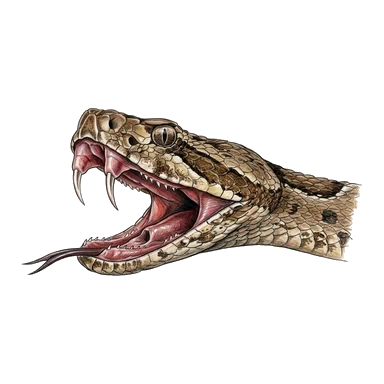 Morsures
The urutu is a large, stout pit viper from South America. It is highly venomous and is an important cause of snakebites in the areas where it lives. Its body has a striking pattern of dark crescent-shaped markings.1
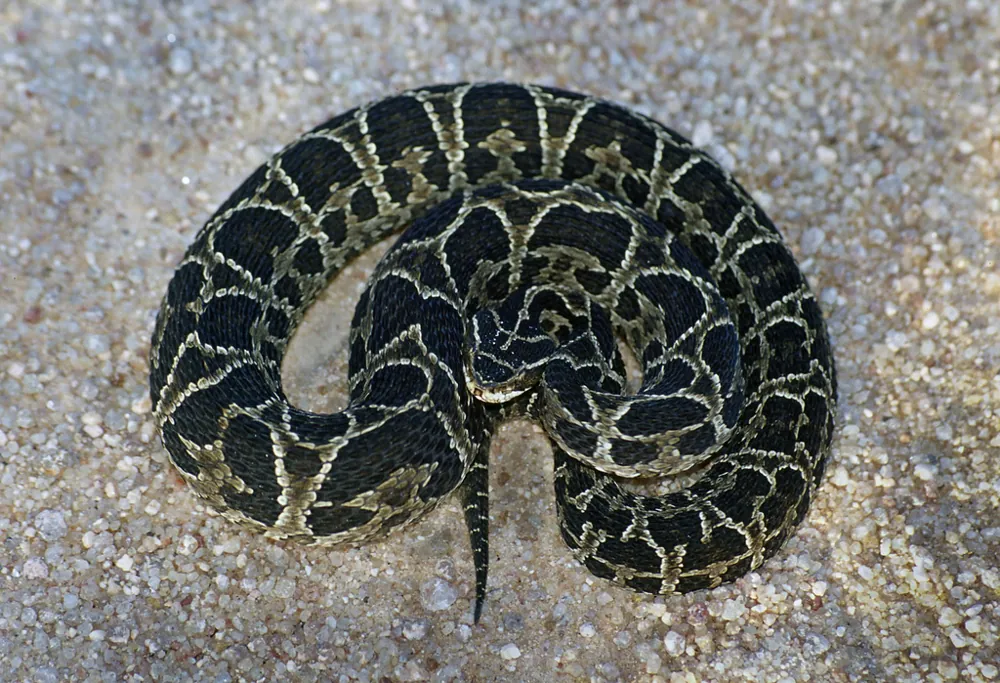
 Comment le reconnaître
- Large and stout, most adults are 80 to 120 cm long.1
- The top of the head is usually chocolate brown to almost black, with tan to white markings.1
- The body has 22 to 28 dark brown to black markings, each bordered in cream or white. Some look like a cross, and some look like a headphone shape.1
- The pattern on the tail forms a zigzag.1
- A dark brown to black stripe runs along the underside from the neck to the tail tip.1
Puissance du venin
Le venin sort par ses crochets ou ses dents quand il mord.
Que fait son venin ?
The urutu is highly venomous. Its venom mainly contains phospholipase A2, snake venom metalloproteinases, snake venom serine proteases and C-type lectins. In one study of 32 patients, all had local pain and swelling, 97% had prolonged blood clotting, 41% had bleeding (usually from the gums), 32% had blistering and 9% had necrosis (death of tissue).1
À quel point est-il dangereux pour l'homme ?
Danger pour l'homme: Très dangereuxIl peut tuer une personne qui n'est pas soignée.Bites are an important cause of snakebite in its range and often cause severe local tissue damage, but they are rarely fatal. In a survey of 6,601 snakebite cases in Central and South America, 384 were attributed to this species, and 8 of those (2%) were fatal. Some bites have caused gangrene that required amputation, and in 2004 a 44-year-old woman died of a brain bleed after being bitten at home.1
 Bonne nouvelle : les médecins ont un médicament (antivenin) ou un traitement pour ça.1
 S'il mord
- In one Brazilian hospital study, all 32 bitten patients were treated with specific antivenin (antivenom), and none of them died.1
- Garde la personne immobile et calme, le membre mordu à hauteur du cœur, enlève bagues et objets serrés, et va vite à l'hôpital.
Appelle toujours d'abord ton numéro d'urgence (112, 000, 911). Ce sont des conseils généraux de premiers secours, pas un avis médical. Les bases des premiers secours
 Reste en sécurité
- Ne touche, n'attrape et n'embête jamais un animal sauvage, même petit, et même s'il a l'air endormi ou mort.
- Laisse-lui de la place. Si tu en croises un, reste calme, recule doucement et laisse-le passer son chemin.
- S'il te mord : reste calme, ne bouge pas, appelle ton numéro d'urgence (112, 000, 911) ou va vite à l'hôpital. Souviens-toi de quoi il avait l'air, une photo aide.
Il ne t'en veut pas. Il utilise son venin pour attraper sa nourriture ou se protéger, et il préfère de loin se cacher. Plus d'infos pour rester en sécurité
Où dans le monde ?
Quelle taille fait-il ?
Quelle longueur fait-il ?
 aussi long que 3 chats domestiques du museau à la queue
 aussi long que 9 bananes mises bout à bout
 pourrait parcourir 100 mètres en 95 secondes (l'humain le plus rapide met 9,6)
Quelle taille fait Urutu comparé à TOI ?
Juste des calculs dans ton navigateur. Rien n'est enregistré ni envoyé nulle part.
À quelle vitesse va-t-il ?


Faits
Genome sequencing found 59 toxin genes from 16 toxin families.1
Its verified maximum length is 169 cm, although reports of over 2 m exist.1
Some unusual individuals have dark stripes running the full length of the body.1
In some specimens the pattern is so concentrated that the markings and the gaps between them are the same colour.1
Females are significantly longer and heavier than males.1
Démêle le vrai du faux
Idée reçue : The bite of this snake is almost always deadly.
Vérité : Bites are rarely fatal, although they often cause severe local tissue damage. In one survey, only 2% of cases attributed to this species were fatal.1
Pour les experts en venin
- Nom scientifique
- Bothrops alternatus
- Groupe
- Vipères à fossettes
- Famille
- Viperidae2
- Ordre
- Squamata
- Continents
- Amérique du Sud
- Petits
- It gives birth to live young, with captive females producing 3 to 12 young and some females producing up to 24. The newborns look like adults but are more brightly coloured, and they can strike venomously from birth.1
- Danger pour l'homme
- 4 / 5: Très dangereux3
D'où viennent les faits
- Bothrops alternatus (Wikipedia (CC BY-SA 4.0))
- Bothrops alternatus (iNaturalist): noms et classification.
- Venom Wiki: le niveau de danger, la taille typique et la vitesse estimée sont les nôtres. Regarde comment on les calcule : Comment on évalue le danger.
Chaque fait sur cette page a un numéro qui renvoie à sa source. Si on s'est trompés, désolés, on est des fans d'animaux, pas une revue scientifique. Dis-le-nous à [email protected] et on corrigera.
 Le scorpion a faim ! Venom Wiki est le projet d'une seule personne : gratuit, sans pub et sans traceurs. Un petit pourboire aide à le garder en ligne.Nourris le scorpion
Plus du même groupe: Vipères à fossettes
 Terciopelo
 Eyelash viper
 Golden lancehead
 South American bushmaster
 Common lancehead
 Jararaca
Vit aussi en: Amérique du Sud
 Golden poison frogGrenouilles toxiques, crapauds et tritonsMortelNe pas toucher
 Brazilian wandering spiderAraignéesPeut tuer
 Cane toadGrenouilles toxiques, crapauds et tritonsNécessite un médecinNe pas toucher
 Peruvian giant centipedeScolopendresNécessite un médecin
 Bullet antFourmisFait juste mal
 Common vampire batMammifères venimeuxFait juste mal