
 Châu Phi
 Châu Á
 Châu Âu
 Nam Mỹ
 Úc và châu Đại Dương
 Châu Nam Cực
 Thái Bình Dương
 Đại Tây Dương
 Ấn Độ Dương
 Bắc Băng Dương
 Địa Trung Hải
 Biển Đỏ
 Biển Caribe
 Biển San Hô
 Biển Đông
 Biển Philippines
 Biển Andaman
 Biển Bắc
 Biển Timor và Arafura
 Vịnh Bengal
 Vịnh California
Oak processionary
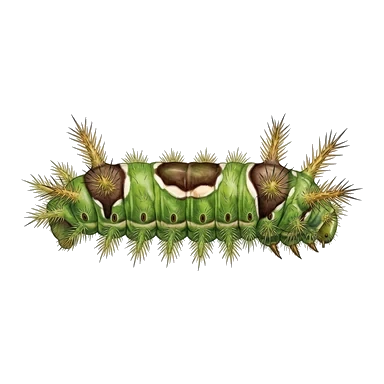 Lông độc
The oak processionary is a moth whose caterpillars feed on oak leaves and can strip trees bare. The caterpillars travel in long, nose-to-tail lines, which is how they got their name. Their fine, hair-like bristles can irritate skin and breathing, so they matter a lot to people.1

 Cách nhận biết
- Adult moths have a wingspan of 25 to 35 mm and are tan, brown and white, which makes them hard to see against oak bark.1
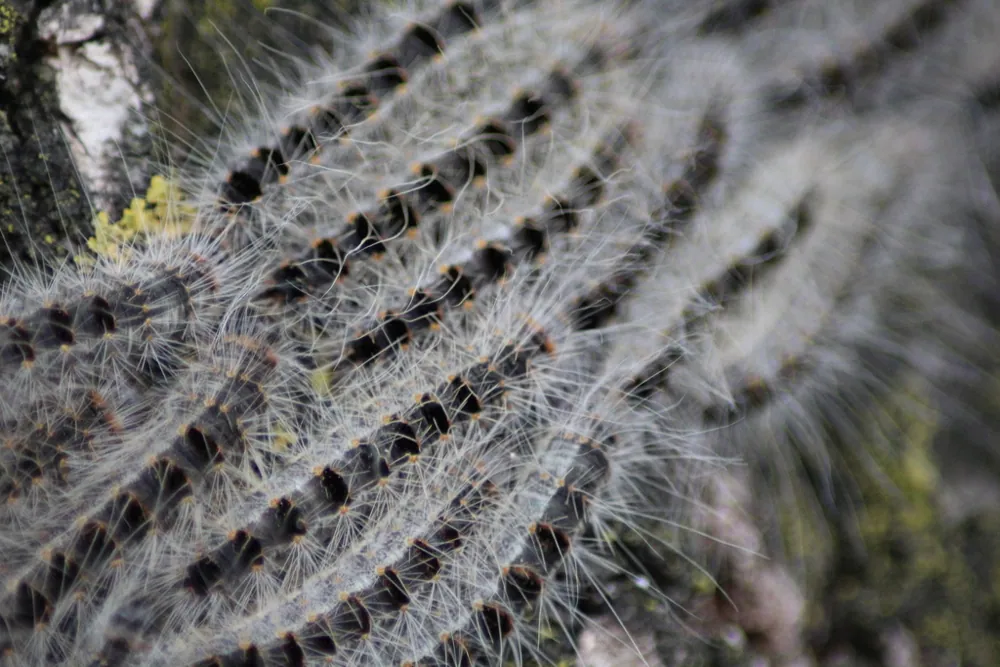
- Caterpillars have very long, white hairs that contrast with shorter hairs.1
- Caterpillars march in lines, often arrow-shaped, with a leader and rows of several caterpillars side by side.1
- Nests are white and silk-like when new, and become discoloured and hard to see over time.1
- Nests can be round, teardrop-shaped, bag-like or blanket-like, and can be found at any height on an oak tree.1
Hay bị nhầm với: Caterpillars of several other species may be mistaken for the oak processionary. Unlike other caterpillars, the oak processionary does not live on fences or walls, so it is mostly found in oak trees or on the ground beneath them in late spring and early summer.1
Sức mạnh nọc độc
Lông tơ tí hon gãy trong da và gây rát.
Nọc độc của nó gây ra gì?
The caterpillars' back bristles contain a urticating toxin called thaumetopoein, a protein that irritates the skin. Contact can cause a papular rash and itching, and the hairs can also cause eye inflammation (conjunctivitis). If the hairs are breathed in, they can cause sore throat (pharyngitis), breathing problems, asthma, or in rare cases anaphylaxis, a severe allergic reaction.1
Nó nguy hiểm thế nào với con người?
Nguy hiểm với con người: ĐauCó thể rất đau, nhưng hầu như không bao giờ nghiêm trọng.The moths are an increasing nuisance to people as their range grows, and the hairs can cause a skin condition called epidemic caterpillar dermatitis. The hairs break off easily, float in the air, and can stay harmful for several seasons. Mowing a lawn can bring people into contact with them.1
 Tin tốt: bác sĩ có thuốc (huyết thanh kháng nọc) hoặc cách điều trị cho trường hợp này.1
Nó làm gì khi sợ?
The caterpillars defend themselves with thousands of pointed, easily broken bristles on their backs that float in the air and irritate the skin.1
 Nếu bạn chạm vào lông của nó
- The skin irritation and itching can be largely relieved by cetirizine-based antihistamine tablets. Anyone with breathing problems or a severe reaction needs urgent medical help.1
- Với lông sâu róm: dùng băng dính gỡ chúng ra, rồi rửa da. Đừng chà xát.
- Với vết cắn: rửa và làm mát. Đi khám nếu người bị cắn thấy không khỏe hoặc dễ chảy máu.
Luôn gọi số khẩn cấp trước tiên (112, 000, 911). Đây là hướng dẫn sơ cứu chung, không phải lời khuyên y tế. Sơ cứu cơ bản
 Giữ an toàn
- Đừng bao giờ chạm, bắt hay trêu chọc động vật hoang dã, dù nó nhỏ, và dù trông như đang ngủ hay đã chết.
- Chừa khoảng cách cho nó. Nếu gặp, hãy bình tĩnh, lùi lại từ từ và để nó đi.
- Nếu bạn chạm vào lông của nó: bình tĩnh, nằm yên, gọi số khẩn cấp (112, 000, 911) hoặc đến bệnh viện thật nhanh. Hãy nhớ hình dạng nó, có ảnh càng tốt.
Nó không nhắm vào bạn. Nó dùng nọc để bắt mồi hoặc tự vệ, và nó thích trốn hơn nhiều. Thêm về cách giữ an toàn
Nó to cỡ nào?
Nó dài bao nhiêu?
 dài khoảng bằng một chiếc kẹp giấy
 chậm hơn ốc sên vườn
Oak processionary to cỡ nào so với BẠN?
Chỉ là phép tính trong trình duyệt của bạn. Không có gì được lưu hay gửi đi đâu cả.
Nó nhanh cỡ nào?

Thông tin
Older caterpillars can have up to 63,000 pointed defensive bristles on their backs.1
In 2007, soldiers were deployed to burn infestations in the Belgian province of Limburg.1
The UK government spent £37 million trying to control the caterpillars, which had spread to all 33 London boroughs by 2019.1
In the Netherlands, great tits have been observed eating the young caterpillars before their hairs develop in April.1
In 2023, an outbreak in Ireland was successfully eradicated.1
Cho chuyên gia về nọc độc
- Tên khoa học
- Thaumetopoea processionea
- Nhóm
- Sâu róm và côn trùng
- Gia đình
- Notodontidae2
- Thứ tự
- Lepidoptera
- Các châu lục
- Châu Âu
- Con non
- Eggs hatch into caterpillars that build communal silk nests in oak trees, and the caterpillars later pupate into adult moths in these nests.1
- Nguy hiểm với con người
- 2 / 5: Đau3
Thông tin lấy từ đâu
- Oak processionary (Wikipedia (CC BY-SA 4.0))
- Thaumetopoea processionea (iNaturalist): tên gọi và phân loại.
- Venom Wiki: mức nguy hiểm, kích thước điển hình và tốc độ ước đoán là của chúng tôi. Xem cách chúng tôi tính: Cách chúng tôi đánh giá nguy hiểm.
Mỗi thông tin trên trang này có một con số dẫn đến nguồn của nó. Nếu chúng tôi sai điều gì, xin lỗi nhé, chúng tôi là người mê động vật, không phải tạp chí khoa học. Hãy báo cho chúng tôi qua [email protected] và chúng tôi sẽ sửa.
 Bọ cạp đói rồi! Venom Wiki là dự án của một người: miễn phí, không quảng cáo, không theo dõi. Một chút tiền tip giúp trang tiếp tục hoạt động.Cho bọ cạp ăn
Cùng nhóm: Sâu róm và côn trùng
 Pine processionarySâu róm và côn trùngChỉ đau thôiĐừng chạm vào
 Common bombardier beetleSâu róm và côn trùngVô hại
 Brown-tail mothSâu róm và côn trùngChỉ đau thôiĐừng chạm vào
 Masked hunterSâu róm và côn trùngChỉ đau thôi
 Pine-tree lappetSâu róm và côn trùngChỉ đau thôiĐừng chạm vào
 Common backswimmerSâu róm và côn trùngVô hại
Cũng sống ở: Châu Âu
 Common European adderRắn lụcCần đi khám
 Spanish flyCác loài có độc khácCần đi khámĐừng chạm vào
 Common waspOng, ong bắp cày và ong vò vẽChỉ đau thôi
 European hornetOng, ong bắp cày và ong vò vẽChỉ đau thôi
 Fire salamanderẾch độc, cóc và sa giôngChỉ đau thôiĐừng chạm vào
 Western honey beeOng, ong bắp cày và ong vò vẽChỉ đau thôi