
 Afrika
 Asia
Asia Eropa
Eropa Amerika Selatan
 Australia dan Oseania
 Antarktika
 Samudra Pasifik
 Samudra Atlantik
 Samudra Hindia
 Samudra Arktik
 Laut Tengah
 Laut Merah
 Laut Karibia
 Laut Koral
 Laut Cina Selatan
 Laut Filipina
 Laut Andaman
 Laut Utara
 Laut Timor dan Laut Arafura
 Teluk Benggala
 Teluk California
Cane toad
 Racun di kulitnyaMakan: Sedikit dari semuanyaBeracun, bukan berbisa
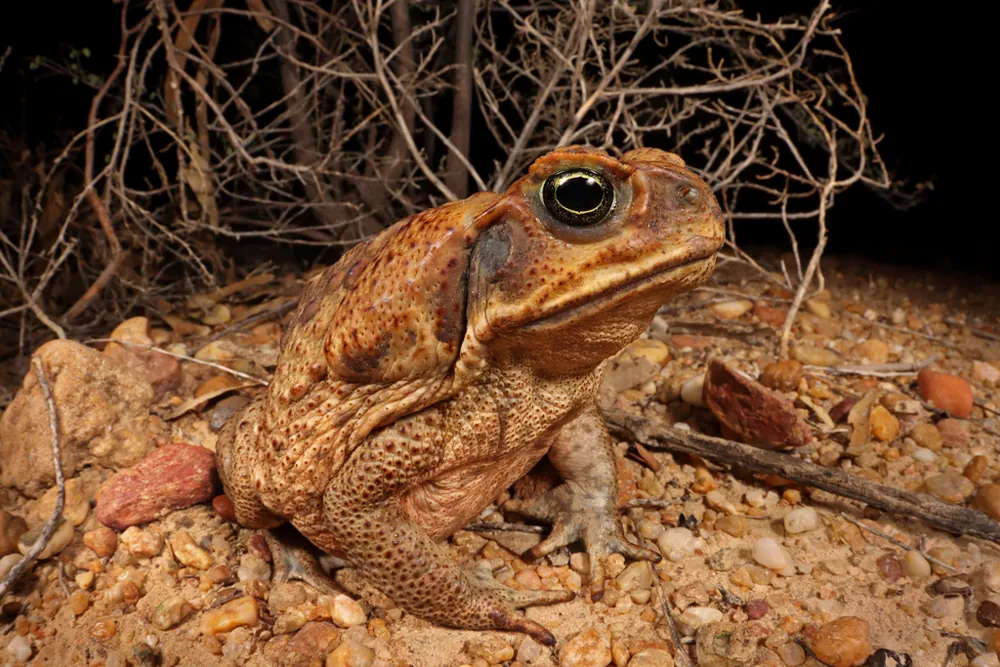
The cane toad is a large toad that is very poisonous to many animals. It is native to South and mainland Central America, but people have moved it to islands in Oceania and the Caribbean and to northern Australia. It matters because it spreads quickly and harms native wildlife and pets.1
 Cara mengenalinya
- Very large, with adults usually 10 to 15 cm long1
- Dry, warty skin with distinct ridges above the eyes that run down the snout1
- A large parotoid gland (a swollen gland) behind each eye1
- Grey, yellowish, red-brown or olive-brown skin, often with patterns1
- Horizontal pupils and golden irises1
Sering tertukar dengan: In Australia, adults can be confused with large native frogs, but these lack the large parotoid glands and the ridge between the nostril and eye. The giant burrowing frog has vertical pupils and silver-grey irises, while the cane toad has horizontal pupils and golden irises. In the United States, the southern toad has two bulbs in front of the parotoid glands.1
Kekuatan racun
Kulitnya beracun. Berbahaya untuk disentuh, dijilat, atau dimakan.
Apa efek racunnya?
The toad's glands secrete a milky-white fluid called bufotoxin when it is threatened. Components of bufotoxin are toxic to many animals. In dogs, signs of poisoning include excessive drooling, extremely red gums, head-shaking, crying and loss of coordination.1
Seberapa berbahaya bagi manusia?
Bahaya bagi manusia: SeriusJika seseorang menyentuh atau memakannya, ia harus ke dokter. Kematian sangat jarang.The toxic skin can kill many wild and domestic animals. Dogs are especially at risk from licking or biting the toad. Human deaths have also been recorded after people ate cane toads.1
Apa yang dilakukannya saat takut?
When threatened, it releases bufotoxin from its glands.1
 Jika seseorang menyentuh atau memakannya
- Jika seseorang menyentuhnya: cuci tangan sampai bersih dan jangan menyentuh mata atau mulut. Jika anak atau hewan peliharaan menjilat atau memakannya: hubungi pusat informasi keracunan atau nomor darurat.
Selalu hubungi nomor darurat dulu (112, 000, 911). Ini panduan pertolongan pertama umum, bukan nasihat medis. Dasar-dasar pertolongan pertama
 Tetap aman
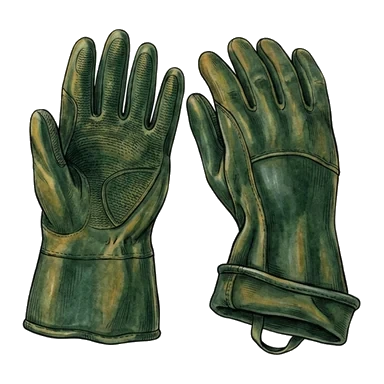
- Jangan pernah menyentuh, menangkap, atau mengganggu hewan liar, walaupun kecil, dan walaupun tampak tidur atau mati.
- Beri ia ruang. Jika bertemu, tetap tenang, mundur perlahan, dan biarkan ia pergi.
- Jika kamu menyentuh atau memakannya: jangan mengucek mata atau mulut, cuci tangan, dan cari bantuan medis.
Ia tidak mengincarmu. Racunnya hanya ada supaya tidak ada yang memakannya. Lebih lanjut tentang tetap aman
Di mana di dunia?
Seberapa besar dia?
Seberapa panjang dia?
 sepanjang 8 balok mainan yang dijajarkan
 bisa menempuh 100 meter dalam 180 detik (manusia tercepat butuh 9,6)
Seberapa besar Cane toad dibandingkan KAMU?
Hanya hitungan di browsermu. Tidak ada yang disimpan atau dikirim ke mana pun.
Seberapa cepat dia?


Fakta
Young toads lose the toxicity they had as eggs and tadpoles, and they only develop their poison glands later. Only an estimated 0.5% of cane toads reach adulthood.1
In Australia, tadpoles have evolved to be more likely to eat their siblings than tadpoles in South America.1
A female can lay thousands of eggs in one spawn, in strings up to 20 metres long.1
In the wild, cane toads can live 10 to 15 years, and one captive toad was reported to have lived 35 years.1
The cane toad is considered the largest species in the Bufonidae, the toad family.1
Cane toads eat both living and dead matter, which is unusual among frogs and toads.1
Pembongkar mitos
Mitos: The name 'marine toad' suggests that cane toads live in the sea.
Faktanya: Cane toads do not live in the sea. The name came from a mistaken belief by an early naturalist.1
Untuk ahli bisa
Dari mana faktanya berasal
- Cane toad (Wikipedia (CC BY-SA 4.0))
- Rhinella marina (iNaturalist): nama dan klasifikasi.
- Venom Wiki: tingkat bahaya, ukuran umum, dan perkiraan kecepatan adalah buatan kami. Lihat cara kami menghitungnya: Cara kami menilai bahaya.
Setiap fakta di halaman ini punya nomor yang menunjuk ke sumbernya. Kalau kami salah, maaf ya, kami penggemar hewan, bukan jurnal ilmiah. Beri tahu kami di [email protected] dan kami akan memperbaikinya.
 Kalajengkingnya lapar! Venom Wiki adalah proyek satu orang: gratis, tanpa iklan, dan tanpa pelacak. Tip kecil membantu menjaganya tetap online.Beri makan kalajengking
Lainnya dari kelompok yang sama: Katak beracun, kodok, dan kadal air
 Golden poison frogKatak beracun, kodok, dan kadal airMematikanJangan sentuh
 Dyeing poison dart frogKatak beracun, kodok, dan kadal airHanya sakitJangan sentuh
 Strawberry poison-dart frogKatak beracun, kodok, dan kadal airHanya sakitJangan sentuh
 Black-legged poison frogKatak beracun, kodok, dan kadal airBisa membunuhJangan sentuh
 California newtKatak beracun, kodok, dan kadal airBisa membunuhJangan sentuh
 Rough-skinned newtKatak beracun, kodok, dan kadal airBisa membunuhJangan sentuh
 Terciopelo
 Eastern coral snake
 Eastern diamondback rattlesnake
 Eyelash viper
 Timber rattlesnake
 Western diamondback rattlesnake