
 Afrika
 Asie
Asie Evropa
 Jižní Amerika
 Austrálie a Oceánie
 Antarktida
 Tichý oceán
 Atlantský oceán
 Indický oceán
 Severní ledový oceán
 Středozemní moře
 Rudé moře
 Karibské moře
 Korálové moře
 Jihočínské moře
 Filipínské moře
 Andamanské moře
 Severní moře
 Timorské a Arafurské moře
 Bengálský záliv
 Kalifornský záliv
Pine processionary
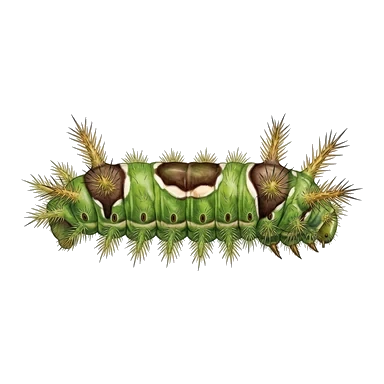 Žahavé chloupky
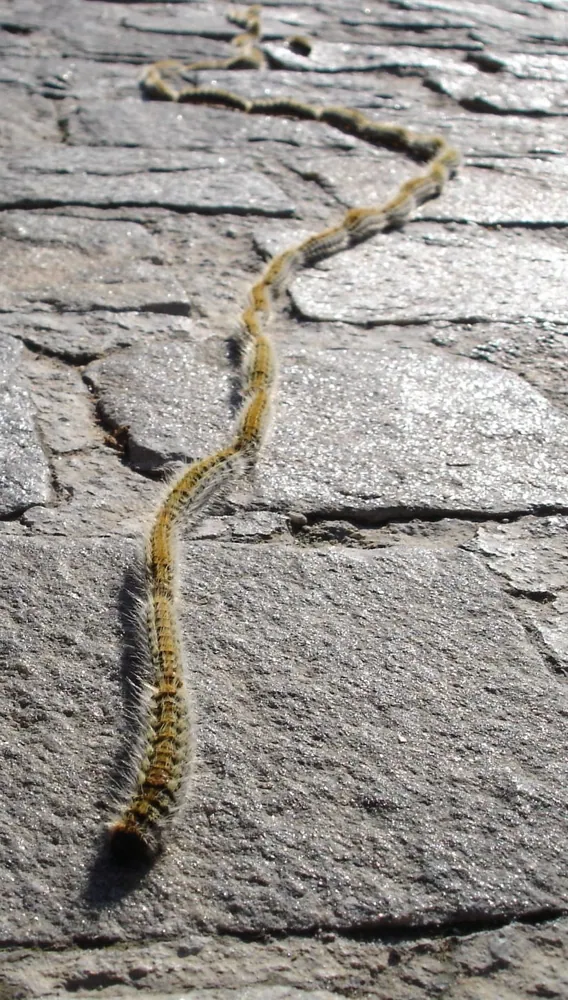
The pine processionary is a moth whose caterpillars are famous for marching in long, nose-to-tail lines through pine woods. Their hairs cause painful rashes and eye irritation, and they can strip the needles from whole trees. It lives around the Mediterranean and is spreading north.1
 Jak ho poznat
- Caterpillars are orange-brown and hairy, with blue bands.1
- Large silken nests in pine trees, often with several in one tree and signs of stripped needles.1
- Caterpillars move in single-file processions, usually at night and when leaving the tree to pupate.1
- Adults have predominantly light brown forewings with brown markings and white hindwings.1
- Adult males have a crescent marking on the wings and are larger than the oak processionary.1
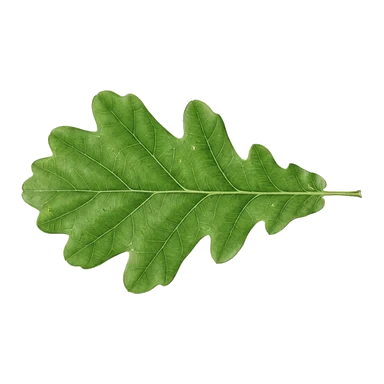
Často se plete s: The oak processionary (Thaumetopoea processionea) is smaller as an adult, has an indistinct wing marking rather than a crescent, and lives in broad-leaved rather than coniferous forests. The pale eggar moth has no crescent marking on its wings.1
Síla jedu
Malinké chloupky nebo štětinky se ulomí v kůži a pálí.
Co dělá jeho jed?
The species is not venomous. Its caterpillars have hairs containing an irritant chemical called thaumetopoein, which causes skin rashes (urticaria) and eye irritation on contact. Some people may have an allergic reaction. The hairs of fifth-stage larvae can also break off and spread across nearby exposed skin.1
Jak je nebezpečné pro lidi?
Nebezpečí pro lidi: BolestivéMůže to hodně bolet, ale skoro nikdy to není vážné.Simple contact with the caterpillar hairs can cause severe rashes and eye irritation in humans and other mammals. Some individuals may have an allergic reaction.1
Co dělá, když se bojí?
When stressed or threatened, fifth-stage caterpillars eject harpoon-shaped hairs that irritate any exposed skin nearby.1
 Když se dotkneš jeho chloupků
- U žahavých chloupků housenek: odstraň je lepicí páskou a pak umyj kůži. Netři.
- Při kousnutí: umyj a zchlaď. Vyhledej lékařskou pomoc, pokud se postiženému udělá zle nebo snadno krvácí.
Vždy nejdřív zavolej na tísňovou linku (112, 000, 911). Jde o obecné rady k první pomoci, ne o lékařskou radu. Základy první pomoci
 Buď v bezpečí
- Nikdy se nedotýkej divokého zvířete, nechytej ho a neprovokuj, ani malé, a ani když vypadá, že spí nebo je mrtvé.
- Nech mu prostor. Když ho potkáš, zůstaň v klidu, pomalu couvej a nech ho jít svou cestou.
- Když se dotkneš jeho chloupků: zůstaň v klidu, nehýbej se, zavolej na tísňovou linku (112, 000, 911) nebo se rychle dostaň do nemocnice. Zapamatuj si, jak vypadalo, fotka pomůže.
Nejde po tobě. Jed používá k lovu potravy nebo k obraně a mnohem radši se schová. Víc o bezpečí
Jak je velké?
Jak je dlouhé?
 zhruba tak dlouhé jako kancelářská sponka
 pomalejší než hlemýžď zahradní
Pine processionary: jak je velké ve srovnání s TEBOU?
Jen matematika ve tvém prohlížeči. Nic se neukládá ani nikam neposílá.
Jak je rychlé?


Fakta
Caterpillars in a procession hold together through touch from the caterpillar in front, which takes priority over the trail pheromone or silk.1
The caterpillars are one of the few temperate-zone insects whose larvae develop through the winter, living in silk nests high in pine trees.1
Adults live for only a single day, during which they mate and lay eggs.1
The Greek physician Dioscorides described the itching caused by this caterpillar in the 1st century AD, and Pliny the Elder recorded a treatment for it.1
Outbreaks are somewhat cyclical, with a period of 7 to 9 years.1
Lovec mýtů
Mýtus: Fabre's caterpillars marched in a circle around a flower pot only because they were trapped on its rim.
Pravda: Young caterpillars' circular trails continue for as long as 12 hours even when they are free on a flat surface.1
Pro znalce jedů
- Vědecký název
- Thaumetopoea pityocampa
- Skupina
- Housenky a hmyz
- Rodina
- Notodontidae2
- Pořadí
- Lepidoptera
- Kontinenty
- Evropa, Afrika, Asie
- Mláďata
- Each female lays an enormous number of eggs near the tops of pine trees, in cylindrical egg masses 4 to 5 cm long covered with scales that mimic pine shoots.1
- Nebezpečí pro lidi
- 2 / 5: Bolestivé3
Odkud fakta pocházejí
- Pine processionary (Wikipedia (CC BY-SA 4.0))
- Thaumetopoea pityocampa (iNaturalist): jména a zařazení.
- Venom Wiki: úroveň nebezpečí, typická velikost a odhad rychlosti jsou naše vlastní. Podívej se, jak je určujeme: Jak hodnotíme nebezpečí.
Každý fakt na této stránce má číslo, které odkazuje na jeho zdroj. Pokud jsme se spletli, promiň, jsme fanoušci zvířat, ne vědecký časopis. Napiš nám na [email protected] a opravíme to.
 Štír má hlad! Venom Wiki je projekt jednoho člověka: zdarma, bez reklam a bez sledování. Malé spropitné pomáhá udržet ho online.Nakrm štíra
Víc ze stejné skupiny: Housenky a hmyz
 Oak processionaryHousenky a hmyzJen to bolíNedotýkat se
 White-spotted assassin bugHousenky a hmyzJen to bolí
 Common bombardier beetleHousenky a hmyzNeškodné
 Asian giant water bugHousenky a hmyzJen to bolí
 Blue-striped nettle grubHousenky a hmyzJen to bolíNedotýkat se
 Brown-tail mothHousenky a hmyzJen to bolíNedotýkat se
Žije také v: Evropa
 Common European adderZmijePotřebuje lékaře
 Spanish flyDalší toxická zvířataPotřebuje lékařeNedotýkat se
 Common waspVčely, vosy a sršněJen to bolí
 European hornetVčely, vosy a sršněJen to bolí
 Fire salamanderPralesničky, ropuchy a čolciJen to bolíNedotýkat se
 Western honey beeVčely, vosy a sršněJen to bolí